







The Winds of Change at Chepauk
The Chennai Super Kings (CSK), a franchise long synonymous with unwavering stability and a methodical approach to team building, find themselves at a precarious crossroads. For years, the yellow jersey was a symbol of consistency, characterized by deep playoff runs and strategic masterclasses led by MS Dhoni. However, the post-Dhoni era has proven to be a sobering reality check for the five-time champions. Following a third consecutive season of missing the playoffs, the atmosphere surrounding the franchise has shifted from patient optimism to urgent introspection. As preparations for the 2027 Indian Premier League (IPL) cycle begin, the leadership mantle held by Ruturaj Gaikwad has come under intense scrutiny, with growing calls to hand the reins to the recently acquired star, Sanju Samson.
The Case for Sanju Samson
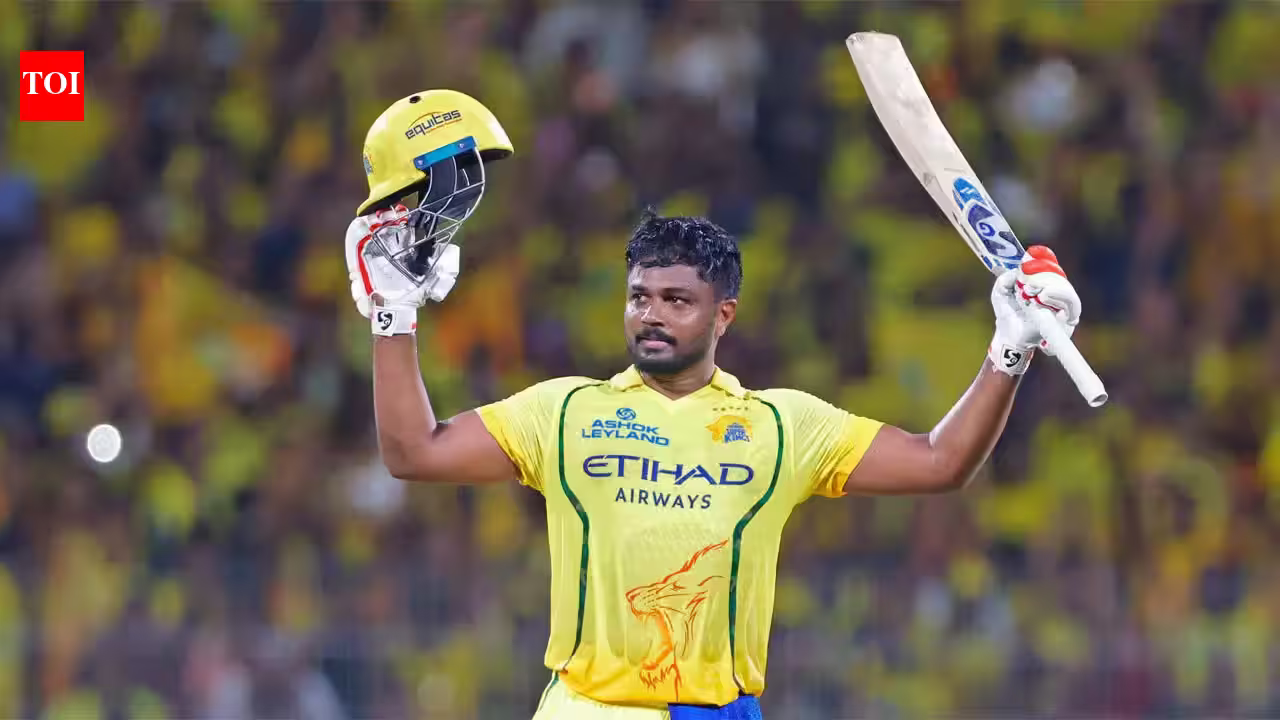
Sanju Samson’s arrival at CSK prior to the 2026 season was heralded as a major coup, and his performance on the field justified the excitement. Finishing as the franchise’s highest run-scorer, Samson proved that he has both the temperament and the skill to lead from the front. His recent crowning as the Player of the Tournament at the 2026 T20 World Cup has further cemented his status as one of the premier white-ball batters in world cricket.
Former India batter Sadagoppan Ramesh has become one of the most vocal advocates for a leadership transition, suggesting that Samson’s tactical acumen is exactly what the current CSK unit requires. Pointing to his tenure at the Rajasthan Royals, where Samson maintained a respectable 50% win rate over 66 matches—including a run to the IPL final—Ramesh argues that Samson possesses the requisite experience to manage the pressures of leading a storied franchise. According to Ramesh, the time for “knee-jerk” reactions has passed, and the current reality demands a proactive, calculated shift to revitalize the squad’s identity.
The Gaikwad Dilemma
At the center of this debate is Ruturaj Gaikwad, a batter of undeniable class whose recent struggles have mirrored the team’s collective downturn. The 2026 campaign was particularly difficult for the young opener, who managed a modest 337 runs at an average of 28.08. Perhaps more concerning for the CSK think-tank was his strike rate, which ranked as the lowest among all top-order batters during the powerplay.
The psychological toll of captaining a franchise as high-profile as Chennai is well-documented. Former CSK stalwart Subramaniam Badrinath has added his voice to the conversation, suggesting that the burden of leadership is hindering Gaikwad’s natural stroke play. Drawing parallels to legendary figures like Sachin Tendulkar, who famously navigated the complexities of balancing elite batting with the stresses of captaincy, Badrinath believes that stripping Gaikwad of the role could be the most “beneficial” move for both parties. Relieving him of his responsibilities could provide the clarity required for him to return to his free-scoring ways, potentially resurrecting his form as a pure specialist batter.
The Broader Structural Reset
While the debate over the captaincy occupies the headlines, the Chennai Super Kings face a broader organizational reset that extends well beyond the identity of the skipper. The recent departure of long-time head coach Stephen Fleming has left a massive void in the team’s hierarchy. Fleming’s tenure was the foundation upon which the CSK culture was built, and finding a successor capable of balancing the franchise’s rich history with the requirements of a modern, fast-evolving IPL will be the most significant challenge the management has faced in over a decade.
Furthermore, the uncertainty regarding MS Dhoni remains the proverbial elephant in the room. Even in a diminished capacity, Dhoni’s presence as a mentor and tactical advisor is ingrained in the fabric of the team. Whether he returns for the 2027 season or finally calls time on his iconic career will dictate the resources and strategies available to the next leadership team. These layers of uncertainty suggest that the next few months will be defined by rigorous internal assessments rather than the quick, surface-level fixes that the franchise historically avoids.
Evaluating the Path Forward
The decision to change a captain is never one that the Chennai Super Kings take lightly. The franchise has always prided itself on backing players through slumps, prioritizing longevity over the volatile turnover rates seen in other camps. However, the mounting pressure to snap a three-year playoff drought necessitates a pragmatic view of the future. As Ramesh noted, a change in captaincy is not a “magic bullet” that will automatically result in a trophy. The squad requires a comprehensive audit of its bowling depth, middle-order stability, and tactical flexibility.
Should the management decide that Gaikwad’s evolution as a leader requires more time, they must find a way to insulate him from the external noise. Alternatively, if they lean into the recommendation of experts like Ramesh and Badrinath, appointing Samson would signal a desire for a new tactical identity—one that marries individual brilliance with the discipline that has defined the CSK brand for nearly twenty years. As the 2027 auction approaches, the eyes of the cricket fraternity will remain firmly fixed on Chepauk, watching to see if the franchise opts for the continuity of the past or the promise of a radical restart.
Disclaimer: This content is auto-generated for informational purposes only.
Source: Read Original News