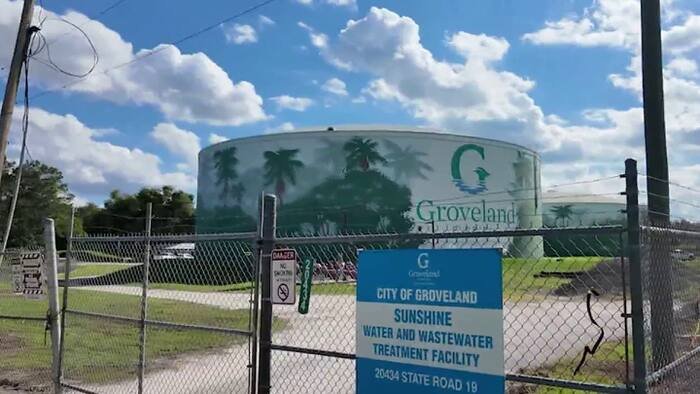






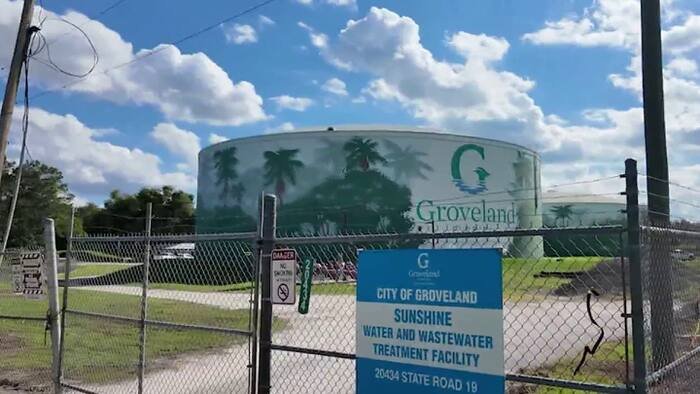
GROVELAND, Fla. – New details have emerged regarding the catastrophic 16-inch water main break that left thousands of Groveland residents without service last month, casting doubt on initial claims that the city’s aging infrastructure was the sole culprit.
During a project update on Thursday, representatives from the city’s water contractor, Woodard & Curran, revealed that preliminary inspections suggest the pipe failure was likely the result of improper installation. The findings contradict previous assertions from city officials who had largely attributed the rupture to the pipe’s age, noting the conduit had been in the ground for more than 30 years.
“When the National Pipe and Plastic representatives showed up, he took his initial look at it. He said the pipes were over-homed,” one contractor explained to city leaders. “The restraint gland that’s on or outside that had the all-thread were not put on evenly.”
The contractors noted that both ends of the pipe showed evidence of compromised installation, definitively ruling out the theory that a “water hammer”—a sudden pressure surge within the system—was responsible for the break. To confirm these observations, the city has commissioned formal forensic testing on the materials. Results are expected to be returned within two to three weeks, potentially providing a final determination on the root cause of the failure.
The revelation comes amid mounting frustration from local residents, who have been vocal in their criticism of the city’s management of recent water crises and the quality of information provided during those events.
In response to these concerns, the city is overhauling its emergency communication strategy. City consultant Lorri Shaban announced the upcoming launch of “Groveland Connect,” a new alert platform designed to replace the city’s current, limited notification methods.
“We were using an old, outdated system that was very limited, which was Tyler,” Shaban stated. “So our first and our only communication piece or channel was Facebook.”
According to city staff, the transition to Groveland Connect is a fiscally strategic move. The initial implementation cost is $9,616.50, with an annual recurring fee of approximately $8,512.50. This is projected to be more cost-effective than the legacy system; the city reported that using the Tyler platform to send text messages during one recent water emergency resulted in a bill of approximately $3,500.
City staff are currently undergoing training to operate the new system. While the official rollout is scheduled for November 1, officials emphasized that the platform is being prioritized for readiness and could be deployed ahead of schedule should another emergency occur. As the forensic report looms, the city hopes these changes will help restore public trust following a turbulent month for the municipal water system.
Disclaimer: This content is auto-generated for informational purposes only.
Source: Read Original News