






The Intersection of Infrastructure and Circular Economy
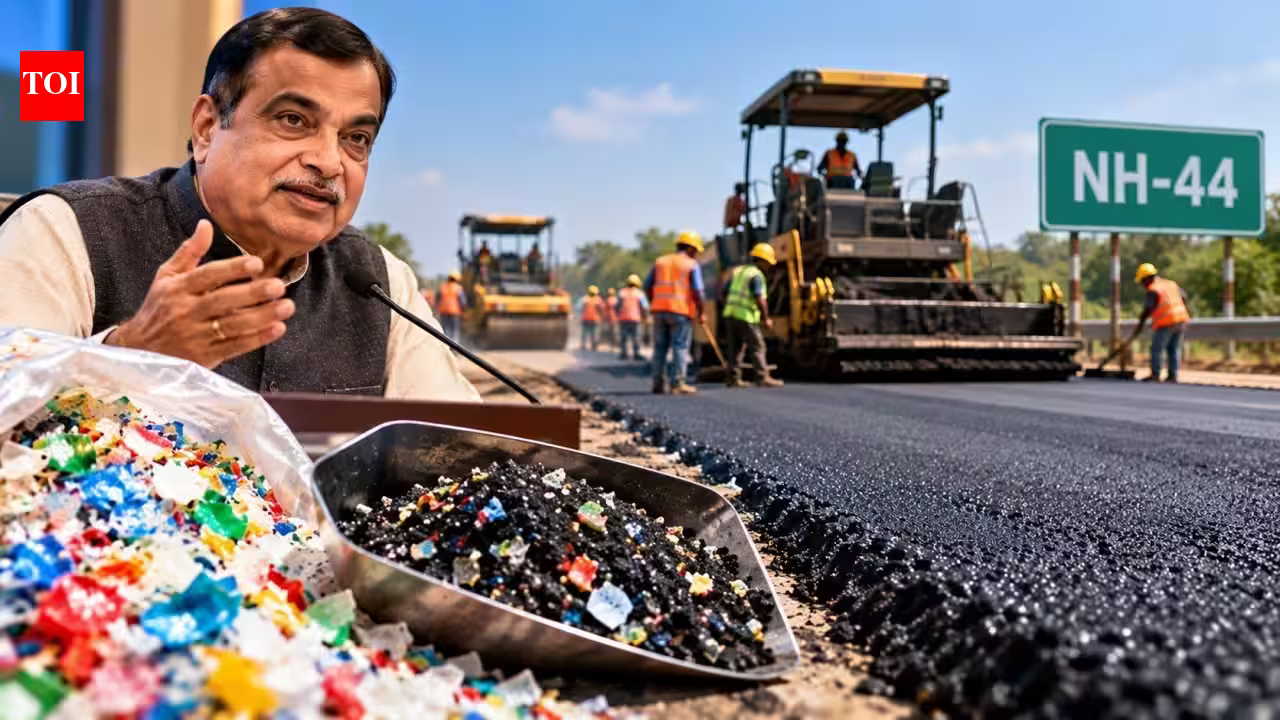
India’s rapid economic expansion is intrinsically linked to the development of its physical infrastructure, most notably its expansive highway network. As the country accelerates its pace of construction, the Ministry of Road Transport and Highways (MoRTH) is increasingly looking toward scientific innovation to address two persistent challenges: the high cost of imported materials and the ballooning accumulation of plastic waste. The recent pilot deployment of Waste Plastic Modified Bitumen (W-PMB) on National Highway 44 (NH-44) near Jhansi represents a significant technical milestone. By integrating a “wet-process” technology developed by IIT (BHU), the government is signaling a shift toward a circular economy model where industrial waste is transformed into a critical raw material for national development.
Traditionally, bitumen—a petroleum-based binder—has been a major import dependency for India. Given the sheer scale of road construction projects, volatility in global crude oil prices directly impacts the budgetary viability of infrastructure expansion. The introduction of W-PMB, which utilizes treated low-density polyethylene (LDPE), offers a dual advantage. Laboratory data suggests that this integration not only reduces the necessity for virgin bitumen by approximately 4% but also produces a pavement structure that is more resilient to the thermal stresses and heavy axle loads characteristic of Indian highways.
Technological Advancement: From Dry-Mix to Wet-Process
For years, the incorporation of plastic into roads was relegated to the “dry-mix” method. In this process, shredded plastic was added directly to the hot aggregate before the bitumen was applied. While this provided a basic mechanism for plastic disposal, it often lacked the structural consistency required for high-traffic, long-duration national highways. The innovation spearheaded by IIT (BHU) introduces a sophisticated “wet-process” where the plastic is chemically blended with bitumen before it is laid on the road surface.
This proprietary process produces a premium grade of binder known as W-PMB 76-10. By dissolving treated LDPE—sourced from discarded irrigation pipes, folders, and various industrial plastic scraps—into the bitumen, engineers have created a material with increased stiffness and higher resistance to deformation. In the tropical climate of India, where high summer temperatures often lead to “rutting” or permanent depressions in asphalt, this modified binder provides superior durability. The patent-protected technology signifies a maturation in Indian engineering, moving from simple waste disposal methods to high-performance material science that meets rigorous safety and longevity standards.
Economic Implications and MSME Integration
The economic potential of this transition extends far beyond the construction site. By creating a standardized, large-scale demand for waste plastic, the government is effectively formalizing a supply chain that involves local recyclers and Micro, Small, and Medium Enterprises (MSMEs). Previously, the recycling industry faced challenges regarding the end-market for processed plastic. By embedding this waste into the national supply chain for highways, the MoRTH is establishing a floor price for processed LDPE, incentivizing the collection and segregation of plastic waste at the municipal level.
The financial metrics of this initiative are equally compelling. Officials report that the use of W-PMB can lead to a reduction in material costs by approximately 20% compared to conventional bitumen. Given the multi-billion-dollar nature of India’s highway projects, a 20% saving on a core material represents a transformative improvement in project economics. This reduction in input costs allows for better allocation of public funds toward other segments of the infrastructure lifecycle, including bridge construction, safety systems, and automated tolling infrastructure.
Strategic Independence in Energy and Materials
The emphasis on W-PMB aligns with the broader policy objectives of the government regarding import substitution and “Atmanirbhar Bharat” (Self-Reliant India). Currently, India faces a daunting annual fuel import bill, estimated at approximately Rs 22 lakh crore. Minister Nitin Gadkari’s push for alternative energy sources—ranging from electric vehicles and hydrogen to ethanol-based flex-fuel engines—is aimed at curbing this dependency. The W-PMB initiative fits squarely into this strategy, treating bitumen as a finite, expensive resource that must be conserved or augmented with indigenous, sustainable alternatives.
The transition toward alternative fuels like E100 (100% ethanol) further illustrates the government’s commitment to reorienting the domestic economy. By incentivizing farmers to become “urja data” (energy providers), the state is not only addressing the climate footprint of the transport sector but also stimulating the rural economy. The rise in maize prices, correlated with the growth of the ethanol production sector, serves as a proof of concept for how industrial policies can redistribute wealth back to the agricultural heartland. When infrastructure construction similarly sources its materials from domestic waste streams, the model of circularity becomes self-sustaining and economically robust.
Performance Monitoring and Future Scaling
The pilot stretch on NH-44 is more than a construction exercise; it is a live laboratory. IIT (BHU) will conduct longitudinal performance monitoring to track the integrity of the road under extreme weather and traffic conditions. This data-driven approach is essential for scaling the technology. Before a material can be standardized across the vast network of the National Highways Authority of India (NHAI), it must demonstrate that it can withstand the intensity of Indian traffic without requiring premature resurfacing or extensive repairs.
If the Jhansi pilot validates the expected performance metrics, the next phase will involve industrializing the production of W-PMB. This would necessitate the establishment of blending plants at or near bitumen refineries, facilitating the large-scale integration of LDPE into the standard bitumen supply. The regulatory framework will also need to evolve to mandate the use of such sustainable binders in future road contracts. By setting clear standards, the government can provide the necessary certainty to private-sector contractors, ensuring that the adoption of waste-modified binders becomes an industry standard rather than an experimental curiosity.
Conclusion
The integration of waste plastic into highway construction marks a departure from traditional infrastructure development, favoring a methodology that is ecologically conscious and economically efficient. As India continues to expand its logistical footprint, the necessity for high-performance, cost-effective materials becomes paramount. The collaboration between academia, the ministry, and the MSME sector demonstrates a coherent model for addressing the country’s infrastructure requirements while simultaneously tackling urban and industrial waste. By reducing reliance on imported bitumen and fostering domestic recycling networks, the nation is building a more resilient, sustainable, and self-sufficient future for its transportation sector. Success in this pilot could set a precedent for infrastructure projects globally, demonstrating how emerging economies can leverage innovation to resolve the modern crisis of plastic waste.
Disclaimer: This content is auto-generated for informational purposes only.
Source: Read Original News