









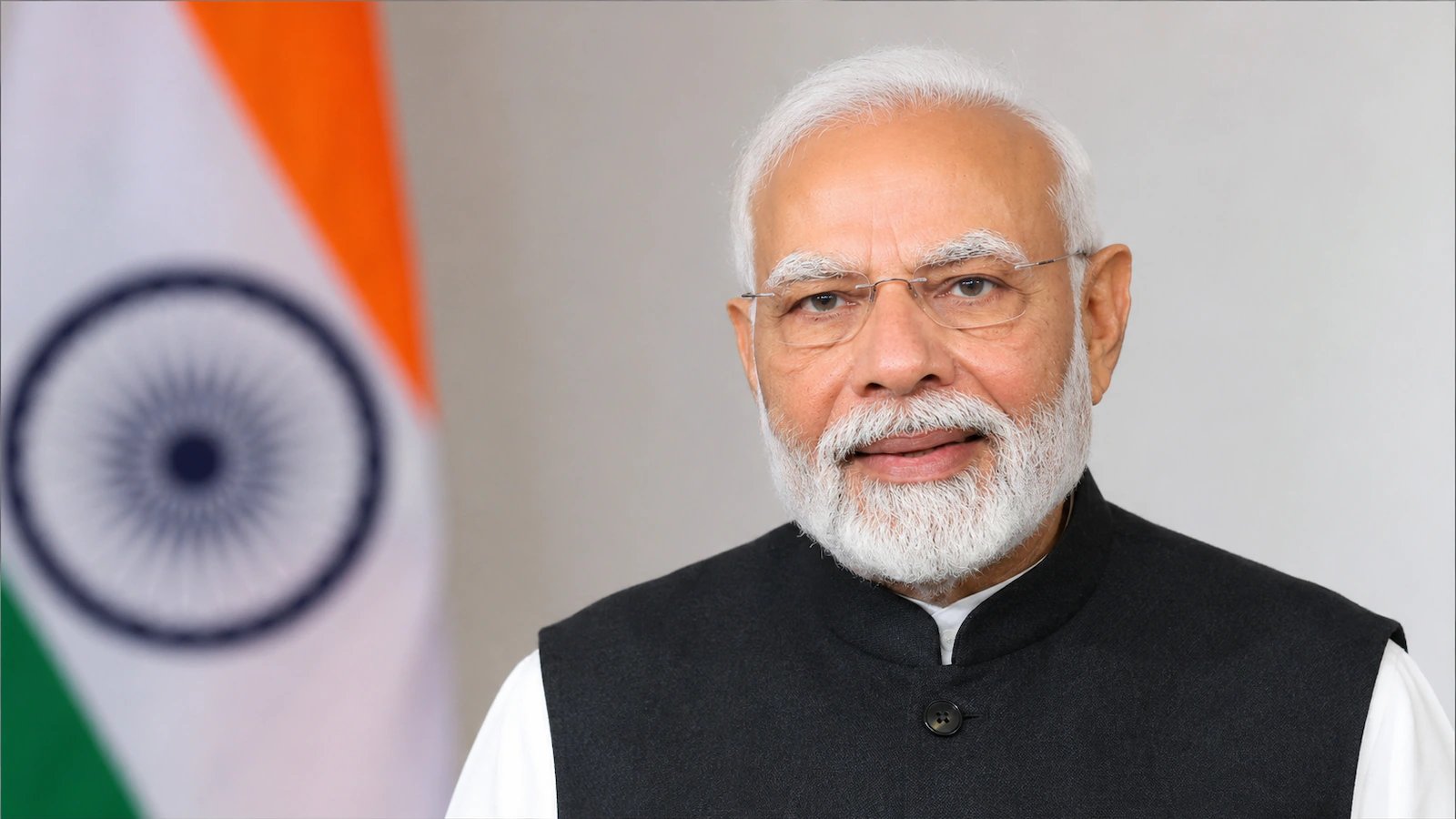
PM Modi Champions Collaborative Water Security Strategy, Calls for AI-Driven Data and Public Movements
New Delhi: Prime Minister Narendra Modi has issued a clarion call for a transformative shift in India’s approach to water security, urging states to move beyond isolated governance toward a collaborative “Team India” model. Speaking at the valedictory session of the two-day National Departmental Summit on Water, the Prime Minister emphasized that managing the nation’s water resources requires a fusion of modern technology, cross-state learning, and sustained public participation.
The summit, organized by the Ministry of Jal Shakti, serves as the inaugural event in a new series of departmental summits designed to strengthen cooperative federalism. By bringing together ministers and senior officials from across the country, the initiative aims to treat water management as a collective national priority rather than a disparate state-level task.
A Data-Driven Future
Recognizing the critical role of information in resource management, PM Modi advocated for robust water data governance. He explicitly called for the integration of artificial intelligence to standardize data collection and analysis. By creating a uniform digital framework, the government aims to enable anticipatory planning, allowing administrators to address water scarcity before it reaches a crisis point.
The “Jal Utsav” and Community Action
Moving beyond infrastructure, the Prime Minister stressed that water conservation must evolve into a mass movement, or Jan Bhagidari. He proposed the promotion of “Jal Utsav” (Water Festivals) to heighten public awareness and foster community ownership of water bodies.
“Water conservation cannot remain solely a government responsibility,” the Prime Minister noted, reinforcing the philosophy of “Jal jahan gire, wahin sanchit karein”—the idea that rainwater must be captured and stored as close to its point of contact as possible. This community-centric strategy aligns with the government’s ambitious target of creating 2 crore new water conservation structures by May 31, 2027.
Learning Across Borders
A recurring theme during the summit was the necessity for states to avoid “reinventing the wheel.” PM Modi encouraged structured inter-state study visits, where farmers, officials, and public representatives can observe successful conservation models in other states and adapt them to their own local geographies.
The summit identified four core priorities to guide this collaborative journey:
- Accelerating infrastructure: Expediting the completion of key water projects.
- Sustaining Jal Sanchay: Promoting rainwater harvesting through broad public participation.
- Long-term security: Ensuring the sustainability of drinking water sources.
- Operational Excellence: Improving the maintenance of rural water schemes under the Jal Jeevan Mission 2.0.
From Policy to Practice
Union Jal Shakti Minister C.R. Patil underscored that the summit was not merely a forum for discussion but a blueprint for action. The Prime Minister urged the participants to treat the event as a beginning, demanding continuous follow-ups on the time-bound outcomes established during the two-day meeting.
As part of the broader vision for sustainable development, the summit also focused on the reuse of treated water for industrial and agricultural purposes and the integration of dam safety protocols into school educational curricula.
By leveraging cutting-edge technology, encouraging cross-state knowledge sharing, and empowering local communities, the government aims to turn the challenge of water scarcity into an opportunity for national growth, ensuring a secure and water-abundant future for India.