







Across Greater Manchester and the wider North West of England, the agricultural sector is facing unprecedented challenges, driven to a breaking point by the UK’s driest July on record. Farmers, who are the backbone of the region’s food supply, are struggling with severely parched lands, dwindling feed supplies, and the looming threat of animal diseases. This crisis not only impacts the livelihoods of farming families but also carries significant implications for national food security.
Margaret Lees, whose family has cultivated Park Farm in Walmersley since 1957, describes a situation she has never witnessed in her more than three decades in farming. “Everything’s running dry basically,” she states, explaining that the lack of grass has forced them to prematurely use their winter silage, a critical feed reserve. This unprecedented depletion of winter provisions highlights the severity of the drought, threatening the sustainability of her dairy and beef herds.
The difficulties extend beyond feed shortages. Livestock farmers like Margaret are engaged in a daily battle to provide water to their dry fields and shelter their cattle from the relentless heat. Adding to their worries is the northward spread of the Bluetongue virus, an animal disease that typically affects warmer climates. Margaret emphasizes the urgent need for government intervention, advocating for direct engagement with farmers to devise timely and effective solutions. Her concern is that without such action, food shortages are “inevitable.”
Becki Fielding, the NFU Lancashire County Chair, echoes these concerns, highlighting the drastic measures farmers are taking. On her own dairy farm, cows are now kept indoors during the day to mitigate heat stress, a practice unheard of in the last 50 years. She underscores that the current weather conditions, where grass simply ceases to grow above a certain temperature, represent one of the most significant challenges farmers have ever encountered.
Fielding points out that the core issue is not a nationwide lack of rainfall, but rather an inadequate capacity to store water for use during dry spells. She advocates for substantial investment in water management infrastructure and a more supportive government planning framework to facilitate better water capture and storage. Fielding also expresses hope that local political leaders, specifically mentioning Andy Burnham, will prioritize solving these critical agricultural issues.
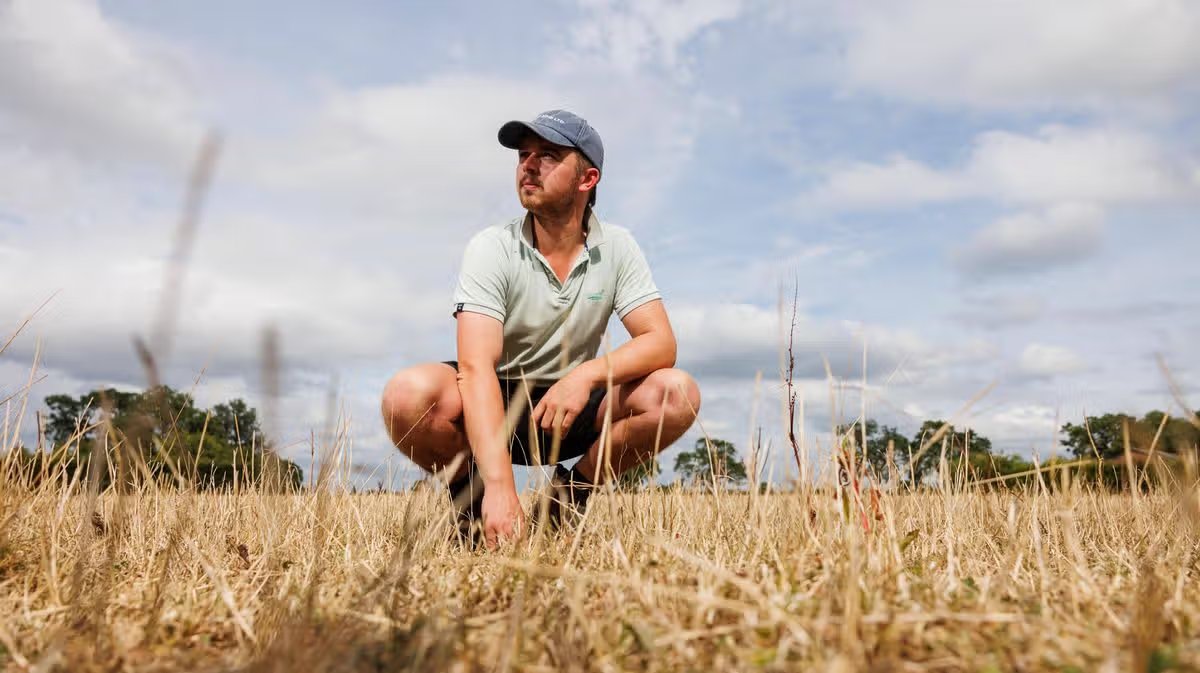
Further south, in Mobberley, Cheshire, the landscape at Dairy Farm tells a similar story of drought and despair. Jack Ancell, an NFU Student and Young Farming Ambassador who has been a livestock farmer since childhood, confirms this year as the worst he has experienced. To protect his herd, he rises before dawn to allow his cattle to graze in the cooler morning hours, constantly monitoring their welfare. The extreme conditions also bring additional challenges, such as swarms of flies attacking his livestock, adding to the daily struggles.
Ancell also notes the premature ripening of crops and the difficulty of preparing the ground for the next planting season due to the hardened soil. Many farmers have already exhausted their winter feed, placing immense reliance on potential autumn grass growth. Beyond climatic challenges, farmers also face issues such as public littering, which poses a significant fire risk in the dry fields.
For other agricultural businesses, traditional farming has become financially untenable without diverse income streams. Olly Harrison, a farmer and popular YouTube personality, reports drastically reduced crop yields, forcing him to diversify into ventures like dog-walking fields, office rentals, and recycling tree waste to sustain his farm. He laments the necessity of non-farming income to keep his agricultural operations afloat.
Dan Thornicroft, who runs Libby’s Patch Farm in Cheshire, warns that these regional crop failures will inevitably lead to increased prices for consumers. He observes that sheds are only half full after an unusually early harvest, signifying a reduced food supply that will impact the cost of staples like bread and beef.
Paul Tompkins, NFU Deputy President, highlights the widespread concern among farmers regarding poor yields and the immediate need for more responsive abstraction licensing systems. He calls for a strategic approach to water management, emphasizing its crucial role in food security.
In response to these escalating concerns, the government recently announced a £65 million emergency funding package. This includes £15 million for on-farm reservoirs, an additional £50 million for the Sustainable Farming Incentive 2026, and environmental scheme flexibilities that allow farmers to utilize protected land for feed without financial penalties. Planning reforms are also underway to streamline the process for building farm reservoirs.
Prime Minister Andy Burnham, during a visit to farms in the South West, pledged to treat homegrown food production as a matter of national security. He acknowledged the severe financial strain and anxiety faced by farmers due to lower incomes, higher costs, and the persistent drought. Burnham emphasized that farmers should not bear the risks of a changing climate alone and committed to supporting them through increased funding, reservoir construction assistance, and easier access to water resources.
Despite these governmental pledges, Margaret Lees of Park Farm remains acutely aware that prompt action is paramount for the survival of family farms. She reiterates the urgent need for direct communication between government and farmers to find practical solutions, expressing a hopeful, yet cautious, sentiment: “There’s no grass growing at the moment. It’s just a matter of just hoping for the rain.”