








The UK’s first council rights of nature framework recognises ecosystems have an intrinsic right to exist, writes the cabinet member for nature and climate transition at Maidstone BC.
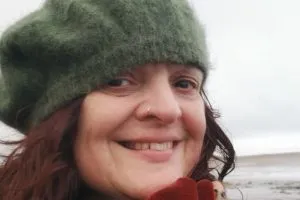
Rachel Rodwell (Green), cabinet member for nature and climate transition, Maidstone BC
Nature doesn’t vote, attend consultations or submit planning objections, yet in local government, our decisions shape its fate every single day.
If someone tried to build over my home without my consent, or challenged my right to exist, the law would protect me. There are clear legal frameworks, and people empowered to speak out and intervene on my behalf. Nature has no voice and, if those of us with the power to act do not step in, who will?
In local government we must strike the balance between protecting green spaces, and complying with national housing policy, infrastructure demands and economic growth. Never has the need been greater for a more accountable approach to nature’s protection.
Our decision to adopt a rights of nature framework is not a symbolic, nor is it an attempt to step beyond our legal powers. It is a deliberate, practical response to make sure nature is considered when our decisions have consequences for the natural systems that underpin our communities.
Whilst this is a first in the UK, recognising that ecosystems have an intrinsic right to exist is well established internationally. However, we are operating within a tight legal framework, and it was challenging to recognise the rights of nature in a responsible way within existing governance.
Statutory obligations
The rights of nature was put to council by a cross‑party motion in October last year. It did not ask for a declaration for its own sake; it asked officers to explore how rights of nature principles could be translated into action using the tools councils already have such as planning policy, land management, service delivery and corporate governance.
Following detailed officer research and legal advice, we were keen to avoid creating a standalone policy or symbolic charter. Instead, the cabinet endorsed a framework that embeds rights of nature directly into the council’s biodiversity and climate change action plans, ensuring nature’s interests are considered alongside social, economic and financial factors in decision‑making rather than sitting outside them.
Any new framework must be delivered through existing budgets and officer capacity
We had to consider our statutory obligations. We can’t just opt out of housing delivery, infrastructure planning or national policy requirements. Recognising the rights of nature does not change that legal reality. It was clear from the outset that development would not stop, but that how development is planned and conditioned matters enormously.
We also had to think about deliverability and cost. In a constrained financial environment, any new framework must be delivered through existing budgets and officer capacity. Our approach avoided creating new governance layers and delivers through existing work such as biodiversity net gain, tree strategy, river health, green infrastructure and nature‑based solutions.
It is important that this decision stands up to public scrutiny, planning challenges and, where necessary, legal challenge. That is why the framework focuses on strengthening how evidence is used, how trade‑offs are assessed, and how long‑term environmental resilience is factored into decisions, not on granting enforceable legal personhood to landscapes or rivers.
Implementation
The declaration is about ensuring nature is not treated as an afterthought and that growth targets are not met at nature’s expense. In practical terms, recognising the rights of nature changes the lens through which decisions are made, rather than the legal powers available to make them:
- For planning, it means stronger scrutiny of ecological impact, river health and tree retention, and greater emphasis on habitat connectivity and long‑term stewardship.
- For land management, it reinforces a shift towards conservation grazing, soil restoration and species recovery.
- For climate resilience, it accelerates the use of nature‑based solutions, recognising that healthy ecosystems are critical infrastructure in their own right.
We are already working hard to respect the rights of nature in everything we do. We have a 20% biodiversity net gain requirement for new developments; our officers have planted thousands of native trees and hedgerows and delivered community ‘tiny forests’.
We are proud five of our parks now hold Green Flag status, including in town centre spaces, underlining that nature recovery is not confined to rural areas. Recently, we have ring-fenced just under £500,000 for grants though our nature recovery fund and we were able to support High Weald Swifts in offering free swift nesting boxes to our residents.
Implementation is tied into existing governance cycles. Progress will be monitored through annual updates to the council’s biodiversity and climate change action plans, ensuring member oversight and transparency, rather than relying on aspirational statements that sit outside accountability structures.
Action not symbolism
This decision matters not because it is ‘first,’ but because it demonstrates a journey that other councils can take without overpromising or exceeding their powers.
Local government is increasingly being asked to resolve conflicts between growth, climate adaptation and ecological decline. Recognising the rights of nature provides a coherent framework for navigating those conflicts, helping councils articulate why certain trade‑offs are made, what is non‑negotiable, and how long‑term environmental resilience supports social and economic wellbeing.
For a sector under pressure, that clarity matters. Nature is not a competing interest to be balanced away; it is the foundation on which places function. Embedding that understanding into everyday decision‑making is not radical. It is responsible.
Our approach shows that rights of nature, when grounded in action rather than symbolism, can be a practical tool for modern local government, one that aligns environmental stewardship with democratic accountability and deliverable outcomes.
Rachel Rodwell (Green), cabinet member for nature and climate transition, Maidstone BC