








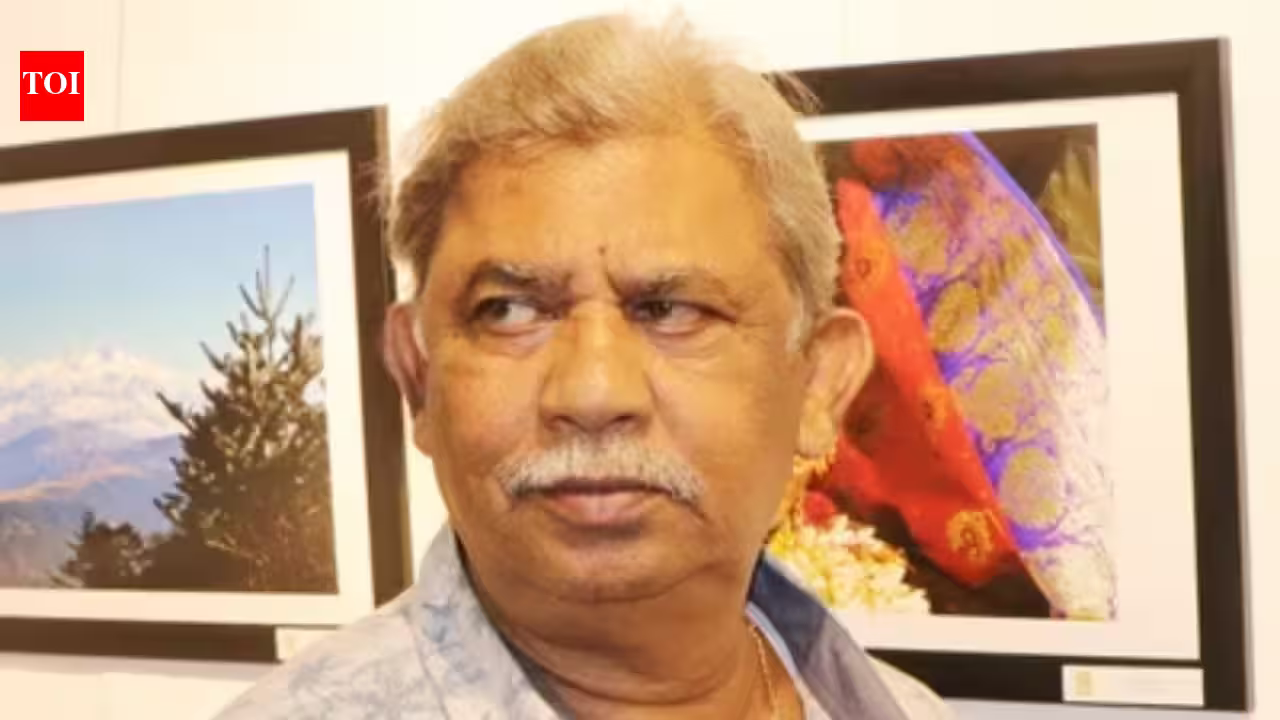
The Bengali filmmaker Raja Sen, a prominent figure in Indian cinema renowned for his poignant narratives and insightful portrayals of human relationships, passed away at the age of 71. His demise on Sunday marked the end of a prolonged and courageous battle with various age-related ailments. Sen, a three-time recipient of the prestigious National Film Award, had been under intensive care at Kolkata’s SSKM Hospital following a recent deterioration in his health.
Sources indicate that Sen was admitted to the state-run medical facility in a critical condition, necessitating ventilator support. His health struggles were not a recent development, as he had been grappling with multiple health complications for several years. The origins of his health decline can be traced back to a severe back injury sustained after a fall on the sets of his film ‘Maya Mridanga’. While initially not deemed critical, this injury gradually impacted his mobility, setting the stage for future health challenges.
Earlier this year, Raja Sen experienced a significant weakening in the lower part of his body. Subsequent medical examinations revealed a complex neurological condition, which led to a major surgery in February. Although his condition reportedly showed improvement for a period after the operation, his health took a turn for the worse in recent weeks, culminating in his critical hospitalization.
Born in Kolkata on November 10, 1955, Raja Sen embarked on his creative journey in Bengali television before making a successful transition into feature filmmaking. His early work in television included directing acclaimed adaptations such as ‘Adarsha Hindu Hotel’, ‘Arogya Niketan’, and ‘Tarashankarer Chhoto Galpo’. Throughout his career, whether through feature films or documentaries, Sen maintained a deep connection to Bengal’s rich literary and cultural traditions, reflecting them eloquently in his cinematic creations.
His feature film debut, ‘Damu’, released in 1996, starring the talents of Raghuvir Yadav, Satya Banerjee, and Sabyasachi Chakrabarty, garnered significant critical acclaim and earned him his first National Film Award for Best Children’s Film. His commitment to exploring diverse facets of life was further exemplified by ‘Atmiyo Swajan’, which received the National Film Award for Best Film on Family Welfare. Sen’s documentary on the revered Rabindra Sangeet exponent Suchitra Mitra was also recognized with a National Film Award for Best Arts/Cultural Film, underscoring his versatile talent.
Beyond these award-winning productions, Raja Sen’s extensive filmography includes notable titles such as ‘Chakrabyuha’, ‘Desh’, ‘Debipaksha’, ‘Krishnakanter Will’, ‘Tinmurti’, ‘Laboratory’, ‘Moubone Aaj’, ‘Colonel’, and ‘Maya Mridanga’. Each of these works contributed to his legacy as a filmmaker whose cinema was deeply rooted in the intricacies of human relationships, the social realities of his time, and the vibrant cultural tapestry of Bengal. Raja Sen is survived by his beloved wife, Papiya Sen, and their daughters, Subhasree Sen and Sreyoshi Sen, who carry forward his memory and artistic spirit.