







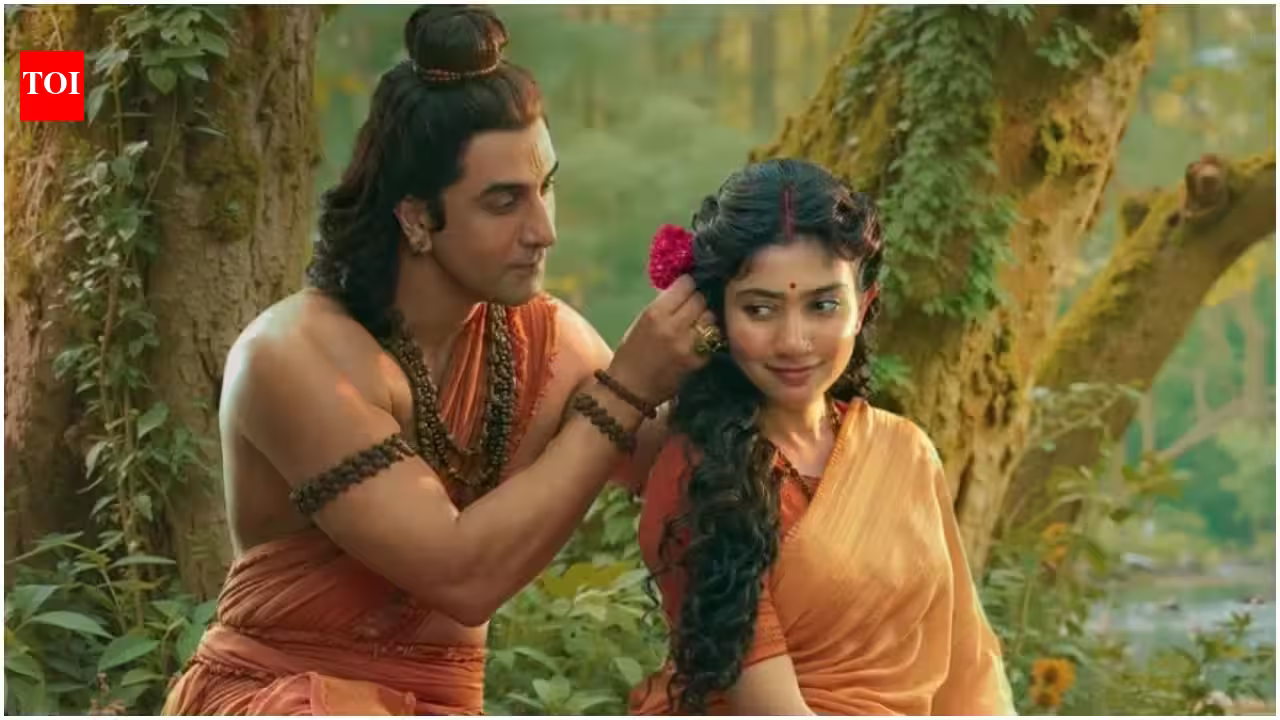
The cultural phenomenon that is Nitesh Tiwari’s Ramayana: Part 1 shows absolutely no signs of tapering off. As the dust settles on its second Monday, the numbers are in, and they paint a picture of a film that has moved beyond the status of a “blockbuster” and into the realm of a genuine national event. With a staggering Rs 32 crore collected on its twelfth day, the epic is now breathing down the neck of the coveted Rs 800 crore milestone—a feat that once seemed like a Herculean task for even the biggest franchise films.
For industry analysts, the success of Ramayana is a masterclass in modern distribution. By weaving together the immense star power of Ranbir Kapoor, the cultural resonance of the source material, and the strategic involvement of Yash—both as a producer and an architect of the film’s pan-India appeal—the production has managed to sustain a level of engagement rarely seen in the post-pandemic box office landscape.
The Geography of Success: A Pan-India Powerhouse
The language-wise breakup for Day 12 provides a fascinating glimpse into how Ramayana is playing across the nation. While the Hindi version naturally dominates the conversation, contributing a robust Rs 23.75 crore, the film’s performance in regional markets proves that the “Pan-India” label isn’t just marketing fluff.
The Malayalam, Kannada, Tamil, and Telugu versions combined for a significant portion of the daily take, proving that the visual spectacle orchestrated by Nitesh Tiwari transcends linguistic barriers. With 22,365 shows running across India on day twelve alone, the film has managed to maintain a footprint that keeps it front and center in the public consciousness. While there was an expected drop of 57.3% from the weekend peak, such fluctuations are standard for any high-performing feature during its second week. The fact that it still pulled in Rs 32 crore on a Monday is a testament to the film’s “must-watch” status, drawing in audiences who were perhaps waiting for the initial rush to subside.
Behind the Lens: The Visionaries and the Ensemble
Director Nitesh Tiwari, working in tandem with screenwriter Shridhar Raghavan, has achieved what many thought impossible: a respectful, technically sophisticated, and commercially viable adaptation of the Ramayana. By synthesizing various iterations of the epic—most notably the Valmiki Ramayana—they have created a narrative that feels both ancient and refreshingly immediate.
The casting choices have been equally pivotal. Ranbir Kapoor’s portrayal of Lord Rama has been lauded for its poise and restraint, providing a steady anchor for the film’s more ambitious sequences. Sai Pallavi’s turn as Sita has received widespread acclaim for its grace, while the presence of Yash as Ravana has brought an intensity that arguably provides the film with its necessary dramatic weight.
The ensemble cast—featuring heavyweights like Lara Dutta, Vivek Oberoi, and the iconic Arun Govil—lends a sense of gravitas to the world-building. With the announcement that Sunny Deol will step into the role of Lord Hanuman for the sequel slated for 2028, the production team has effectively turned Ramayana into a long-term cinematic universe. This forward-looking strategy suggests that the producers, Namit Malhotra and Yash, are not merely looking at the immediate windfall, but are committed to building an IP that will define a generation of Indian cinema.
Crossing Borders: The IFFI Spotlight
Beyond the cold, hard numbers of the box office, Ramayana is beginning to exert its influence on the global stage. The announcement that the film will serve as the opening screening for the BRICS segment at the 57th International Film Festival of India (IFFI) in Goa is a significant feather in the production’s cap.
IFFI has long been the premier platform for showcasing the diversity of world cinema, and Ramayana being chosen as the anchor for the BRICS segment is a nod to its technical prowess and its ability to act as a cultural touchstone. As audiences from the 11 BRICS member nations prepare to see the film, it highlights how Indian mythological storytelling is evolving to meet international standards of VFX and narrative pacing. It is a moment where the commercial success of the domestic market meets the soft-power ambitions of the Indian film industry.
What Lies Ahead for the ‘Rise of a Legend’?
As we look toward the end of the second week, the million-dollar question remains: how far can this reach? Given the current trajectory and the lack of major competition in the immediate pipeline, the film is perfectly positioned to eclipse the Rs 800 crore mark by the end of the current week.
Whether it can climb toward the elusive Rs 1,000 crore club will depend entirely on its holding power through the third weekend. However, the team behind Ramayana has already achieved something more important than a specific digit in a balance sheet: they have reinvigorated the theatrical experience for a demographic that had largely shifted their viewing habits to streaming platforms.
The film has successfully converted a sacred text into a shared, communal experience. In the age of fragmented media, getting millions of people into the same dark rooms, across all corners of the country, to watch the same story is a feat in itself. Ramayana: Part 1 is not just a film; it is a signal that big-screen storytelling, when handled with vision and scale, remains the most powerful medium in the country. For now, the audience continues to vote with their feet, ensuring that the legacy of this “Rise of a Legend” is only just beginning.
Disclaimer: This content is auto-generated for informational purposes only.
Source: Read Original News