







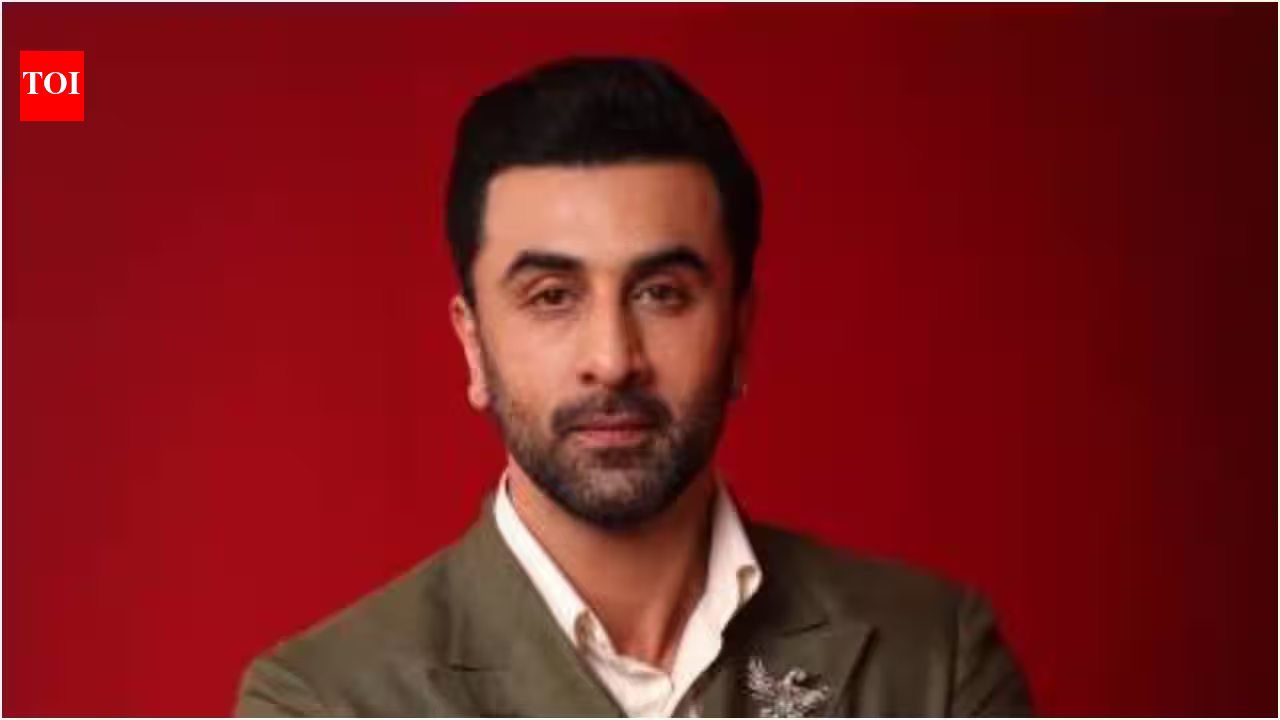
The air is thick with anticipation, and for the Indian film industry, the stakes have never felt higher. As the release of Nitesh Tiwari’s Ramayana looms on the horizon, the promotional trail has become a spectacle of its own. In a recent, high-energy sit-down with Star Talks, the heavy hitters of this ambitious project—Ranbir Kapoor, Yash, Rakul Preet Singh, Ravi Dubey, and director Nitesh Tiwari—pulled back the curtain on the creative gymnastics required to bring one of the world’s oldest epics into the modern cinematic era.
But it wasn’t just the discussion of VFX or casting that set social media ablaze. It was a single, provocative comment from the film’s leading man that has sparked a nationwide debate on the intersection of ancient mythology and futuristic technology.
Ranbir Kapoor and the “Ancient Elon Musk” Narrative
The conversation hit a crescendo when the host turned the spotlight toward the film’s weaponry and technical grandeur, specifically praising the work of the Academy Award-winning studio DNEG. As the discussion touched upon the legendary visuals of the film, the host remarked on how the mythical artifacts of the Ramayana—specifically the flying chariots—could easily rival the breakthroughs of Silicon Valley.
Ranbir Kapoor, never one to shy away from a bold take, jumped into the conversation with a smirk that felt part-tease, part-conviction. “Elon Musk recently invented a flying car,” Kapoor noted. “I think India did it 5,000 years ago!”
The comment was vintage Kapoor: charismatic, slightly provocative, and deeply rooted in the pride of the material he is currently filming. While some critics might dismiss it as a hyperbolic soundbite designed to stir up headlines, the sentiment reflects a larger, growing trend in Indian pop culture: the desire to frame our ancient heritage not just as “religion,” but as a precursor to modern scientific achievement. By comparing Ravana’s aerial dominance to Musk’s current engineering endeavors, Kapoor effectively repositioned the Ramayana from an ancient fable to a prehistoric sci-fi blueprint.
Unpacking the Legend: What is the Pushpaka Vimana?
At the center of Kapoor’s comparison is the Pushpaka Vimana, perhaps the most iconic piece of mythical hardware in the epic. For the uninitiated, the Pushpaka Vimana isn’t merely a chariot; in the source text, it is a self-propelled, gravity-defying flying palace.
In Nitesh Tiwari’s adaptation, the visual team has been tasked with translating these descriptions into something that feels grounded yet awe-inspiring for a contemporary audience. The trailers have already given us a glimpse of this massive, ornate structure drifting through the clouds—a feat of CGI that serves as the film’s aesthetic anchor. It represents the pinnacle of divine engineering, a symbol of power that transcends the limitations of its era, much like how we perceive Tesla’s futuristic innovations today.
The Politics of Power: Ravana’s Theft
To understand why the Vimana holds such weight in the film, one must look at the mythology behind it. It wasn’t originally forged for the Demon King; it was a creation of Vishwakarma, the celestial architect, gifted to Lord Brahma and subsequently handed down to Kubera, the god of wealth and Ravana’s own half-brother.
The tragedy and the power dynamic of the Ramayana are perfectly encapsulated in how Ravana comes to possess the chariot. He didn’t earn it; he took it. By defeating Kubera, Ravana claimed the ultimate status symbol, effectively “hijacking” the technology of the heavens. In the hands of a director like Tiwari, this isn’t just a plot point—it’s a character study. Ravana’s reliance on the Pushpaka Vimana signifies his ego, his arrogance, and his refusal to be bound by the terrestrial limits imposed on mortal men. It is the original “hypercar,” and as the film’s marketing emphasizes, it is an essential piece of the visual storytelling that will differentiate this version from the countless iterations that came before.
A Titan of a Production: The People Behind the Myth
The sheer scale of this project is unprecedented. Nitesh Tiwari, best known for his sensitive handling of human drama in Dangal and Chhichhore, is taking on the monumental task of split-narrative filmmaking. Ramayana is designed as a two-part epic, a structure that allows for deep character development before the inevitable clash of destinies.
The casting is nothing short of a strategic masterclass. Ranbir Kapoor as Lord Rama brings a necessary gravitas, while Sai Pallavi’s casting as Sita has been widely hailed as a perfect union of grace and internal strength. The inclusion of Yash—the superstar who turned the KGF franchise into a pan-Indian phenomenon—as Ravana is perhaps the film’s most inspired gamble. Yash brings a predatory, screen-dominating charisma that the character of Ravana demands. Toss in Sunny Deol as the formidable Lord Hanuman and Ravi Dubey as the fiercely loyal Lakshman, and you have an ensemble that balances pedigree with raw, star-studded magnetism.
Music and Legacy: The November 5 Countdown
If the cast and the visuals aren’t enough, the production has secured a dream team for the sonic landscape: AR Rahman and Hans Zimmer. To have the melodic genius of India collaborating with the titan of Hollywood’s blockbuster soundscapes suggests that the film is aiming for a global language.
With the first part hitting theatres on November 5—strategically timed with the Diwali season—the film is leaning into the cultural calendar to maximize its impact. It is a bold, high-budget, high-stakes bet that the Indian audience is ready to see their myths treated with the same reverence and technical spectacle that Western audiences have enjoyed for decades with franchises like Lord of the Rings or Dune.
Whether or not the film successfully bridges the gap between 5,000-year-old folklore and the Elon Musk-esque future remains to be seen. But one thing is certain: Ranbir Kapoor and his team have successfully moved the goalposts of expectation. When the lights go down on November 5, we won’t just be watching a movie; we’ll be witnessing a culture’s attempt to reclaim its own legends, one flying chariot at a time.
Disclaimer: This content is auto-generated for informational purposes only.
Source: Read Original News