







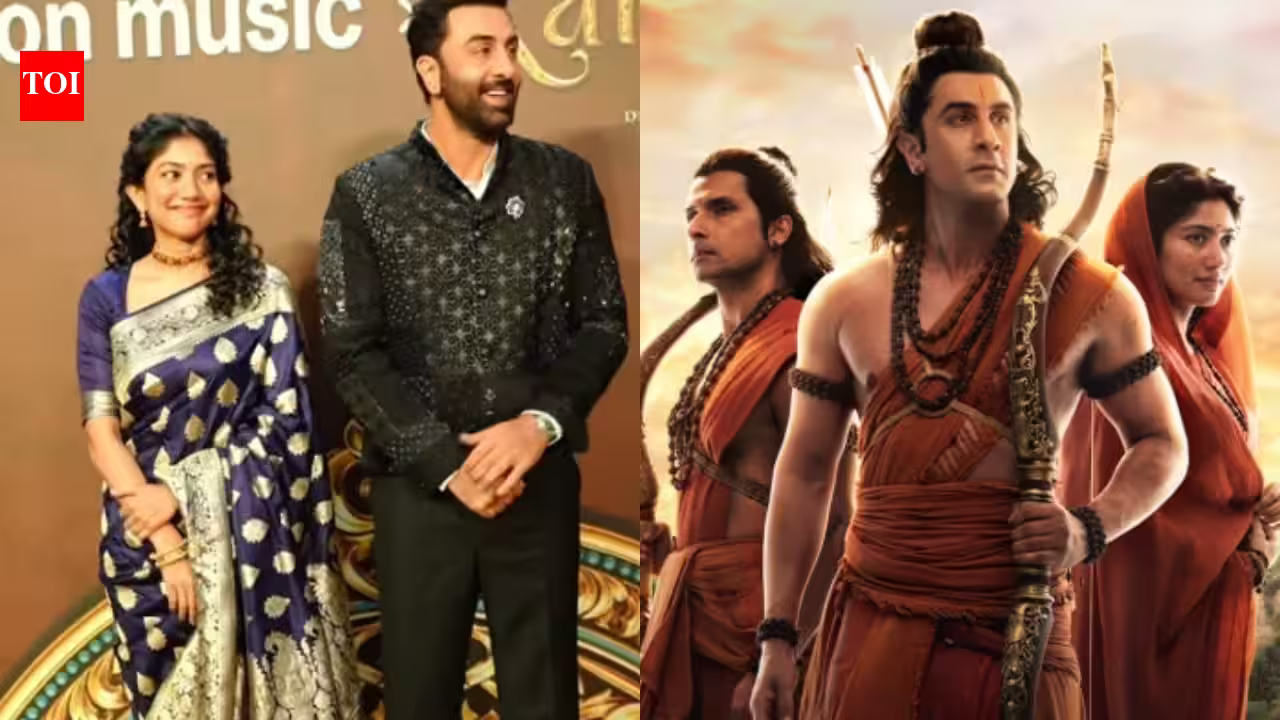
The atmosphere at the Chennai Trade Centre on October 21 was nothing short of electric, serving as a microcosmic preview of the sheer scale Nitesh Tiwari is aiming for with his upcoming mythological epic, Ramayana. While the music launch was intended to showcase the sonic landscape of what is arguably India’s most anticipated film, the headlines were quickly hijacked by a compelling visual dichotomy: the understated, rooted elegance of Sai Pallavi and the staggering, globe-trotting luxury embodied by Ranbir Kapoor.
As the film prepares to take the world by storm in late 2026, this event offered a perfect snapshot of the two worlds colliding within this massive production. It wasn’t just a promotional stop; it was a masterclass in modern Indian star power.
Sai Pallavi: The Elegance of Tradition
In an era where red-carpet appearances are often dominated by avant-garde trends and western-inspired silhouettes, Sai Pallavi’s choice for the Ramayana event felt like a breath of fresh air. Choosing to lean into the cultural gravitas of the film she is currently filming, the Premam star opted for a stunning navy-blue Banarasi Katan silk saree that seemed to honor the timelessness of the epic narrative itself.
The saree, a masterpiece of craftsmanship, featured a heavy, broad border saturated in intricate silver zari work. The detailing wasn’t loud; it was precise, with delicate silver butis scattered across the deep blue canvas, mirroring a star-dusted night sky. By opting for elbow-length sleeves on her blouse, Pallavi leaned into a regal, classic silhouette that felt both modest and profoundly confident.
However, it was her choice of accessories that elevated the look from merely “traditional” to “curated.” She paired the cool-toned navy ensemble with a striking gold choker, inlaid with vibrant red and green precious stones. This intentional splash of color broke the monotony of the silver and blue, acting as a visual anchor that commanded attention without overwhelming her natural, minimalist aesthetic. It was a look that felt deeply connected to the character of Sita, suggesting a deliberate effort to embody the grace and composure required for the role.
Ranbir Kapoor and the Rs 11.5 Crore Statement
While Sai Pallavi’s ensemble spoke the language of heritage and grace, Ranbir Kapoor’s appearance offered a stark, high-octane contrast. If the Ramayana is the pinnacle of Indian storytelling, Kapoor’s wrist seemed to be aiming for the pinnacle of global horology.
According to reports circulating following the event—citing figures reaching approximately Rs 11.5 crore—Kapoor was spotted wearing a timepiece that effectively cost more than the annual budget of a mid-sized independent film. In the circles of elite watch collecting, such a piece isn’t just an accessory; it is an asset, a piece of engineering history, and a subtle signal of the star’s current standing in the global entertainment ecosystem.
The juxtaposition was impossible to miss. While he stood on stage as the man slated to play one of the most revered figures in human history, his wrist was adorned with a piece of modern luxury that felt entirely distinct from the ancient narrative of the film. It sparked a flurry of discourse online: does this represent the “New India” of cinema, where traditional epics are backed by unprecedented production budgets and international-level star lifestyles? Or is it simply the reality of an actor at the very top of his game, blending personal success with the demands of a high-profile promotional tour? Regardless, the watch did its job—it dominated the conversation.
The Maestro in the Room: AR Rahman
It would be a disservice to focus solely on the fashion when the event was, at its heart, a musical unveiling. The presence of the legendary AR Rahman added a layer of gravitas that grounded the spectacle. When a filmmaker like Nitesh Tiwari pairs with a composer like Rahman for a project as monumental as the Ramayana, the stakes are irrevocably raised.
Rahman’s involvement suggests that the sonic landscape of the film will move beyond the traditional mythological tropes we’ve seen in decades past. We are likely looking at a score that merges deep-rooted Indian classical motifs with the kind of grand, orchestral soundscapes that define international blockbusters. The chemistry on stage between the director, the lead cast, and the maestro hinted at a project that is being treated with the utmost reverence—a “labor of love” in the truest sense of the industry buzzword.
The Road to ‘Ramayana: Rise of a Legend’
Behind the flashbulbs and the luxury watches, there is a logistical behemoth brewing. Ramayana: Part 1, officially titled Ramayana: Rise of a Legend, is Nitesh Tiwari’s most ambitious swing to date. Co-written by Shridhar Raghavan and Shreyas Jain, the script is reportedly designed to honor the nuances of the Valmiki epic while utilizing the technical capabilities of contemporary VFX and production design.
The release strategy is equally massive. With a worldwide premiere scheduled for October 27, 2026, followed by a theatrical rollout on November 5, the film is aiming for total market penetration. Releasing in Hindi, Tamil, Telugu, Kannada, Malayalam, and English—all bolstered by the immersive experience of IMAX 3D—it is clear that the makers aren’t just targeting the Indian domestic audience; they are aiming for a global footprint.
As we look toward the second installment, slated for Diwali 2027, the Chennai event stands as a marker. It was the moment the public saw the faces of the mythic figures, the aesthetic direction of the production, and the sheer scale of the investment. Whether it is the traditional silk of a star like Sai Pallavi or the high-stakes luxury of Ranbir Kapoor, Ramayana has firmly established its position as the center of the cinematic universe for the next two years. The wait will be long, but the industry buzz confirms one thing: the legend is already rising.
Disclaimer: This content is auto-generated for informational purposes only.
Source: Read Original News