








Get free access to the most comprehensive World Cup coverage in The Athletic app.
World Cup fever is spreading. Have you caught it yet?
All 48 teams have now completed one of their three group matches at the tournament and several players have already made their mark, so it’s time to update our provisional pre-World Cup player rankings.
These are informed by The Athletic’s ratings model, which provides an objective assessment of each player’s contribution. Matchday one performances are heavily weighted in these rankings, but the best players heading into the competition retain some benefit of the doubt — class being permanent and all that.
Without further delay, here is the updated list. Please feel welcome to direct your thoughts and complaints to the comments section.
Ronaldo struggles and a World Cup player arrested | World Cup Daily Briefing
Megan Feringa and Amitai Winehouse
1. Lionel Messi — Argentina/Inter Miami (+24)
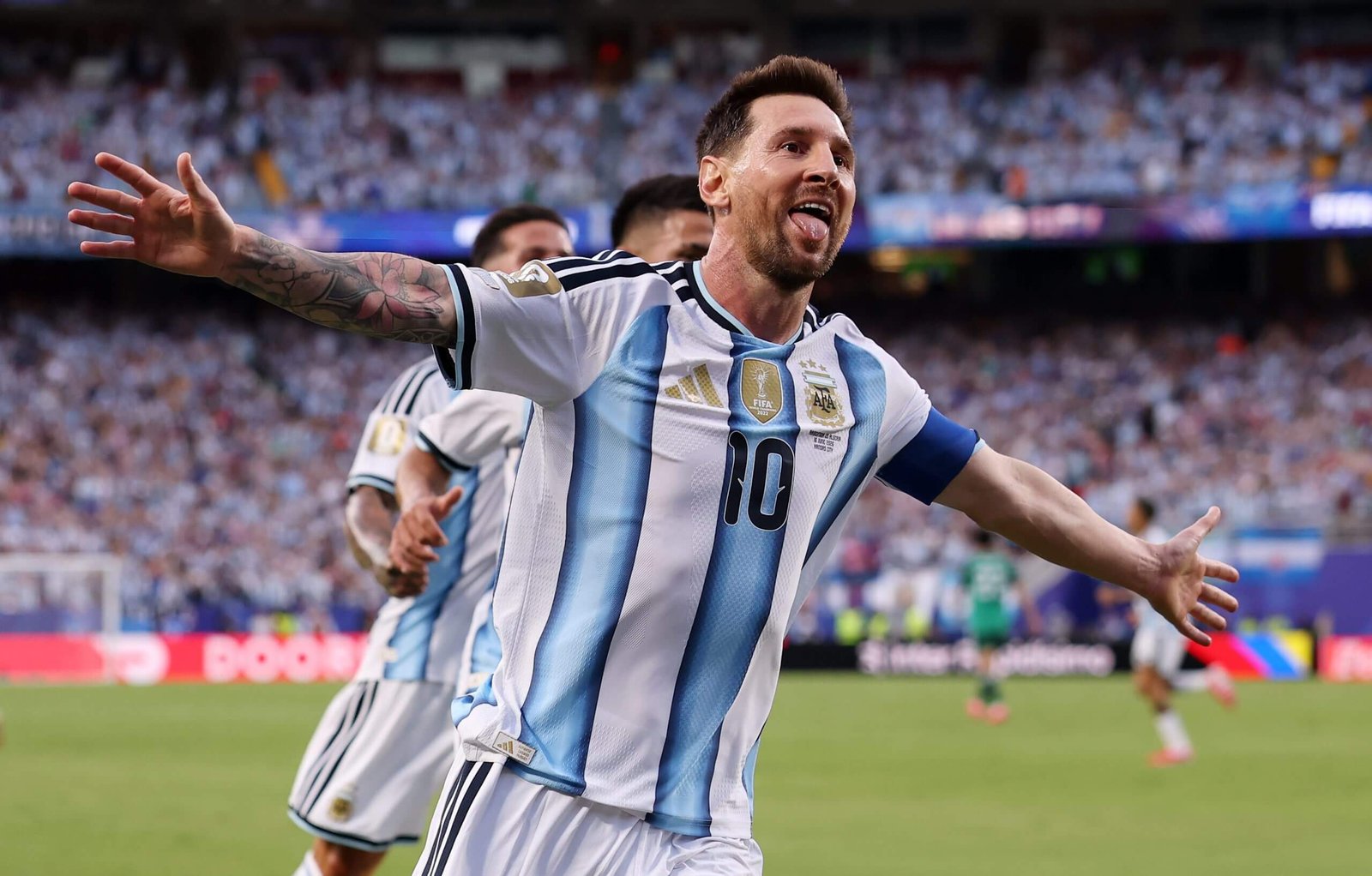
He could have been sent off against Algeria. Instead, the sport’s consensus GOAT scored his first World Cup hat-trick to move level with German hero Miroslav Klose at the top of the competition’s all-time scoring chart. As he approaches his 39th birthday on Wednesday, Messi still looks very capable of owning this stage.

Lionel Messi celebrates his opener against Algeria (Charlotte Wilson/Getty Images)
2. Harry Kane — England/Bayern Munich (same)
Europe’s best forward last season flexed his muscles against Croatia yesterday, even if he needed two tries at a penalty to get him started. Kane scored twice, was frequently England’s creative hub in attack and even made a vital block in his own penalty area to prevent any late drama in their 4-2 win.
3. Michael Olise — France/Bayern Munich (+1)
Enabled team-mate Kylian Mbappe to steal the headlines against Senegal. Olise created France’s opener with the pass of the tournament so far and repeatedly picked his way through the opposition lines. Manager Didier Deschamps is positioning him as the elegant No 10 of France’s terrifying attack, and this was a scintillating proof of concept.
4. Kylian Mbappe — France/Real Madrid (+2)
Delivered more evidence that the World Cup brings out his best. Unlucky not to win a penalty, took his first goal brilliantly from Olise’s pass and lashed in a late second to extinguish Senegal’s momentary hopes of a comeback. This is the level of leadership and lethality that France need him to maintain over the coming weeks.
5. Erling Haaland — Norway/Manchester City (+8)
Spare a thought for Iraq goalkeeper Jamal Hasan. The sight of Haaland bearing down on him as he chased a weak back pass was as terrifying as it gets in football, and underlined how desperate the gigantic Norwegian goal machine is to make the most of his first World Cup.
6. Luis Diaz — Colombia/Bayern Munich (+5)
Clipped a brilliant pass in behind the Uzbekistan defence for Daniel Munoz to flick home Colombia’s opener, then snuck a shot through the hands of Utkir Yusupov to restore his team’s lead after they had been pegged back. The early signs are that he has brought his club form to this tournament.

Luis Diaz and Daniel Munoz celebrate Colombia’s opening goal against Uzbekistan (Carl Recine/Getty Images)
7. Achraf Hakimi — Morocco/Paris Saint-Germain (+2)
Engaged in a heavyweight tussle with Vinicius Junior as well as providing his customary attacking thrust from right-back, helping his side carve through a startlingly porous Brazil midfield. A captain’s display.
8. Joshua Kimmich — Germany/Bayern Munich (+8)
Yes, it was only Curacao, but any fears about Kimmich’s influence being reduced at right-back were effectively allayed by two assists as Germany ran riot. Wherever he is deployed on the pitch, Kimmich remains a hugely important force for control and creation in Julian Nagelsmann’s team.
9. Vinicius Junior — Brazil/Real Madrid (+6)
Brazil did not have much going for them in a downright worrying opening game against Morocco, but Vinicius Jr lived up to his billing as their talisman, scoring a brilliant solo equaliser and posing a consistent threat down the left flank.
10. Jude Bellingham — England/Real Madrid (+9)
Shook off a quiet first half against Croatia to score one of the goals of the tournament early in the second, racing down the right flank, holding off a defender and finishing superbly from a tight angle. Few players in the world can produce the moments that he does.

Jude Bellingham is congratulated by Harry Kane and Noni Madueke after restoring England’s lead against Croatia (Francois Nel/Getty Images)
11. Declan Rice — England/Arsenal (+1)
Typically industrious at the heart of England’s midfield and supplied consistently excellent set-piece deliveries, most notably for Kane’s second goal. Also helped secure greater midfield control for Thomas Tuchel’s team in the second half in Dallas.
12. Bruno Fernandes — Portugal/Manchester United (-2)
Portugal were arguably the biggest disappointment of matchday one, but it was not for Fernandes’ lack of effort. He created a steady stream of danger against a stubborn DR Congo defence, but was hindered by the statue of a legend playing in front of him.
13. Pedri — Spain/Barcelona (-5)
Cape Verde’s epic display of defiance should not conceal that Pedri still produced one of the better individual midfield performances across the World Cup’s opening round of fixtures, dictating Spain’s probing possession and fully extending goalkeeper Vozinha himself without finding the net.
14. Dayot Upamecano — France/Bayern Munich (+10)
Upamecano was the primary defender assigned to deal with a very lively Nicolas Jackson and generally did so excellently, showcasing his cheat code recovery speed on several occasions. Senegal’s late consolation goal was not down to him.

Dayot Upamecano tussles with Senegal’s Nicolas Jackson (Jewel Samad/AFP via Getty Images)
15. Enzo Fernandez — Argentina/Chelsea (+11)
Messi was the unequivocal headliner against Algeria, but Fernandez offered a reminder that operating in a deeper playmaking role for this Argentina side seems to bring out a higher level in him. He will also be aware that this World Cup, like the last one, can put him in the shop window.
16. Joao Neves — Portugal/Paris Saint-Germain (+14)
Put his team ahead by once again demonstrating his surprising aerial prowess, and was generally a much more impactful midfield presence than his club and country team-mate Vitinha even as Portugal failed to do enough to put DR Congo away.
17. William Saliba — France/Arsenal (same)
Though less memorable than Upamecano against Senegal, Saliba nonetheless provided a highly secure foundation for France to sleepwalk through the first half at MetLife Stadium before blowing their opponents away in the second. Also not at fault for Ibrahim Mbaye’s late goal.
18. Yan Diomande — Ivory Coast/RB Leipzig (+17)
Elite clubs tracking Diomande’s progress will surely have been salivating over his excellent World Cup debut against Ecuador. While he was not directly involved in Amad’s late winner, he was the most dangerous man on the pitch and consistently stressed one of the competition’s most highly-regarded defences.
19. Ousmane Dembele — France/Paris Saint-Germain (-18)
France were great against Senegal, but Dembele was pretty much a decoy on the right flank to create space for the Mbappe/Olise connection to ignite. His enduring presence in this top 20 is based on reputation rather than World Cup performance and if he remains so peripheral, he will slide further.
20. Lamine Yamal — Spain/Barcelona (-17)
This will hopefully be just a temporary dip for Yamal, who came on in the 71st minute against Cape Verde and created a couple of dangerous moments without delivering the breakthrough that Spain needed. Coach Luis de la Fuente will be desperately hoping he is fit to start against Saudi Arabia on Sunday.

Lamine Yamal should improve as the tournament goes on (Buda Mendes/Getty Images)
21. Folarin Balogun — United States/Monaco (new entry)
Balogun earned his status as the highest new entry in this list with two excellent goals in the USMNT’s first-half blitz of Paraguay. His intelligent movement stretches defences and his cool finishing could be the X-factor that lifts Mauricio Pochettino’s side from frisky co-hosts to serious knockout-stage problem.
22. Christian Pulisic — United States/Milan (new entry)
He only played 45 minutes in Los Angeles, but Pulisic did more than enough to earn this ranking. One jinking run between two Paraguay defenders helped create the USMNT’s opener and he set up their second goal for Balogun. The pressure of being the American face of this World Cup does not appear to faze him.
23. Yasin Ayari — Sweden/Brighton and Hove Albion (new entry)
His restraint in not celebrating his first long-range screamer against Tunisia (his father’s home country) might have been the most impressive achievement of this World Cup, but even Ayari could not resist a smile when he fired in a thrilling second to punctuate a polished performance in the Swedish midfield.

Yasin Ayari scored two spectacular goals against Tunisia (David Ramos/Getty Images)
24. Kai Havertz — Germany/Arsenal (new entry)
Germany’s perennial agonising about their No 9 position has receded a little after their group opener against Curacao, and not just because of the way Havertz scored his two goals of their seven. His pressing, link play and movement also make him an intriguing focal point for Florian Wirtz and Jamal Musiala to orbit.
25. Vitinha — Portugal/Paris Saint-Germain (-20)
Portugal were ponderous and less than purposeful in possession against DR Congo and it is impossible not to penalise Vitinha in particular for that, given his midfield role. But is this team set up to accentuate his huge strengths as much as PSG are?
26. Alexander Isak — Sweden/Liverpool (new entry)
It was hugely encouraging to see Isak back to something approaching his best against Tunisia, sneaking a low shot inside the far post and winning the ball back high up the pitch for Viktor Gyokeres to score. His faint flick-on also allowed Mattias Svanberg’s goal to stand.
27. Crysencio Summerville — Netherlands/West Ham United (new entry)
Deployed on the right wing to accommodate Cody Gakpo, Summerville’s speed and direct running caused Japan problems before he cut infield and curled a pinpoint left-footed shot just inside the far post. He is carrying himself like he knows this World Cup can help secure a big move later this summer.
28. Florian Wirtz — Germany/Liverpool (+6)
Wirtz generally turns up for Germany and his talent for combinations in tight spaces created a scoring window for Felix Nmecha inside six minutes. He was unfortunate not to get on the scoresheet himself but can be a productive source of final-third invention when they come up against tougher opposition.
29. Bukayo Saka — England/Arsenal (+2)
Only had 18 minutes on the pitch against Croatia but found a way to make a decisive impact, seizing upon a loose ball in transition and playing a quick crossfield pass perfectly into the stride of fellow substitute Marcus Rashford, who scored England’s fourth. Will surely rise these rankings once he is starting games.
30. Virgil van Dijk — Netherlands/Liverpool (-2)
Scored his first World Cup goal with a perfectly measured header in off the post and provided his customary calming presence on the ball. But at almost 35 he is not quite the one-man wall he once was, and the Dutch conceding twice against Japan will prompt further questions about the defensive unit he leads.

Virgil van Dijk remains key to the Netherlands’ approach (Aric Becker/AFP via Getty Images)
31. Adrien Rabiot — France/Milan (new entry)
Not the most glamorous or expansive performer, but Rabiot played a key midfield role in containing Senegal’s transition threat alongside Aurelien Tchouameni while also linking defence and attack, picking the right moment and pass to spring Bradley Barcola free to score.
32. Ryan Gravenberch — Netherlands/Liverpool (new entry)
Takes on a little more playmaking responsibility for his country than he does for his club, and supplied the inviting cross from the right that Van Dijk converted. Also registered an assist for Summerville’s strike, though that attribution might be a little generous.
33. Elijah Just — New Zealand/Motherwell (new entry)
Tearing Iran’s defence apart with striker Chris Wood, Just’s first goal will go down as one of this tournament’s most impressive. His second was a simpler finish, but still made him the first New Zealand man to score twice at a World Cup.
34. Thibaut Courtois — Belgium/Real Madrid (-11)
Could do little to stop Emam Ashour’s excellent long-range strike for Egypt and was generally solid with his hands otherwise, but Courtois’ distribution with his feet often leaves a bit to be desired and it did not hugely help Belgium in their Seattle opener.
35. Federico Valverde — Uruguay/Real Madrid (-15)
Generally struggled to exert the level of midfield influence that Uruguay need him to have on games against Saudi Arabia, despite his willingness to crash the penalty area. Did force an exceptional save from Mohammed Al Owais with a low shot from distance late on.

Uruguay will need more from Federico Valverde (Lars Baron/Getty Images)
36. Hwang In-beom — South Korea/Feyenoord (new entry)
One of the best stories of the opening round. Hwang was at the heart of all of South Korea’s best play against the Czech Republic, and punctuated a masterful midfield display by sitting down and then dinking goalkeeper Matej Kovar before racing into the right channel and creating the winner for Oh Hyeon-gyu.
37. Desire Doue — France/Paris Saint-Germain (-8)
Far from France’s flashiest or most effective attacking performer against Senegal, but Doue’s comfort level receiving the ball under pressure still helped Deschamps’ team exert control and his positioning on the left maintained the space for Olise and Mbappe centrally.
38. Nuno Mendes — Portugal/Paris Saint-Germain (-24)
A big faller here, because of Portugal’s broader structural struggles. Threatened to score in Houston yesterday with one trademark surge up the left flank, but those moments were too few and far between.
39. Jamal Musiala — Germany/Bayern Munich (+9)
In the unusual position of needing to play his way into rhythm at a World Cup following his injury-shortened club season, Musiala made a close to ideal start against Curacao. His movement with and without the ball dovetailed superbly with Wirtz and Havertz, and his finish from Kimmich’s through ball oozed class.

Jamal Musiala scores against Curacao (Alexander Hassenstein/Getty Images)
40. Felix Nmecha — Germany/Borussia Dortmund (new entry)
Took his early goal brilliantly and almost scored another from outside the box before winning a penalty that Havertz converted. If he can combine solid possession play with this level of goal threat against better opposition than Curacao, he could become a fixture in this ranking.
41. Gabriel — Brazil/Arsenal (-34)
Brazil’s non-existent midfield left the Arsenal centre-back operating almost permanently in scramble mode against Morocco, but he was still caught out badly by Brahim Diaz’s pass that sprang Ismael Saibari clear to score. This is not the defensive environment Gabriel is used to at club level, and it showed.
42. Lee Kang-in — Korea Republic/Paris Saint-Germain (new entry)
A more understated contributor to the Korean comeback against the Czechs, but Lee showcased his quality with neat interplay in tight spaces and weighted a perfect chip through the opposition lines to give Hwang the chance to bring his team level. Further Group A games against Mexico and South Africa should afford him more chances to make his mark.
43. Nathaniel Brown — Germany/Eintracht Frankfurt (new entry)
Left-back no longer looks like a problem position for Brown, who will face tougher defensive challenges than Curacao posed on Sunday but aptly demonstrated his ability to impact the game in the final third with an assist for Nico Schlotterbeck from a corner kick, followed by a deft right-footed volley for Germany’s fifth goal.
44. Daichi Kamada — Japan/Crystal Palace (new entry)
Did anyone in Dallas’ AT&T Stadium know less about Kamada’s dramatic late equaliser against the Netherlands than the man himself? In any case, this ranking is more about the all-action midfield performance that drove Japan forward and ultimately earned them a deserved point from their Group F opener.

Daichi Kamada surprised himself with his equaliser against the Dutch (Aric Becker/AFP via Getty Images)
45. Ramin Rezaeian — Iran/Esteghlal (new entry)
There is always room in a ranking like this for a 36-year-old full-back and Rezaeian is here on merit, after keeping moving when the entire New Zealand defence had stopped to poke in Iran’s first goal before whipping in a delicious cross for Mohammad Mohebi to nod in their second.
46. Chris Wood — New Zealand/Nottingham Forest (new entry)
The clip of him elegantly chesting down a high ball and turning has gone viral on social media, but Wood’s hold-up play was even more integral to the success New Zealand had against Iran, creating panic in the defenders around him and space for Just to apply a clinical finishing touch.
47. Ismael Saibari — Morocco/PSV (new entry)
It was easy to see from the nonchalant manner in which he dinked the ball over an advancing Alisson why Bayern have moved to sign Saibari, a slick and versatile attacker who stressed the Brazil defence and looks well equipped to do further damage in Group C and beyond.
48. Bradley Barcola — France/Paris Saint-Germain (new entry)
Needed less than two minutes to underline why the depth of France’s firepower is so feared at this tournament, racing away from Kalidou Koulibaly onto Rabiot’s pass and angling a beautiful dink over goalkeeper Edouard Mendy to cement an impressive statement victory. Barcola’s speed and skill are devastating.

The devastating Bradley Barcola (Dan Mullan/Getty Images)
49. Nico Schlotterbeck — Germany/Borussia Dortmund (new entry)
Schlotterbeck was unfortunate that his two successful tackles led directly to Livano Comenencia’s historic goal for Curacao, but seemed to channel his frustration into the powerful header that restored Germany’s lead. He is a physical force and a huge presence in both boxes.
50. Vozinha — Cape Verde/Chaves (new entry)
Who else to complete this list but the 40-year-old goalkeeper who has gained 11 million Instagram followers in the past three days? Vozinha’s acrobatic defiance in the Cape Verde goal as Spain laid siege to his penalty area was exactly what the World Cup is supposed to be about. Long may it continue.