








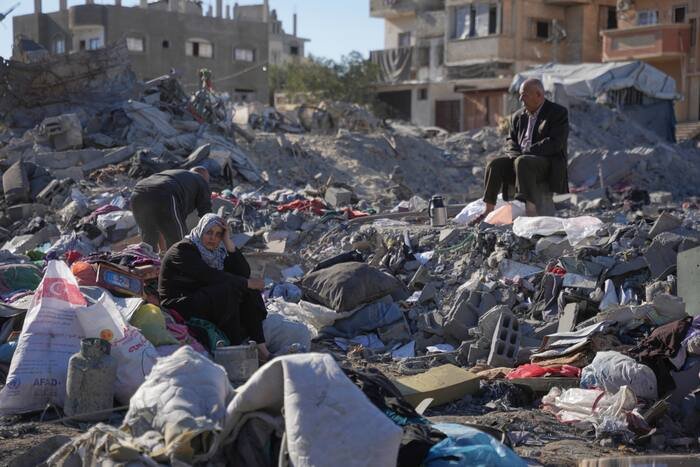
The Middle East remains a flashpoint of instability this Sunday as a series of violent incidents and hardening diplomatic postures ripple across the region. From renewed bloodshed in Gaza to high-stakes naval tensions in the Persian Gulf, global observers are closely monitoring the latest escalation. In the digital age, tech-driven news aggregation and real-time data monitoring from platforms like Google News have become vital tools for tracking these rapid developments as they unfold on the ground.
Escalating Tensions in Gaza
The cycle of violence in the Gaza Strip showed no signs of abating on Sunday. Israeli military operations resulted in the deaths of at least eight individuals, including a young boy. Medical officials at Nasser Hospital confirmed that five people were killed during an airstrike in the southern city of Khan Younis. Simultaneously, a separate strike in Gaza City claimed three lives, including the child, and left a woman in critical condition.
The Israel Defense Forces (IDF) stated that these operations were targeted, aimed at neutralizing specific militant threats in the region. Since the onset of the conflict in October 2023, the humanitarian crisis has deepened significantly. Data from the Gaza Health Ministry indicates that the total death toll has now surpassed 74,500. While a ceasefire has been in place since October 2025, the region continues to experience near-daily kinetic activity, highlighting the fragility of current stability.
Maritime Threats and Regional Hostility
Security concerns are also mounting at sea. Qatar’s national liquefied natural gas shipping firm, Nakilat, reported that one of its vessels, the Al Mayeda, was struck by unidentified objects while navigating the Persian Gulf on Friday evening. While the ship sustained damage, the company confirmed that the crew remained unharmed and the vessel continued its operations.
The incident comes alongside a sharp rhetorical shift from Tehran. Iran officially designated the British Royal Navy and Royal Air Force as terrorist organizations on Sunday, while labeling the U.K.’s MI6 intelligence service a “hostile entity.” Iranian officials accused the U.K. of providing logistical support for U.S.-Israeli military actions, a move that experts warn could pave the way for domestic prosecutions of individuals associated with British intelligence and further complicate international maritime security.
The Role of Information and AI in Crisis Management
As the situation in the Middle East fluctuates, the infrastructure of information delivery has become more critical than ever. Tech giants like Google are playing an increasingly central role in how these crises are processed by the public. Through Google News, the integration of AI-driven summarization and real-time updates allows users to track fragmented reports from disparate sources—such as government statements, international monitors like the United Nations, and on-the-ground medical reports—into a cohesive narrative.
This is especially relevant as the U.N. demands an investigation into the death of another staff member held in the custody of Yemen’s Houthi rebels. The loss of Mohammad el Shami, who had been detained since mid-2024, marks the second time a U.N. employee has died under Houthi detention in less than a year.
In this volatile climate, U.S. State Department official Donald Blome addressed the Manama Dialogue in Bahrain, emphasizing that while Washington maintains an open channel for diplomacy with Iran, the U.S. is “prepared to go in another direction” to prevent the region’s instability from impacting the global economy. As AI tools continue to improve in their capacity to aggregate these complex geopolitical updates, they serve as a primary filter for a global audience attempting to navigate a landscape where misinformation can be as dangerous as the conflict itself.
Disclaimer: This content is auto-generated for informational purposes only.
Source: Read Original News