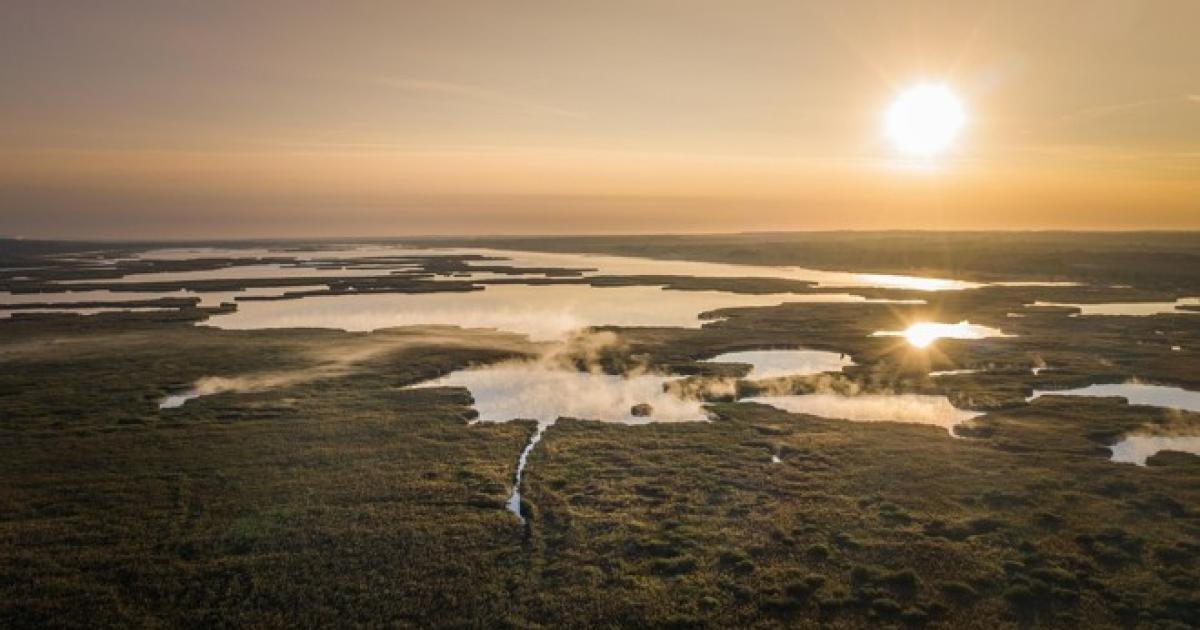







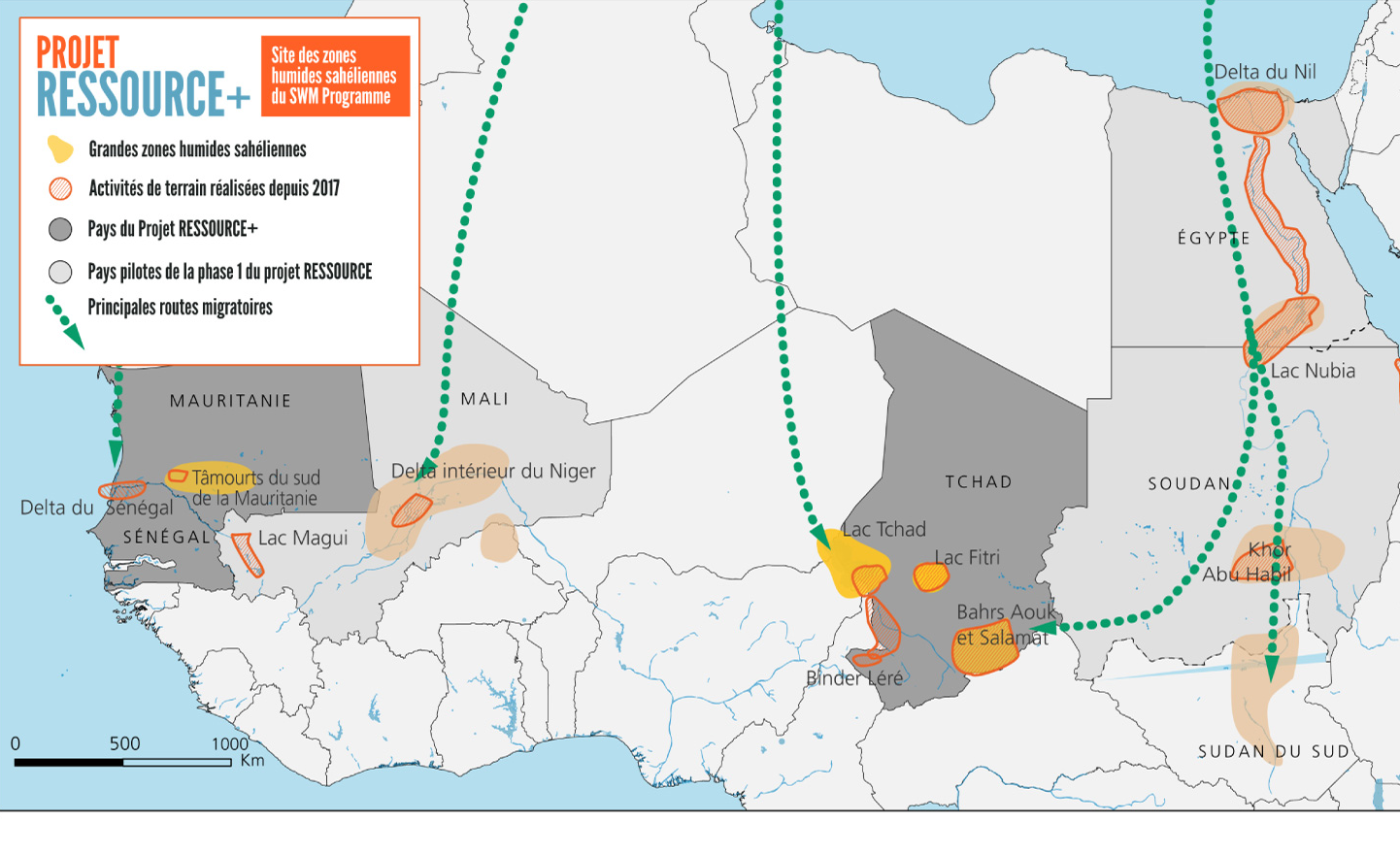
In a region where water scarcity is a daily challenge, the Sahelian wetlands are crucial for millions of people. These wetlands underpin pastoral, agricultural, and economic activities. They also support an incredibly rich and unique biodiversity, namely millions of waterbirds, many of which are migratory species that breed in Europe and Asia.
However, these ecosystems face significant threats. The main ones include climate change, uncontrolled agricultural development, water supply projects, intensive natural resource use, invasive aquatic species, and unsustainable hunting. These pressures are rapidly degrading the wetlands, dramatically altering habitats and severely impacting Sahelian waterbird populations.
In Mauritania
Following the signing, on 18 July 2025, of the Funding Agreement between FAO and the Agence française de développement (AFD), enabling the mobilization of EUR 1.7 million in co-financing from the French Global Environment Facility (FFEM) for the implementation of the RESSOURCE+ Project (Sahelian Wetlands Site under the FAO-coordinated SWM Programme), a project agreement with the Islamic Republic of Mauritania was prepared. The agreement was signed on 13 January 2026 by H.E. Ms Messouda Baham Mohamed Laghdaf, Minister of Environment and Sustainable Development of Mauritania.
The RESSOURCE+ Project seeks to achieve the following results and impacts:
- conservation of ecosystems and ecosystem services of major Sahelian wetlands;
- improved knowledge of waterbird populations and associated offtakes, including legal hunting and illegal harvesting;
- development and promotion of innovative approaches for the sustainable management and use of wetlands and waterbird populations;
- consolidation and long-term sustainability of these approaches through an enabling legal and institutional framework.
In Mauritania, project activities will focus on a set of pilot inland wetlands located in the Senegal River Valley, selected in close coordination with the national authorities. Planned activities will include, inter alia:
- awareness-raising of local communities on wetland and waterbird conservation, as well as on monitoring of waterbird populations (censuses) and tracking of their use by communities;
- capacity development of law enforcement officers, Ramsar, AEWA and RESSOURCE national focal points, and local communities, with a focus on: (i) waterbird identification and census techniques, and (ii) rights and obligations related to the use and management of waterbirds and wetlands;
- targeted support to waterbird census operations (International Waterbird Census – IWC), including ground-based counts and the testing of innovative, AI-assisted remote sensing approaches (drone- and satellite-based);
- assessment of the sustainability of waterbird offtakes and promotion of sustainable and rational use practices of waterbird resources;
- support to the updating of national wetland inventories and Ramsar Information Sheets (RIS), identification of new wetlands of international importance, and assistance to national administrations in the designation of new Ramsar sites and the preparation of their management plans;
- compilation of relevant legal and regulatory texts, analysis of the transposition of the Ramsar Convention and AEWA into national legislation, and dissemination through the SWM Programme Legal Hub (https://www.fao.org/in-action/swm-programme/legal-hub/en).
All project activities will be implemented in close collaboration with the Directorate for the Protection of the Coastline, Wetlands and Protected Areas (DiLZAP).