






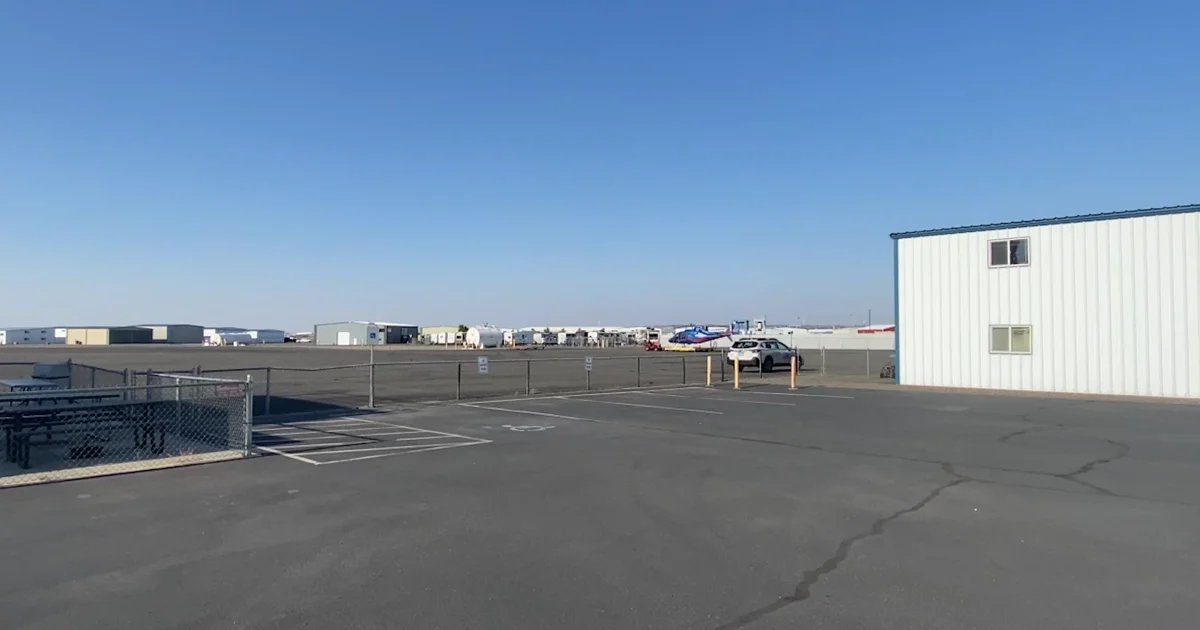
RICHLAND, Wash. — The aviation industry, often seen as a gateway to technological innovation and global connectivity, is facing a localized crisis at the Richland Airport, where rising land lease costs are stifling growth and driving long-term businesses to downsize. For local operators like Clif Dyer, owner of Sundance Aviation, the struggle to justify the skyrocketing cost of doing business highlights a growing friction between institutional infrastructure management and the realities of small business economics.
## The Economic Stagnation of Infrastructure
The Port of Benton is currently confronting the fallout of Resolution 22-42, a policy that significantly hiked lease rates for airport tenants. For Dyer, the numbers are daunting: his workforce has plummeted from 13 to just five employees, and a future lease adjustment is set to push his annual costs to $12,000—a massive jump from the initial $1,200 rate.
Port Commissioner Bill O’Neil acknowledges that the airport has seen zero new private investment over the past seven years. In a business environment where scalability is crucial, the aggressive pricing model has essentially rendered the airport an unattractive prospect for development. “We just grabbed our checkbooks and walked out of the room,” said Dyer, illustrating how prohibitive overhead costs have forced operators to pivot away from capital improvements and expansion.
## Reevaluating the Model
In an era where data-driven decision-making is standard, the Port of Benton is now hitting the pause button. The decision to freeze lease increases reflects a broader attempt to realign local policies with market realities. The Port is currently awaiting a comprehensive assessment from the Washington State Department of Transportation, which will evaluate how Richland’s rates compare against other regional hubs.
The goal is to move beyond rigid, unsustainable pricing and toward a flexible structure that balances public interest with private sector profitability. Commissioner O’Neil has pledged that the Port is working to establish rates that not only facilitate success for small businesses but also provide a stable, competitive environment that encourages, rather than discourages, facility investment.
## Rethinking Public-Private Risk
Beyond the immediate dispute over rental rates, the conflict in Richland highlights an ideological shift in how entrepreneurs view government-managed facilities. Dyer, for instance, is advocating for a partnership model that transcends traditional landlord-tenant agreements. He suggests a system where risk and reward are shared between the government and private operators.
In this proposed framework, public entities would share in the profits during prosperous times, but would also provide a safety net for private businesses during economic downturns, such as the 2008 recession. Such a “shared-risk” philosophy could offer a blueprint for municipalities struggling to maintain revenue while ensuring their commercial tenants survive market volatility.
As the Port of Benton prepares to draft a new resolution, the future of the Richland Airport rests on its ability to evolve. For veterans like Dyer, who is looking toward the eventual transition of his business, the hope is that a more equitable and realistic lease structure will be established before the window for development closes entirely. Whether through improved data analysis or a shift toward a collaborative risk-sharing model, the Port’s next steps will determine if the airport can regain its status as an engine for regional economic growth or if it will continue to face a landscape of empty slots and stalled innovation.
Disclaimer: This content is auto-generated for informational purposes only.
Source: Read Original News