







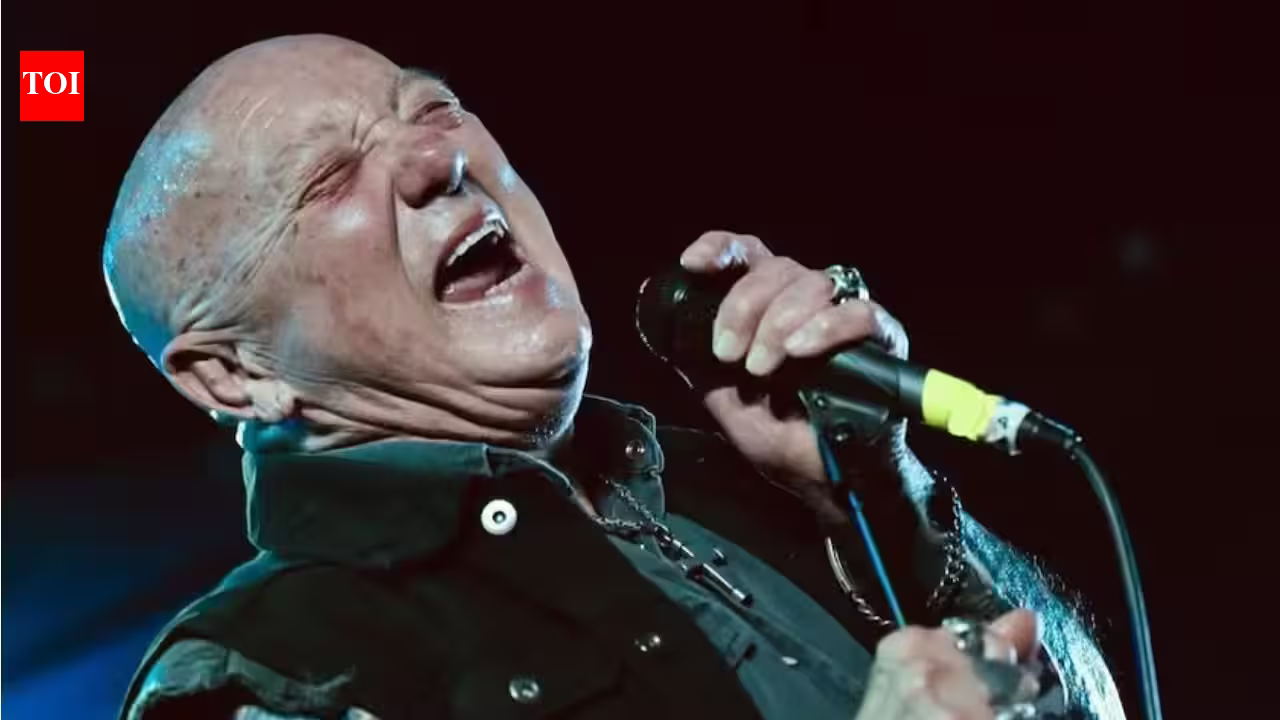
The Australian rock landscape is significantly quieter this week. Gary “Angry” Anderson, the indomitable, gravel-voiced engine behind the iconic Rose Tattoo, has passed away at the age of 79. His death on September 21, 2026, brought a poignant close to a career that spanned five decades, defined by everything from high-octane slide-guitar anthems to unexpected pop-culture ballads and a tireless commitment to social advocacy.
Anderson’s passing, following a cardiac arrest suffered while touring Europe, is a jarring bookend to what was supposed to be a celebratory curtain call. The band had been in the midst of their “One Last Ride” tour, a trek designed to mark the 50th anniversary of the group—a milestone very few hard rock acts ever reach. Instead, the final notes of that legacy were struck in a German hospital, leaving a void in the hearts of fans who viewed him not just as a musician, but as a quintessential Australian firebrand.
The Architect of the Outlaw Sound
To understand Angry Anderson is to understand the raw, volatile spirit of late-70s Australian rock. Born in Melbourne in 1947, Anderson’s early life was a crucible of struggle. He didn’t just grow up with a chip on his shoulder; he wore it as armor. These experiences fueled the persona that would eventually define Rose Tattoo.
Before the “Tatts” became legends, Anderson cut his teeth with Buster Brown, a band that acted as a launchpad for several local heavyweights, including future AC/DC powerhouse Phil Rudd. But it was the formation of Rose Tattoo in Sydney in 1976 that truly unleashed him. With a sound that blended the grit of the blues with a punk-rock ferocity, they were the antithesis of the polished, radio-friendly acts of the day.
The 1978 self-titled debut album was a revelation. It didn’t just sound like rock and roll; it sounded like a brawl in a pub. Anthems like “Rock ‘n’ Roll Outlaw” and “Bad Boy for Love” became the blue-collar gospel of a generation. Whether it was the legendary incident on Countdown—where he and guitarist Mick Cocks traded chewing gum on air, resulting in an immediate ban—or their relentless touring schedule, Anderson and his crew became the definitive “bad boys” of the Aussie scene. They weren’t just playing music; they were cultivating an aura of menace that the ARIA Hall of Fame would eventually acknowledge in 2006.
Beyond the Stage: The Thunderdome and the Wedding Ballad
One of the more fascinating aspects of Anderson’s life was his refusal to be boxed into a singular category. While he was every bit the “Rock ‘n’ Roll Outlaw” his lyrics suggested, he possessed a theatrical versatility that surprised even his closest critics.
In 1985, he stepped into the post-apocalyptic wasteland of George Miller’s Mad Max Beyond Thunderdome. As Ironbar Bassey, Anderson looked every bit the part—a chrome-plated, leather-clad force of nature squaring off against Mel Gibson. It was a role that played into his terrifying physical presence but demonstrated his ease in front of a camera.
Yet, his most jarringly brilliant move came in 1987. Anyone who walked into a radio station in the late eighties and told an executive that the lead singer of Rose Tattoo should record a sweeping, tear-jerker wedding ballad would have been laughed out of the room. And yet, “Suddenly” became an undeniable hit. When it was featured in the nuptials of Scott and Charlene on Neighbours, it became the soundtrack to a national obsession. It peaked at No. 2 on the charts, proving that beneath the leather vest and the aggressive tattoos, Anderson possessed a melodic sensitivity that resonated with the masses.
A Legacy of Resilience and Compassion
It would be a grave injustice to summarize Anderson’s life solely through his stage work. Away from the glare of the spotlight, he was a deeply empathetic figure. As he matured, he leveraged his fame to champion those without a voice. Whether he was appearing on A Current Affair or working with organizations like the Starlight Children’s Foundation, Canteen, or Camp Quality, he was consistently present in the trenches of social and charitable work. This altruism saw him appointed as a Member of the Order of Australia in 1993, a testament to the fact that his “Angry” moniker was largely a performance—a protective layer for a man deeply concerned with the welfare of others.
Perhaps this depth made the tragedy of 2018 even more devastating. The loss of his son, Liam, during a period of mental health crisis for the perpetrator, was a wound that never truly closed. Anderson was remarkably candid about his grief, using his own trauma to foster conversations about mental health and community safety in Australia. In those later years, he seemed to embody a rare, hard-won wisdom, one that moved between the vulnerability of a grieving father and the stoicism of a veteran rocker.
The Final Curtain Call
The “One Last Ride” tour was supposed to be the victory lap for a man who had seen everything the music industry had to throw at him and survived to tell the tale. While his death before the completion of that tour feels like a cruel twist of fate, there is a certain symmetry to it. Anderson was a man who lived at 110 percent for nearly eight decades; he was never one for quiet retirements or fading into the background.
He remained the beating heart of Rose Tattoo right until the very end, leading the band through venues across Europe and proving that, even in his seventies, he still held the fire. As the tributes pour in from the rock community and beyond, it is clear that we have lost more than just a singer. We have lost a titan of the Australian cultural tapestry.
Gary “Angry” Anderson leaves behind a complex legacy—a library of songs that fueled teenage rebellion, a film career that captured the imagination, and a lifetime of charity that improved countless young lives. He was, as his music suggested, a bad boy for love, but more importantly, he was a man who ultimately loved the life he lived, and the people he fought for. He has taken his last ride, but the outlaw’s legend is firmly etched into the annals of history.
Disclaimer: This content is auto-generated for informational purposes only.
Source: Read Original News