









India’s Fighter Jet Ambitions: Rolls-Royce and Safran Vie for Engine Development Deal
NEW DELHI — India’s quest to achieve true strategic autonomy in defense has shifted its focus to the skies, where a high-stakes competition is underway to co-develop a state-of-the-art engine for the country’s fifth-generation fighter program. As New Delhi looks to end decades of reliance on foreign propulsion technology, global aerospace giants Rolls-Royce and Safran have emerged as the primary contenders for the lucrative and technologically significant contract.
The program centers on the Advanced Medium Combat Aircraft (AMCA), India’s flagship stealth fighter project. While initial iterations of the aircraft are slated to utilize the American-made GE F414 engine, the Indian government is seeking a long-term partner to co-develop a high-thrust, 120 kN class turbofan engine for the more advanced “Mk-2” variant.
The British Bid: A Strategic Industrial Ecosystem
Rolls-Royce, the storied British aero-engine manufacturer, recently amplified its efforts by announcing a “strategic intent” to partner with Reliance Industries, one of India’s largest conglomerates. The partnership aims to go beyond simple engine production, proposing the creation of a dedicated aerospace gas turbine complex in India.
“Together, with our existing partnerships and capabilities in India, this marks a major milestone towards building a robust, self-reliant aerospace ecosystem in the country,” said Rolls-Royce Chief Executive Tufan Erginbilgic.
Anant Ambani, executive director at Reliance, echoed this sentiment, emphasizing that “India’s strategic autonomy requires sovereign capability in critical technologies.” The proposal includes full intellectual property ownership for the Indian side, a key requirement for the government’s “Atmanirbhar Bharat” (Self-Reliant India) initiative.
The French Proposition: Technical Depth and Collaboration
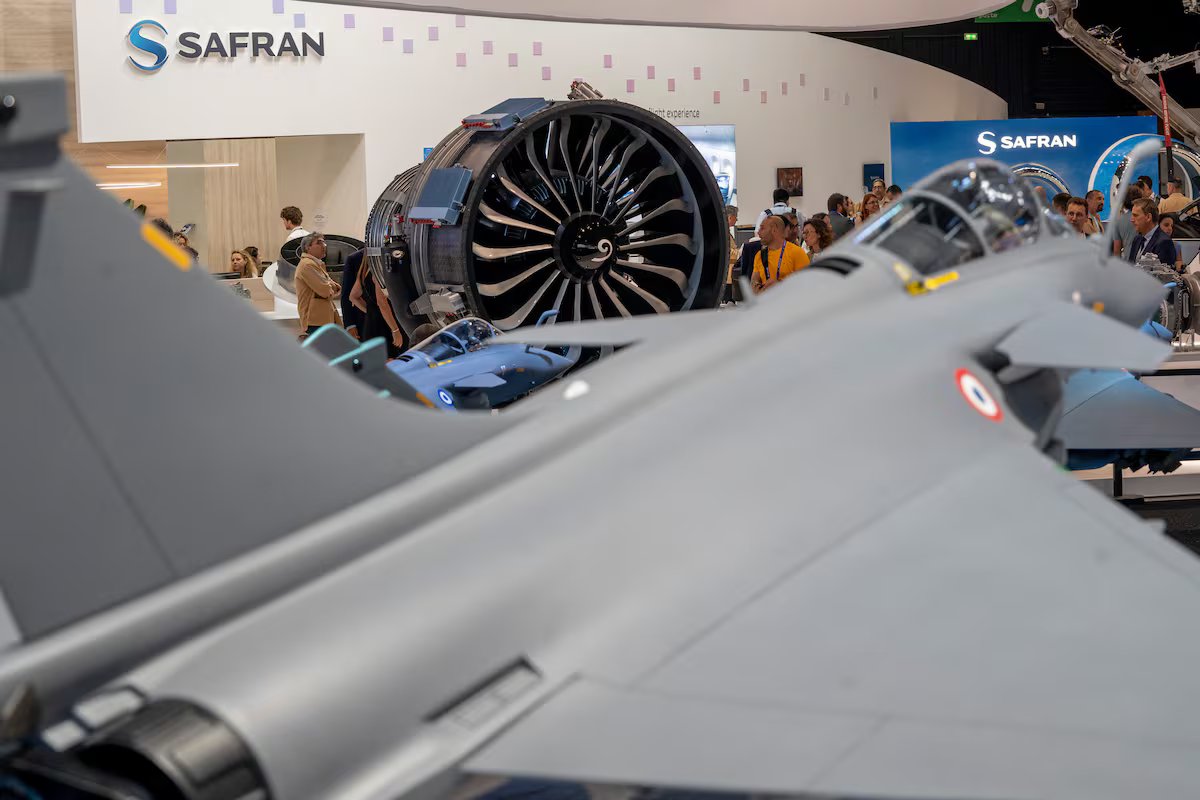
Not to be outdone, France’s Safran has been aggressively pursuing the contract through a collaborative model with India’s state-run Gas Turbine Research Establishment (GTRE). Safran’s offer, currently under evaluation by the Cabinet Committee on Security, promises a comprehensive transfer of technology, including critical “hot-section” turbine architecture.
Safran CEO Olivier Andries previously characterized the offer as unique, noting that it involves a deep integration between French engineers and India’s Defence Research and Development Organisation (DRDO). By facilitating the development of a brand-new engine on Indian soil, Safran aims to bypass the traditional buyer-seller model and instead establish a long-term joint venture that builds essential local propulsion expertise.
A Technological “Non-Negotiable”
For India, the challenge of building an indigenous engine has long been its “Achilles’ heel.” Despite significant advancements in airframe design, the nation has struggled to master the complex metallurgy and engineering required for high-performance jet engines, leaving its frontline fleets reliant on imported powerplants.
“India’s dependence on foreign suppliers represents perhaps the single most technological vulnerability in India’s aerospace ecosystem, and developing an indigenous engine is a non-negotiable priority,” said retired Air Marshal Anil Khosla, a former vice chief of the Indian Air Force. “As India considers these offers, the question is whether these companies will share the deepest layers of their process knowledge.”
As the Rolls-Royce and Safran contest intensifies, the Indian government faces a delicate balancing act: selecting a partner that not only provides the most advanced hardware but also ensures the genuine, irreversible transfer of the secrets behind building a world-class jet engine. In the evolving landscape of global air power, the outcome of this deal will effectively determine whether India joins the exclusive club of nations capable of powering their own stealth fighters.