






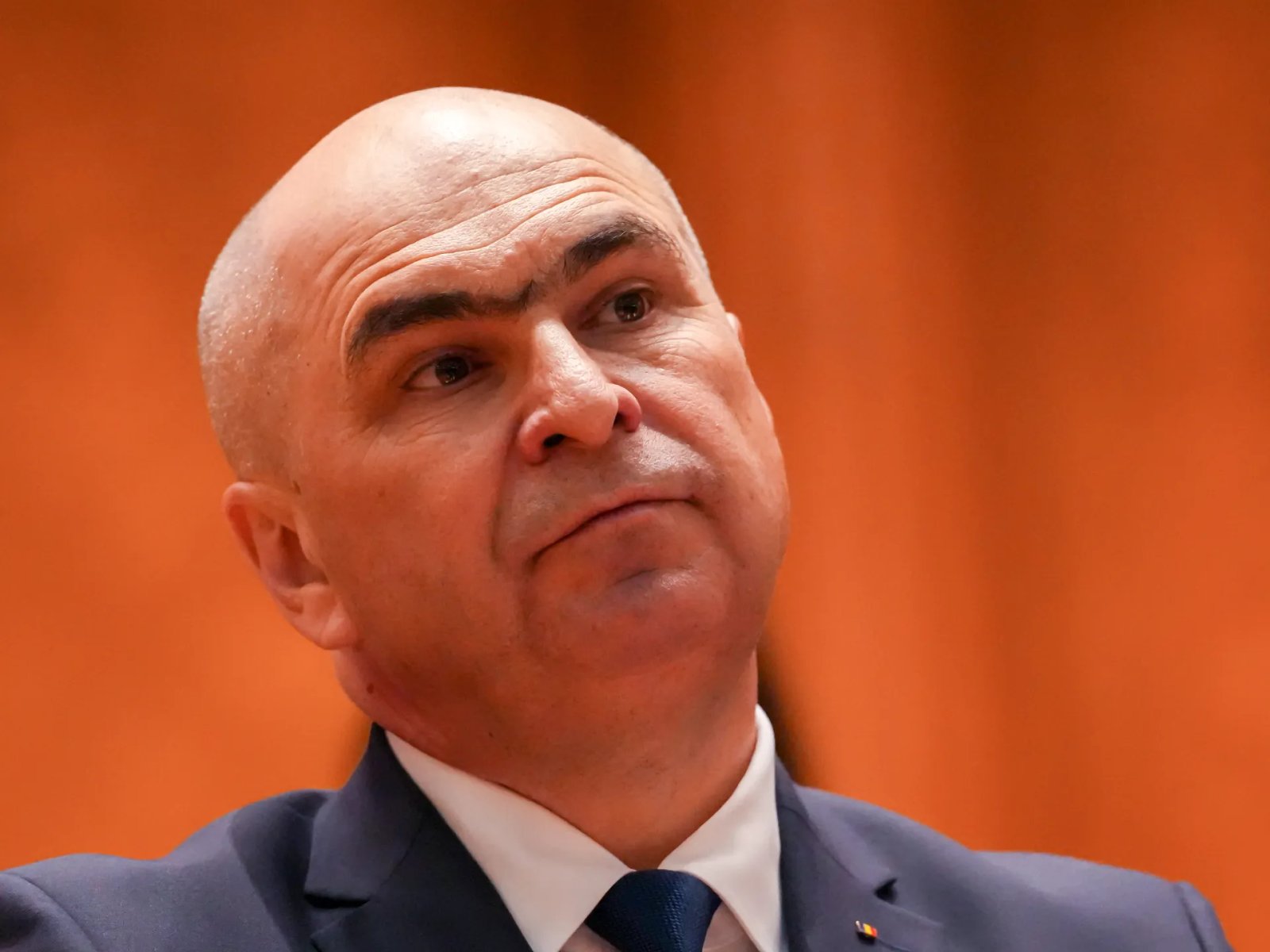
Romania’s pro-European Union coalition government has collapsed after a vote of no confidence in Prime Minister Ilie Bolojan, raising fears of a fiscal crisis.
After a parliamentary debate on Tuesday, 281 legislators voted in favour of the motion and four against.
The effort was launched last week when the left-wing Social Democratic Party (PSD), which withdrew from the coalition in late April, and the far-right opposition Alliance for the Unity of Romanians party (AUR) submitted the motion to parliament.
MPs from Bolojan’s centre-right National Liberal Party (PNL) and coalition partners Save Romania Union party and the small ethnic Hungarian UDMR party did not vote.
Although snap elections look unlikely, financial markets showed concern that the turbulence could mean Bucharest wavers in its commitment to narrowing the EU’s biggest budget deficit.
Th leu, Romania’s currency, fell to a record low against the euro before Tuesday’s vote.
Ten months in power
The now former coalition government came to power 10 months ago with a view to contain the gains of the far right after a series of polarising elections, and it had begun to reduce the deficit, narrowly avoiding a ratings downgrade from the last rung of investment grade.
But the Social Democrats, without whom a pro-EU majority cannot be achieved, have repeatedly clashed with Bolojan as his austerity measures have hit their voters and patronage networks and their popular support has bled away to the far right.
Nevertheless, opinion polls suggested Bolojan is the most popular politician in the ruling coalition.
‘Do you have a plan?’
Bolojan called the no-confidence motion “cynical and artificial” and said before the vote that it “seems to be written by people who were not in government every day and did not participate in all the decisions”.
“I assumed the position of prime minister, being aware that it comes with enormous pressure and that I would not receive applause from the citizens. But I chose to do what was urgent and necessary for our country,” he said before the vote. “Can anyone say how Romania will function from tomorrow. Do you have a plan?”
Centrist President Nicusor Dan, who nominates the prime minister, is now expected to invite parties for negotiations and try to rebuild the four-party pro-EU coalition under a different member of Bolojan’s Liberals or perhaps a technocrat as prime minister.
The Social Democrats have often said they would rejoin a pro-EU coalition under a different prime minister.
Bolojan’s party has so far ruled out collaborating with the Social Democrats again although some senior party members have pushed for reconciliation.
“There is life after the no-confidence vote,” PSD leader Sorin Grindeanu told reporters. “We want to keep broadly this coalition.”
Grindeanu said Bolojan should appoint an interim prime minister due to his margin of support, adding that he expects Dan to consult the PSD.
‘Political theatre’
PNL Secretary-General Dan Motreanu wrote in a social media post that the PSD and AUR “have a duty to take over the government, to come up with a prime minister proposal and a clear program” while accusing the two parties of “playing political theatre”.
“You cannot overthrow a government and then run away from accountability,” Motreanu said. “In the economy, any signal of political chaos quickly translates into real costs to people.”
Siegfried Muresan, a Romanian Liberal member of the European Parliament, called the alliance between the leftists and AUR in support of the no-confidence motion “anti-European”.
“The formation of a new government will become their responsibility,” he told the Reuters news agency. However, Liberal Deputy Prime Minister Catalin Predoiu said his party “must leave its options open”.
Bolojan will stay on as interim prime minister with limited powers until a new government is approved by parliament.
Romania’s next parliamentary elections are not due until 2028.
Romania must continue to shrink its deficit as well as implement reforms to tap about 10 billion euros ($11.7bn) of EU recovery and resilience funds before an August cut-off date. The deficit is expected to narrow to 6.2 percent of Romania’s economic output this year from more than 9 percent in 2024.