







Guwahati bore witness to a staggering display of run-scoring that has sent shockwaves through the cricketing fraternity, prompting a visceral debate about the health of the 50-over format. In a spectacle that saw 811 runs poured onto the scoreboard in just 93.3 overs, the second ODI between India and the West Indies became less of a sporting contest and more of a demolition derby against the leather ball. While the batting prowess on display was undeniably world-class, the overwhelming consensus is that the sport has hit a troubling inflection point.
The “National Highway” Phenomenon
At the heart of the controversy is the surface at the Barsapara Stadium. Ravi Shastri, ever the voice of candor in the commentary box, did not mince his words, labeling the pitch a “national highway.” On a track that offered zero assistance to the seamers and negligible turn for the spinners, the bowlers were reduced to mere bowling machines, watching helplessly as their deliveries were dispatched to all corners of the ground with repetitive ease.
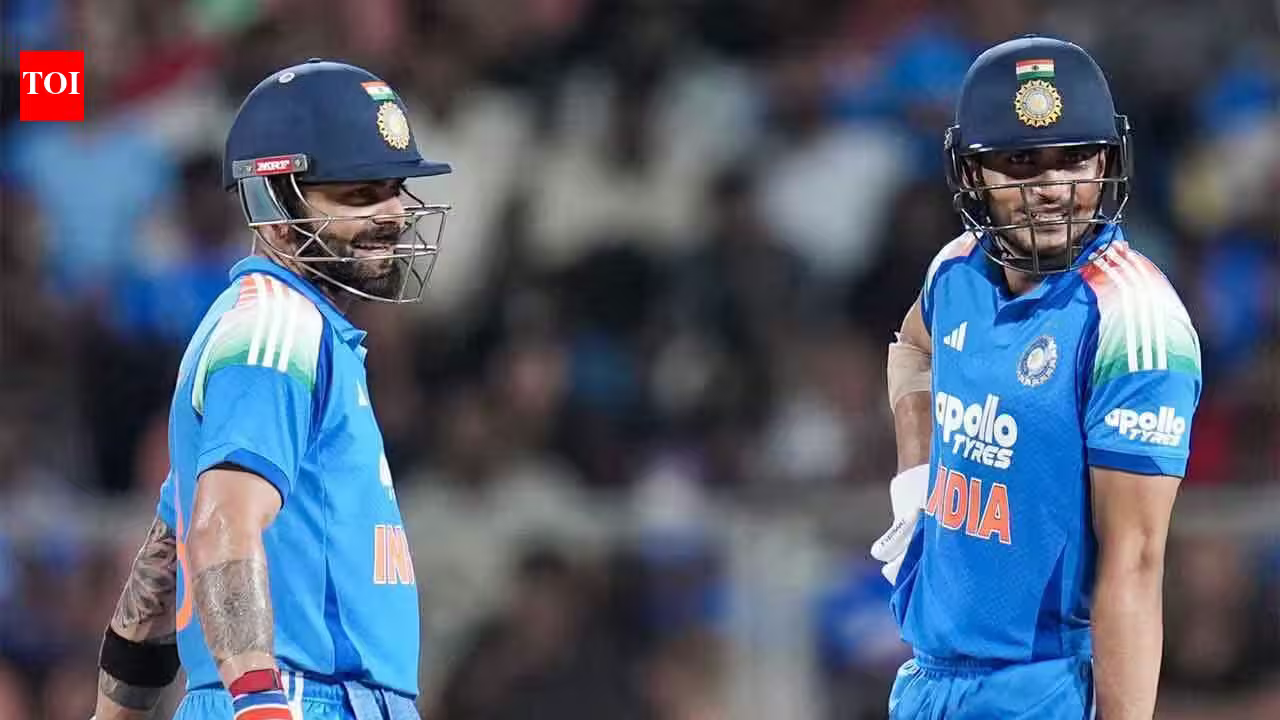
The statistics are eye-watering: India’s captain Shubman Gill anchored the innings with a sublime, unbeaten 223, displaying the timing and poise that have quickly made him the crown jewel of Indian batting. Rohit Sharma complemented the assault with a fluid 101, but the traffic was two-way. The West Indies responded with three centurions of their own, mirroring India’s aggression and exposing the lack of bite in the bowling attacks. What was once the hallmark of a high-octane ODI thriller—a delicate balance between risk and reward—has been replaced by a monotonous parade of boundaries.
A Cry for Balance
The backlash from veterans of the game has been immediate and fierce. Madan Lal, the architect of many a pressure-cooker spell during India’s historic 1983 World Cup triumph, was left thoroughly unimpressed.
“Extremely boring game, yaar,” Lal remarked in a candid post-match assessment. “Over 800 runs scored on a ‘paata’ (flat) wicket, and there was absolutely nothing in it for the bowlers. Give the bowlers something to play with. Where is the contest between bat and ball?”
Lal’s frustration echoes a sentiment shared by many purists: cricket is designed to be a tug-of-war, not a one-sided exhibition. He argues that an ideal ODI should hover around the 280-run mark, a total that allows for tactical nuance, middle-overs tension, and the strategic deployment of spin. “For that to happen, curators must put some life into these insipid wickets,” he urged, though he admits he is skeptical that ground authorities will deviate from the current formula of providing batting paradises that guarantee crowds and boundary-heavy highlights.
The T20i Shadow
Former Delhi pacer Sanjiv Sharma points to a broader structural evolution—or perhaps degradation—in the way the game is being approached. He believes the proliferation of T20 cricket is bleeding into the DNA of the 50-over format, causing batters to abandon the traditional “build-and-accelerate” philosophy in favor of pure, unadulterated hitting.
“In T20Is, we see teams routinely chase down 200-plus scores,” Sharma noted. “Batters are carrying that confidence, and that fearlessness, into the 50-over format. They aren’t waiting for the bad ball anymore; they are creating the bad ball.”
The danger, according to both Lal and Sharma, is the long-term impact on bowling talent. When bowlers are denied any margin for error, their ability to bowl with discipline, flight, and subtle variations begins to atrophy. “Apart from Kuldeep Yadav, neither side had a match-winner with the ball,” Sharma added. “India had a second-string attack, but what about the West Indies? Their bowling was abysmal.”
An Existential Crisis for the 50-Over Game
The 50-over format finds itself in an awkward middle ground in the current global calendar. It lacks the raw, condensed adrenaline of T20Is and the grueling, psychological warfare of Test cricket. Its traditional allure has always been the time it affords for a narrative to “breathe”—for a match to ebb and flow as pitches tire and shadows lengthen.
However, when surfaces are curated to negate the very elements that make a match compelling—the seam movement of the new ball or the sharp spin of the middle overs—the “contest” vanishes. Shubman Gill’s second double-hundred in this format is, statistically, a monumental achievement that will be etched into the record books. Yet, in the hearts of the spectators and the minds of the critics, it serves as a sobering reminder that a record without a genuine adversary is mere arithmetic.
As the series moves forward, the pressure shifts from the players to the curators. If cricket is to maintain its credibility as a multi-dimensional sport, the authorities must reconcile the need for entertainment with the fundamental requirement of competition. Without a return to tracks that offer a fair day’s work for both the batter and the bowler, the ODI format risks becoming a spectator sport that is increasingly difficult to watch.
Disclaimer: This content is auto-generated for informational purposes only.
Source: Read Original News