








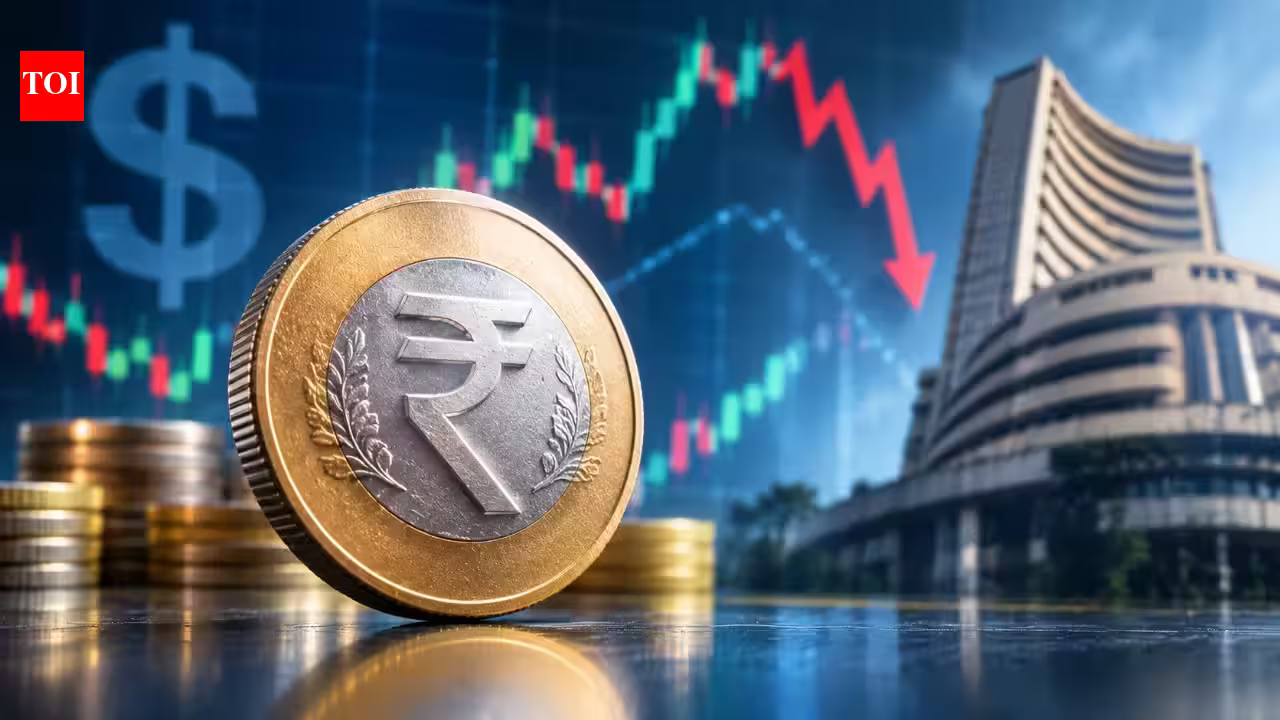
The Mechanics of Recent Rupee Volatility
The Indian rupee has recently demonstrated a pattern of significant oscillation, underscoring the complexities inherent in emerging market currency management. After a robust five-day winning streak that saw the local currency reach a seven-month high, the rupee experienced a sharp reversal, shedding 23 paise in a single trading session to settle at the 92.85 mark against the US dollar. This pivot, while seemingly abrupt, highlights the tug-of-war between strong capital inflows and structural macroeconomic pressures.
The underlying cause of this volatility is multifaceted. While the rupee had been buoyed by substantial foreign portfolio investments throughout November, the sudden correction suggests that market participants are beginning to account for both corporate demand for hard currency and the Reserve Bank of India’s (RBI) cautious approach to excessive currency appreciation. When a currency appreciates as rapidly as the rupee did—gaining over 1.6% in under a week—it often moves into overbought territory, prompting technical adjustments and profit-taking by institutional players.
Foreign Institutional Inflows and the Global AI Pivot
A primary driver of the rupee’s recent strength has been the substantial influx of foreign capital into Indian equity markets. In November alone, overseas investors injected approximately $13 billion into domestic stocks. This movement is not coincidental; it is part of a broader global thematic shift. As investors begin to rotate away from the heavily saturated artificial intelligence sector in developed markets, they are reallocating capital toward markets that promise more diversified growth profiles, such as India.
Goldman Sachs has characterized the Indian rupee as a relative sanctuary—a “port of stability”—amid the turbulence surrounding AI-linked market bets. This positioning reflects India’s resilience as an investment destination. However, the reliance on portfolio inflows introduces a layer of vulnerability. Unlike foreign direct investment, which is long-term and sticky, portfolio inflows can be withdrawn with relative ease if global risk sentiment shifts or if the relative attractiveness of the Indian market wanes. Consequently, the currency remains hypersensitive to the net buying or selling trends of institutional investors, who currently hold significant influence over the short-term trajectory of the exchange rate.
The Role of Corporate Demand and Reserve Buffers
Beyond the influence of global capital flows, the domestic demand for foreign currency plays a critical role in setting the floor for the rupee. Recent market reports indicate that significant demand for the US dollar from large Indian conglomerates contributed to the rupee’s retreat. As large firms look to manage their import obligations or settle international debt, they often enter the forex market in force, which can quickly absorb excess supply and apply downward pressure on the domestic currency.
Furthermore, the state of India’s foreign exchange reserves provides a critical context for these movements. Recent data from the Reserve Bank of India revealed a decline in reserves by $14.205 billion, pushing the total to a three-month low of $705.342 billion. This decline is significant because reserves serve as the primary defensive wall against extreme currency volatility. When reserves are under pressure, the central bank’s ability—and willingness—to intervene in the market to prevent excessive depreciation is tested. Analysts suggest that there is now a greater tolerance for two-way volatility, meaning the RBI may be less inclined to aggressively defend specific price points, allowing the market to find its natural equilibrium based on supply and demand fundamentals.
Macroeconomic Headwinds and Currency Sustainability
While the recent appreciation of the rupee against major global currencies like the British pound, the euro, and the Japanese yen has been a point of positive performance, the sustainability of this trend remains a subject of intense analytical debate. The fundamental challenge lies in the trade-off between a stronger currency and export competitiveness. While a stronger rupee makes imports cheaper—thereby helping to contain imported inflation—it also puts pressure on India’s export-oriented sectors, which struggle with lower margins when the domestic currency is too strong.
Furthermore, the external environment remains fraught with uncertainty. The dollar index continues to exhibit influence over emerging market currencies, and while crude oil prices have shown a slight decline, any unexpected spike in energy costs would immediately weigh on India’s import bill, further straining the balance of payments. The recent dip in domestic equities, with both the Sensex and the Nifty trailing, indicates that local investors are also adopting a more cautious stance, aligning with the broader global mood of uncertainty.
Strategic Implications for Indian Businesses
For businesses operating in India, the recent volatility serves as a reminder of the necessity for robust currency hedging strategies. As the rupee shifts from a period of sustained gains to one of marked volatility, firms with significant international exposure must navigate the risks of sudden exchange rate swings. Relying on the trend to persist is a strategy fraught with risk; instead, firms are encouraged to utilize forward contracts and other hedging instruments to lock in costs and protect profit margins from further erosion.
Moreover, the shifting sentiment toward the rupee suggests that the “easy money” phase of recent equity rallies may be moderating. Financial leaders should prepare for a period where cost-efficiency and operational resilience take precedence over reliance on favorable macro-tailwinds. As the central bank potentially allows more flexibility in currency pricing, businesses that proactively manage their foreign currency exposure will be better positioned to weather the transition.
In summary, the rupee’s recent performance is a classic case study of an emerging market currency reacting to the dual pressures of global institutional rebalancing and domestic fundamental requirements. While the long-term outlook for the Indian economy remains robust, the short-term currency environment will likely remain volatile. Investors and businesses alike should prioritize agility and prudent risk management over the next fiscal quarter to navigate the shifting sands of the global foreign exchange landscape. The balance between maintaining a competitive export sector and sustaining investor confidence through fiscal stability will remain the central challenge for policymakers and market participants in the coming months.
Disclaimer: This content is auto-generated for informational purposes only.
Source: Read Original News