







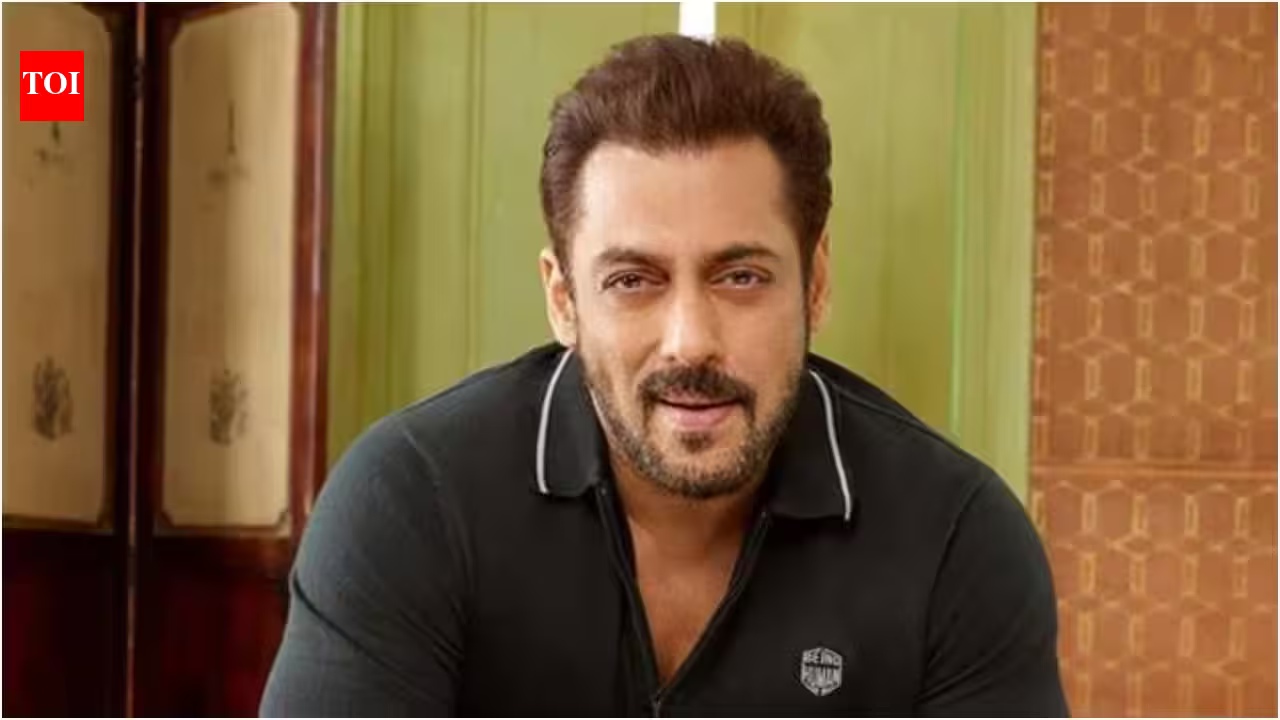
The Mumbai film fraternity has always had a complicated relationship with the epic Ramayana. It is a story that exists in the cultural DNA of every Indian, yet translating it to the silver screen often feels like walking a tightrope between creative interpretation and religious sentiment. Today, at the buzzy trailer launch of his upcoming project Maatrubhumi: May War Rest in Peace, Salman Khan injected himself into the ongoing discourse surrounding the high-budget cinematic adaptations of the epic, and true to form, he didn’t mince his words.
As the industry grapples with the mounting pressure of visual spectacle, Khan has issued a stern reminder: the soul of the story matters far more than the price tag attached to its CGI.
Beyond the Budget: A Plea for Substance
For months, the media cycle has been dominated by whispers—and occasionally leaks—regarding the massive production costs and cutting-edge VFX being poured into the upcoming multi-part Ramayana project. With every headline focused on the staggering budgets or the technological wizardry required to bring the divine to life, the actual essence of the narrative seems to have been relegated to the background.
Salman Khan, standing on stage at the Maatrubhumi launch, cut through the noise with characteristic bluntness. “If you want to talk about a Ramayana film, talk about the Ramayana itself,” he urged, his tone shifting from casual banter to a more serious, reflective stance. For Khan, the fixation on production costs and the technical prowess of VFX suites misses the point of why the epic has endured for millennia. He believes the conversation should be anchored in the character of Lord Ram and the virtues he represents. To Khan, reducing a foundational pillar of Indian culture to a mere exercise in digital vanity is a disservice to the audience and the material alike.
Finding the Hero Within the Chaos
The pivot to his own project, Maatrubhumi: May War Rest in Peace, felt intentional. By positioning his protagonist as a modern vessel for ancient virtues, Khan is attempting to bridge the gap between traditional storytelling and contemporary action cinema.
“The hero in Maatrubhumi possesses all the qualities of Ram,” he noted, drawing a direct parallel between the moral fortitude of his character and the idealism associated with the Ayodhya prince. It’s a bold marketing strategy. In an era where “masala” entertainers usually rely on gray-shaded anti-heroes or vengeful vigilantes, Khan is doubling down on a figure of integrity. Whether or not his audience—often hungry for the high-octane “Bhai” persona—will respond to a hero defined by the measured, dharmic qualities of a mythological figure remains to be seen. However, by aligning his film with the weight of the Ramayana, Khan is setting a high bar for his own performance.
A New Date for a High-Stakes Release
The production history of Maatrubhumi has been anything but smooth. Originally slated for an April release, the film was pushed back, a move that often triggers speculation in the unforgiving corridors of trade analysis. Today, the speculation ends. Khan officially confirmed that the film is locked and loaded for a December 4 release.
The film boasts an intriguing ensemble cast that suggests a departure from the typical “Salman-centric” vehicles of the past. Alongside the superstar, the screen will be shared by the versatile Chitrangda Singh, the formidable Mukesh Rishi, Ankur Bhatia, Zeyn Shaw, and Abhilash Chaudhary. It is a cast that hints at a grit-heavy, ensemble-driven drama, moving away from the star-vehicle tropes that have defined much of Khan’s recent filmography. With the December window being a premium slot, the production is clearly banking on the post-festive momentum to carry the film to box office success.
The Shadow of the ‘Ramayana’ Epic
While Khan focuses on Maatrubhumi, the industry is holding its collective breath for the Ramayana project he indirectly critiqued. This adaptation is arguably the most ambitious undertaking in modern Indian cinema. With Ranbir Kapoor stepping into the role of Lord Rama and Sai Pallavi portraying Sita, the casting has been met with both enthusiasm and intense scrutiny. The inclusion of Yash as Ravana and Ravie Dubey as Lakshman, coupled with a supporting cast that reads like a “Who’s Who” of the industry—including Arun Govil, Lara Dutta, and Vivek Oberoi—proves that the makers are not cutting corners.
The promise of Sunny Deol as Lord Hanuman in the second part of the saga has further fueled the hype machine. However, as the film moves into its complex post-production phase, the very pressures that Khan critiqued—the astronomical budgets and the reliance on visual spectacle—will only intensify. The film’s success will ultimately be measured by whether it can satisfy the technical demands of a 21st-century blockbuster while maintaining the emotional and spiritual gravity that the story necessitates.
The Verdict on Modern Mythmaking
As the dust settles from today’s event, one thing remains clear: Salman Khan has set the terms of engagement. By calling for a shift in focus from the “how” (the VFX and the money) to the “what” (the values and the character), he has voiced a sentiment that many viewers share but few in the industry are willing to admit out loud.
There is an inherent danger in modernizing the epics: the risk of losing the heart to the hardware. As Maatrubhumi heads toward its December debut, the film serves as a litmus test. Can an action-oriented, contemporary thriller successfully channel the virtues of an ancient king, or will it be swallowed by the same spectacle-driven culture that Khan currently finds so reductive?
December 4 will tell us everything. Until then, the industry is left to ponder the question Khan placed at the center of the table: when we look at the epics, are we seeing the story, or are we just watching the budget burn?
Disclaimer: This content is auto-generated for informational purposes only.
Source: Read Original News