







- From Red Sea reefs to Asir forests, Kingdom highlights conservation efforts
- Projects align with Vision 2030 goals for sustainability and biodiversity protection
RIYADH: Saudi Arabia marked World Environment Day with a series of initiatives highlighting the Kingdom’s expanding efforts to protect biodiversity, restore degraded landscapes, promote sustainable development and strengthen environmental awareness as part of its Vision 2030 transformation agenda.
Observed annually on June 5 and led by the United Nations Environment Programme, World Environment Day has become the world’s largest platform for environmental outreach, bringing together governments, businesses, academic institutions and communities to address challenges ranging from climate change and biodiversity loss to pollution and sustainable resource management.
For Saudi Arabia, the occasion comes amid an ambitious national environmental strategy that seeks to balance economic growth with conservation. Through initiatives such as the Saudi Green Initiative, major protected-area projects, ecosystem restoration programs and investments in renewable energy and sustainable tourism, the Kingdom has placed environmental stewardship at the center of its long-term development plans.
This year’s observance showcased a broad range of efforts across the country, from protecting one of the world’s most important marine ecosystems in the Red Sea to restoring vast stretches of desert landscapes, preserving mountain forests, greening cities and advancing scientific research on sustainability.

Red Sea: Protection before development
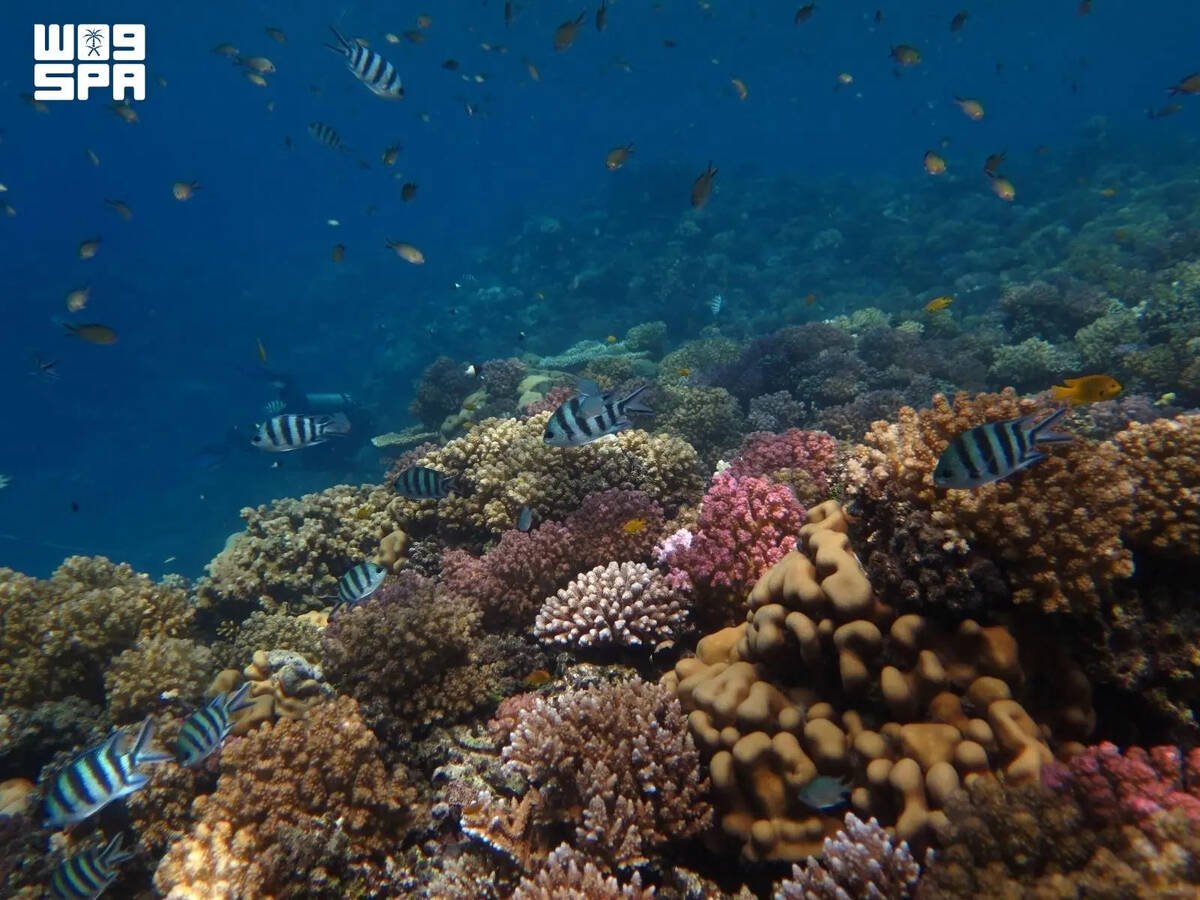
Along Saudi Arabia’s western coastline, the Red Sea was highlighted as a model for integrating environmental protection into economic development before large-scale tourism expansion takes place.
Stretching more than 1,800 kilometers and covering roughly 186,000 square kilometers, the Red Sea hosts the world’s fourth-largest coral reef system and around 6.2% of global coral reefs, making it one of the planet’s most valuable marine ecosystems.
The Saudi Red Sea Authority emphasized its pioneering mechanism for verifying marine environmental protection at tourism sites, developed in cooperation with relevant government entities. The initiative seeks to make sustainability measurable and enforceable from the earliest stages of tourism development.
The effort aligns with the National Red Sea Sustainability Strategy, which aims to increase protected marine and coastal areas from 3% to 30% by 2030 through dozens of conservation initiatives designed to establish a sustainable blue economy.

King Salman bin Abdulaziz Royal Reserve: Restoring nature at scale
In the Kingdom’s north, the King Salman bin Abdulaziz Royal Reserve Development Authority used World Environment Day to highlight major restoration and conservation achievements.
The authority emphasized its role in protecting biodiversity by providing safe habitats for wildlife and native plant species while supporting national sustainability objectives.
Among its most significant accomplishments is the rehabilitation of more than 750,000 hectares of degraded land, restoration of vegetation cover and the planting of more than four million seedlings across the reserve.
The authority also launched awareness campaigns through social media platforms to encourage environmental responsibility and strengthen public engagement in conservation efforts.

Asir Region: A biodiversity hotspot
The mountainous Asir region was showcased as one of Saudi Arabia’s most environmentally diverse areas, with ecosystems ranging from the peaks of the Sarawat Mountains to the coastal plains of Tihama.
The region’s relatively cool climate and seasonal rainfall have supported extensive forests of juniper, wild olive and acacia trees, as well as numerous medicinal and aromatic plants.
Asir also serves as an important refuge for resident and migratory bird species, making it one of the Kingdom’s richest biodiversity zones.
Authorities noted that protected areas across the region continue to play a crucial role in habitat conservation, vegetation restoration and ecotourism development, reinforcing Asir’s growing reputation as both an environmental and tourism destination.

Makkah: Building a more sustainable city
In Makkah, authorities highlighted environmental projects aimed at improving urban sustainability for residents and the millions of pilgrims who visit the holy city each year.
The Holy Makkah Municipality said it is expanding afforestation programs, developing parks and green spaces, and enhancing waste-management and recycling systems.
Municipal authorities are also deploying advanced environmental monitoring technologies and modern digital tools to improve service delivery and environmental compliance throughout the city.
Officials said public-awareness campaigns remain a key component of the strategy, encouraging responsible environmental behavior and helping preserve natural resources for future generations.

King Khalid University: Science supporting sustainability
Academic institutions also joined the observance, with King Khalid University in Abha highlighting its growing contribution to environmental research and innovation.
The university has embedded sustainability into its 2030 research strategy and expanded the work of its Prince Sultan bin Abdulaziz Center for Environmental Research and Natural Resources Sustainability.
According to the university, researchers have documented more than 20,000 plant samples, conducted 500 field surveys, published 200 scientific papers and completed more than 50 environmental projects.
The institution has also secured a Category A environmental license from the National Center for Environmental Compliance and established more than 30 strategic partnerships at the local and international levels.
Supported by more than 412,000 square meters of green campus space, researchers are developing projects focused on smart agriculture, recycling technologies and environmental artificial intelligence applications aimed at protecting forests and natural resources.
As Saudi Arabia advances toward its Vision 2030 goals, the activities highlighted during World Environment Day underscored a common theme across the Kingdom: that environmental protection is increasingly being viewed not only as a conservation imperative, but also as a foundation for sustainable economic growth, scientific innovation and improved quality of life.