




The Cartography of Exclusion: Rethinking India’s Borderlands
The India-Bangladesh frontier has long been defined by a duality: it is both a heavily securitized international boundary and a living, breathing landscape of shared cultural heritage. Historically, the borderlands were sites of sanctuary, most notably during the 1971 Liberation War when millions sought refuge across the divide. Yet, as of November 2026, the rhetoric surrounding these regions is shifting from historical continuity toward a volatile politics of identity that threatens the social fabric of the subcontinent.
The Politics of Belonging
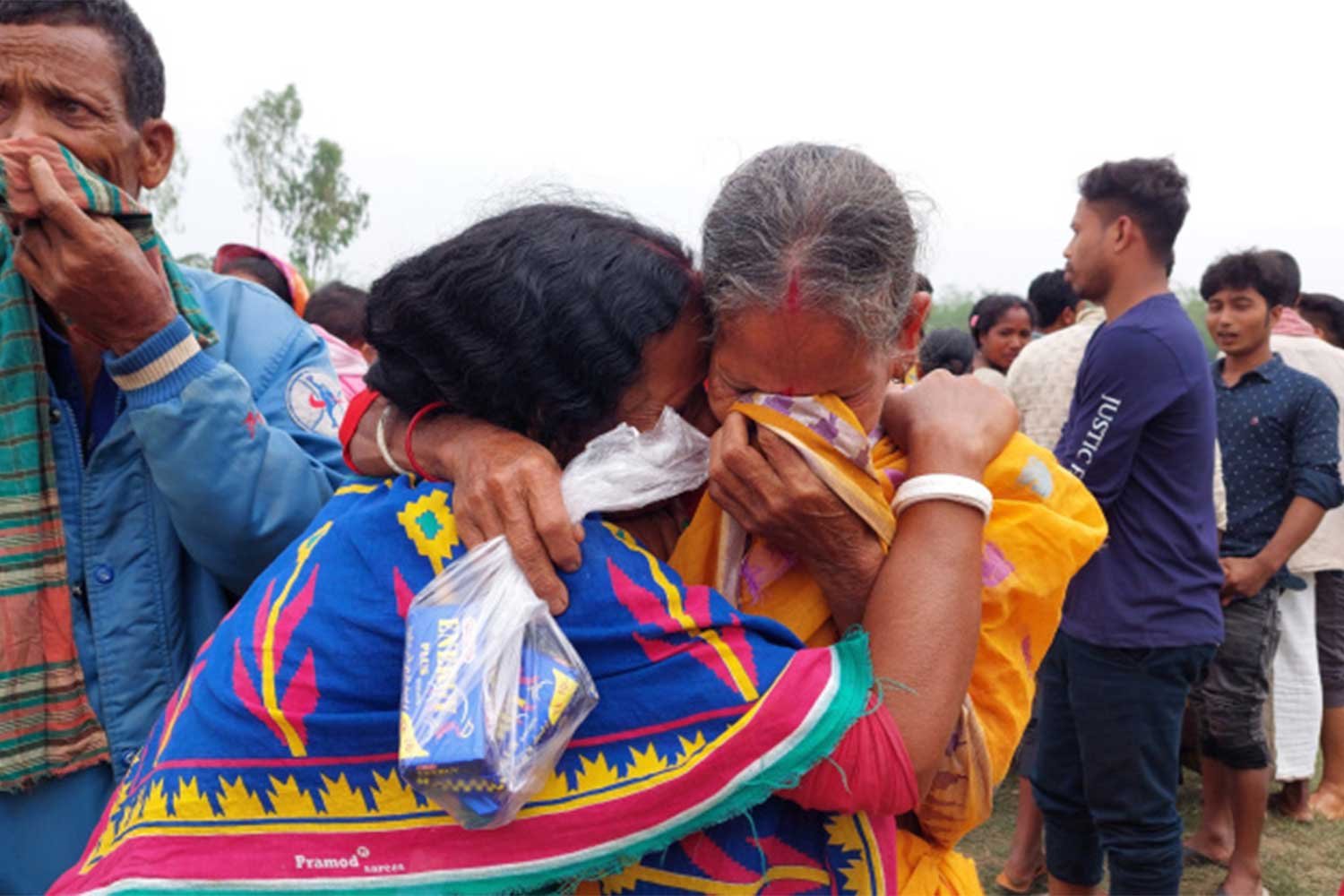
In recent years, the discourse within India’s northeastern border states has taken a troubling turn. Demolition drives in districts like Assam’s Dhubri, coupled with the rising usage of derogatory labels directed at Bengali-speaking Muslims, signal an alarming trend. For the inhabitants of these areas, citizenship is increasingly being measured not by legal documentation, but by a performative adherence to specific linguistic, religious, and cultural markers.
This environment fosters what can be described as a “cartography of othering.” By conflating national security with religious majoritarianism, political actors are effectively narrowing the definition of who qualifies as a legitimate Indian citizen. When entire communities are reflexively treated as outsiders, the distinction between standard migration enforcement and targeted identity-based exclusion begins to blur, leaving vulnerable populations in a state of perpetual suspicion.
The Regional Spillover
The impact of this exclusionary politics does not remain confined within Indian territory. Developments in India’s border states are meticulously tracked by civil society and media in Bangladesh. In an era of hyper-connected social media, reports of discrimination often cross the border rapidly, where they are sometimes amplified without nuance. This creates a transnational feedback loop of suspicion, potentially stoking religious polarization within Bangladesh and complicating diplomatic relations.
While New Delhi and Dhaka maintain deep economic and strategic ties—ranging from water-sharing agreements to connectivity projects—there is a palpable tension between practical statecraft and the rise of nationalist rhetoric. Political leaders on both sides often invoke historical grievances or territorial myths, such as the retrospective framing of post-Partition borders. These narratives, while often intended for domestic consumption, reshape the regional imagination and erode the trust necessary for long-term stability.
A Lesson from History
The humanitarian crisis of the Rohingya people serves as a grim cautionary tale for the region. The systematic erosion of citizenship and rights—which began years before the mass displacement of 2017—remains a stark reminder of how the normalization of prejudice can escalate into catastrophe. While the socio-political contexts of India and Myanmar are distinct, the underlying mechanism of “othering” follows a similar, dangerous logic.
If South Asia continues down this path, the consequence will be a landscape where citizens are forced to constantly justify their right to exist in the homes they have inhabited for generations. Addressing this requires more than just diplomatic restraint from Dhaka or policy adjustments in New Delhi. It demands a fundamental shift in political responsibility.
The borderlands should be treated as socio-cultural spaces that link two nations, rather than as frontlines of an ideological struggle. If policymakers fail to prioritize inclusive citizenship, they risk creating a future where the border is no longer just a line on a map, but a permanent barrier separating neighbors, turning long-time inhabitants into perpetual strangers in their own land.
Disclaimer: This content is auto-generated for informational purposes only.
Source: Read Original News