







The ‘Dhurandhar’ Phenomenon: Shashi Tharoor Weighs In on Cinema, Propaganda, and Bloodshed
In the rapidly evolving landscape of Indian blockbuster cinema, few franchises have managed to ignite as much box-office fire—and as much cultural friction—as Aditya Dhar’s Dhurandhar. Since the release of its inaugural chapter in December 2025 and its powerhouse sequel in March 2026, the Ranveer Singh-led saga has shattered records, raking in a staggering Rs 3,100 crore worldwide. Yet, as the dust settles on the battlefield, a new conversation has emerged: not about the profits, but about the politics.
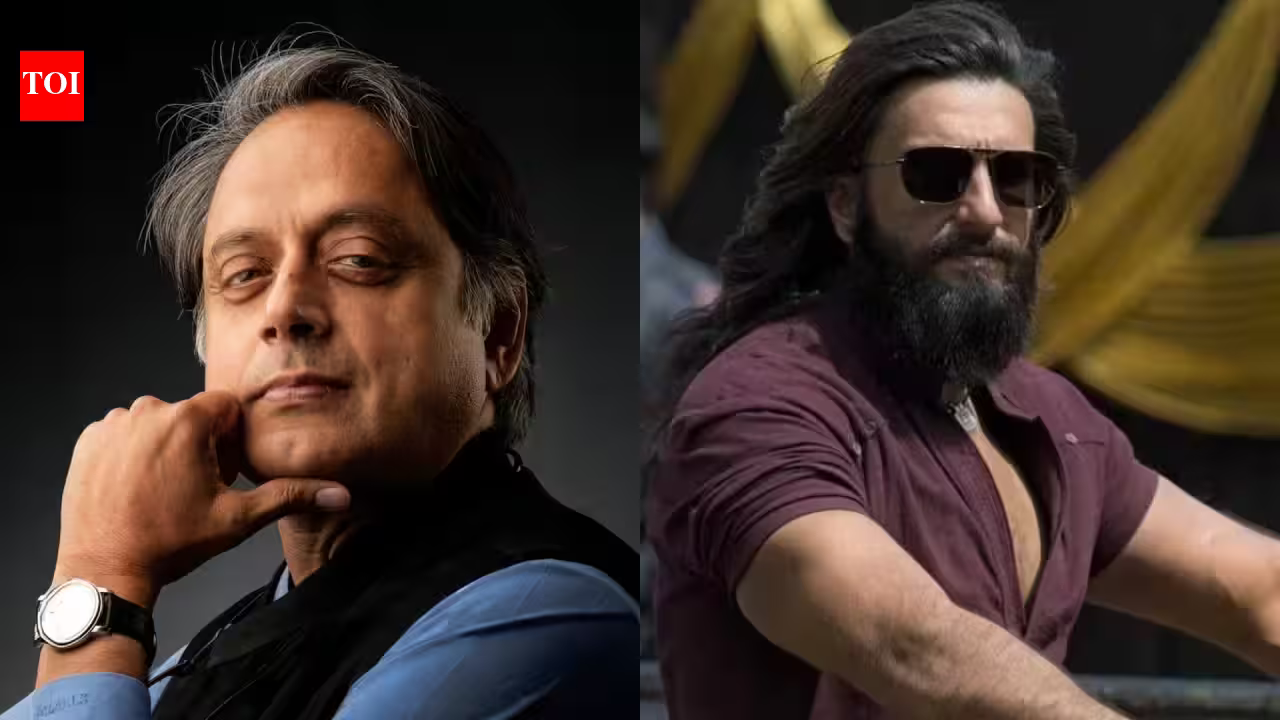
Enter Congress MP Shashi Tharoor, a man whose critiques are as measured as his prose. In a candid breakdown shared on his official YouTube channel, Tharoor offered a nuanced appraisal of the franchise, oscillating between genuine admiration for its technical bravado and a visceral distaste for its ideological undercurrents. For Tharoor, Dhurandhar is a masterclass in modern filmmaking that simultaneously acts as a polarizing mirror to our current geopolitical climate.
A Technical Triumph Masked by Mayhem
“As a work of fiction, as a work of entertainment, there is no doubt that the second part is superb,” Tharoor noted, setting a tone that acknowledges the undeniable craft behind the camera. The lawmaker didn’t hold back in praising the franchise’s cinematic execution. From the intricate production design to the sharp direction, he lauded the films as “vividly made” and “competent,” admitting that after an eight-hour immersion, one truly feels as though they have been through a “major cinematic experience.”
However, the praise came with a sharp caveat. Tharoor, who is known for his penchant for refined discourse, found the film’s reliance on brutality deeply unsettling. He characterized the graphic violence not just as excessive, but as “totally over the top.”
“There was no need to show so much violence, blood, mayhem, cruelty and some of the most disgusting scenes ever seen in Indian cinema,” he asserted. It is a criticism that resonates with a segment of the audience that feels modern action cinema has begun to prize visceral shock value over narrative necessity. For Tharoor, the film’s “brilliance” in storytelling is occasionally cannibalized by its insistence on grotesque spectacle.
The Propaganda Paradox and Regional Bans
Beyond the gore, the elephant in the room remains the political messaging. Dhurandhar has faced significant headwinds internationally, with reports confirming bans in Pakistan and several Gulf nations—a development that Tharoor finds both expected and understandable.
“There is a lot of propaganda stuff built into it obviously,” he remarked, acknowledging the allegations of nationalist agenda that have trailed the franchise. He noted that the bans were largely a diplomatic buffer against the potential for “needlessly creating bad blood between Indians and Pakistanis.”
Perhaps most intriguing was Tharoor’s hypothesis on how a Pakistani viewer might process the film. Rather than a blanket condemnation, he suggested a more complex emotional reaction. “I don’t know how Pakistanis will react if they see this,” he pondered. “Some of the lines, I think Pakistanis will laugh. Some of the other things, I think Pakistanis will realise how much wrong has been done in their name.” It is a uniquely Tharoorian perspective: viewing the film not as a weapon, but as a flawed piece of media that inadvertently exposes the failures of state-sponsored militancy.
Cloak-and-Dagger: Fiction vs. The Real World
As a seasoned politician with decades of experience on the global stage, Tharoor also took issue with the film’s stylized depiction of intelligence work. The Dhurandhar franchise thrives on the aesthetic of the “cloak-and-dagger” operative—a world of dark alleys, high-stakes explosions, and shadow wars.
Tharoor, however, offered a reality check based on his own professional brushes with India’s intelligence community. “I have dealt with a lot of our intelligence people but in a very civilised way, having analysis, conversations, information exchanges,” he shared. He confessed that the high-octane drama of the film—where command decisions seemingly trigger geopolitical catastrophes—bears little resemblance to the quiet, analytical, and bureaucratic reality of statecraft he has inhabited.
Questioning the Continuity of Power
One of the film’s key pillars is the character played by R Madhavan, a figure widely understood to be a cinematic surrogate for National Security Advisor Ajit Doval. Tharoor challenged the structural plausibility of the character’s longevity within the narrative, questioning the logic of a single official holding the same strategic position from the late 1990s through the present day.
While acknowledging that such continuity is a necessary “stretch” for the sake of franchise storytelling, Tharoor remained skeptical of the realism. “I think it would be too much of a stretch to assume that’s true,” he noted. “So I would see this as a fictional film that tells a story which obviously is meant to impart a certain sense of lessons as well.”
The Final Verdict: Entertainment or Indoctrination?
Ultimately, Shashi Tharoor’s review is a reminder that Dhurandhar is a film of two halves: one that belongs to the audience’s thirst for high-budget, high-concept thrills, and another that belongs to the broader culture war. By refusing to dismiss the films entirely, Tharoor highlights the danger of simplistic reactions to complex cultural products.
The franchise, featuring a stellar ensemble including Akshaye Khanna, Arjun Rampal, Rakesh Bedi, Sanjay Dutt, and the young Sara Arjun, has certainly moved the needle. Whether you view it as a patriotic triumph or a dangerous piece of propaganda, Dhurandhar has cemented its place in the pop-culture canon. As Tharoor concluded, the film is “bound to have an impact on anyone who has an imagination or a mind.” In a world where cinema increasingly serves as a battleground for national identity, that impact may prove to be the franchise’s most enduring, and perhaps most controversial, legacy.
Disclaimer: This content is auto-generated for informational purposes only.
Source: Read Original News