![ToxIc Full Movie Collection: 'Toxic' box office collection Day 3 [LIVE]: Yash and Kiara Advani film aims at crossing Rs 150 crore India net amid mixed reviews and global haul of Rs 190 crore | Hindi Movie News](https://dailysamchar.in/wp-content/uploads/2026/08/1787905993_photo.jpg "ToxIc Full Movie Collection: ‘Toxic’ box office collection Day 3 [LIVE]: Yash and Kiara Advani film aims at crossing Rs 150 crore India net amid mixed reviews and global haul of Rs 190 crore | Hindi Movie News")








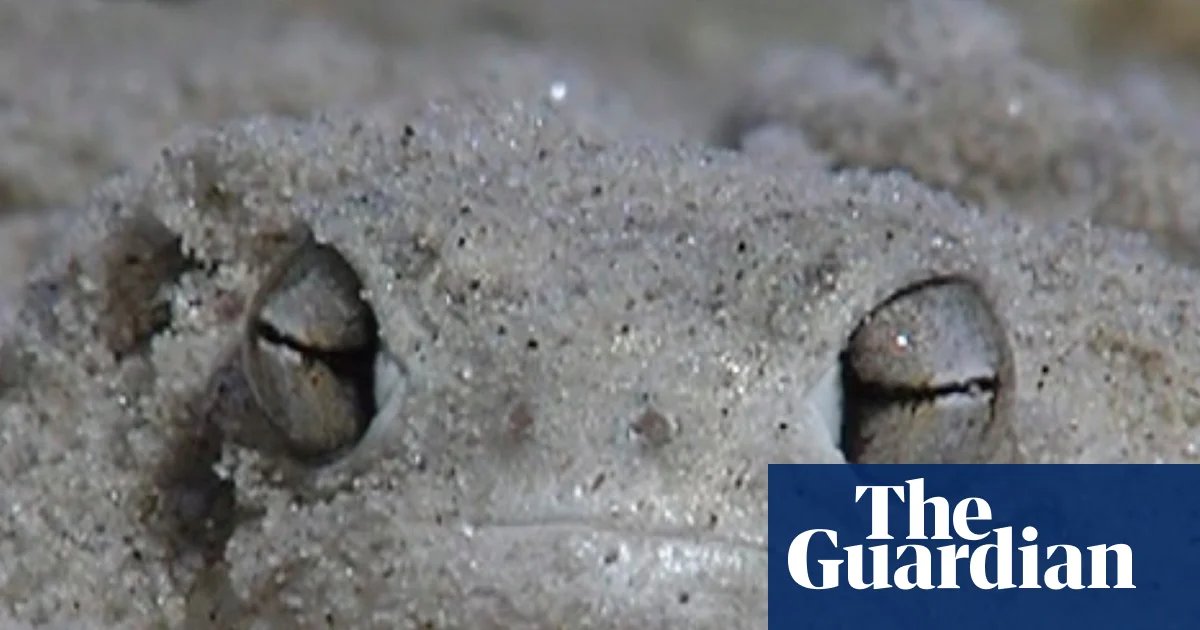
The desert rain frog is one of the most unusual amphibians on the planet. With a rotund body and stumpy legs that dig rather than jump, it has evolved to survive not in wetlands or rainforests, but in the unforgiving dunes of the southern African desert.
This week the species was declared to be threatened with extinction by the International Union for Conservation of Nature (IUCN)’s red list, which classified it as vulnerable. Without conservation efforts, its population is expected to decline by 20% in the next decade, the IUCN warns.
“It’s a completely unique species and it’s just amazing that it has managed to evolve and adapt to this harsh environment,” says Dr Jeanne Tarrant, the executive director of Anura Africa and co-chair of the IUCN Amphibian Specialist Group.
“It [exhibits] the least typical frog kind of behaviour that you can get. Frogs like it where it’s moist and tropical – and this thing is living in the desert,” she says.
The desert rain frog (Breviceps macrops) lives only in a narrow strip of the north-west coast of South Africa and in south-western Namibia. It can’t be found anywhere else on the planet, say experts.
However, vast swathes of its habitat are threatened with destruction. The IUCN warns that diamond mining and development projects, such as the Boegoebaai port and rail project, are expected to affect a third of the frog’s range in South Africa, and two-thirds of its range in Namibia over the next 20 years. Increased urbanisation also poses a threat.
There are added concerns that the frog may be a growing target for the pet trade, after social media videos featuring its famous squeak were shared widely online.
The high-pitched noise, which sounds like a dog toy, is cute to the human ear. However, this sound is actually a distress call, usually made in response to predators, says Tarrant: “Someone would have been poking it with a stick or traumatising it a bit to get it to make that call.”
Clips of the squeak, which rack up millions of views, have led to a surge in online searches inquiring how to obtain a desert rain frog, says Tarrant. It is not yet clear if this is translating into the frogs being snatched from the wild.
Conservationists warn the desert rain frog must be kept in its habitat, adding that it would be very difficult for pet owners to recreate the conditions necessary for it to thrive.
The frog spends much of its time burrowed in the sand dunes, emerging at night to snack on termites and other insects.
“Their back feet are their little shovels and they will burrow down and disappear within seconds,” says Tarrant. The sand on the surface of dunes is bone dry, so the frog tunnels down backwards, descending about 30cm, until it finds a damp layer where it can rest.
The amount of time spent below the surface varies, but the frogs can remain there for months, living off the small amount of oxygen present in the soil, says Louis du Preez, professor of zoology at North-West University in South Africa, who leads the African Amphibian Conservation Research Group.
When the frog resurfaces, it searches for patches of water formed by condensed fog that has dripped from plants on to the sand. It sits on these patches, absorbing moisture through its stomach.
“On their belly, they’ve got an area that’s highly vascularised – you can see it is a pink patch, because of the blood vessels in the skin,” says Du Preez. This skin acts as blotting paper.
If the frog had a long, thin body like a snake, this would mean a bigger surface area, increasing the risk of moisture loss through evaporation, adds Du Preez: “This little fat froggy can survive better,” he says.
A favourite snack is fat-rich termites, says Du Preez, who adds that the frog finds these irresistible. “If it’s absolutely at full capacity and there’s another termite walking past, it will go for it,” he says.
“Later on you just see the termite wings sticking out of the mouth,” he adds. “They can’t swallow another one, but will take it regardless.”
To reproduce, the male frog attaches himself to the female, as she is too rotund to hang on to, says du Preez. “He literally secretes a glue on his chest and forearms and he glues himself to the female.”
The female will then dig into the soil and create a space to deposit the eggs, which the male will fertilise. On top of the fertilised eggs, the female lays unfertilised eggs, which later liquefy. When the tadpoles hatch in the subterranean chamber, they whip this liquid into a foam that traps oxygen.
“Among all the frogs in the world, this one has got really unique breeding, biology, physical features, morphology,” says Du Preez, adding that conserving sand dunes is the best way to protect the species.“They don’t occur anywhere else in the world.”
Find more age of extinction coverage here, and follow the biodiversity reporters Rebecca Ratcliffe, Phoebe Weston and Patrick Greenfield in the Guardian app for more nature coverage.