









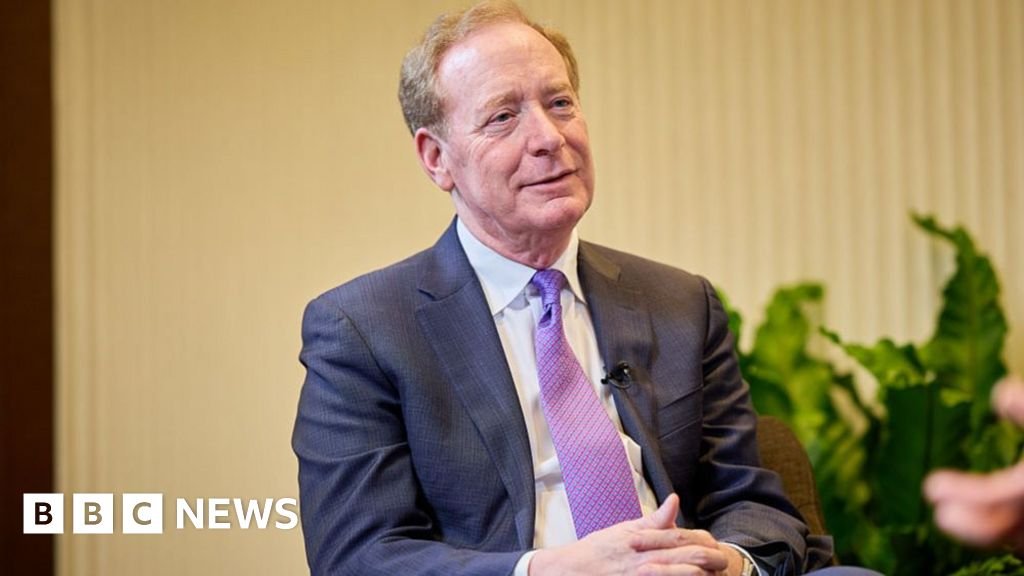
Microsoft President Brad Smith has issued a clarion call for the establishment of a robust, internationally recognized framework to govern artificial intelligence. Speaking from the heart of the tech industry, Smith emphasized that as AI becomes increasingly integrated into the fabric of global infrastructure, the lack of standardized regulation poses significant risks to security, privacy, and economic stability.
Smith highlighted the United Kingdom as a unique candidate for steering this complex diplomatic and technological process. He noted that the country’s legal heritage, existing technical expertise, and role as a bridge between the United States and the European Union position it as the ideal mediator to harmonize competing regulatory philosophies.
## The Push for a Unified Global Regulatory Standard
The current landscape of AI governance is fragmented. While the European Union has moved forward with the AI Act, the United States has largely relied on executive orders and industry-led standards. Smith argues that this divergence creates a “compliance nightmare” for tech conglomerates and startups alike, which could stifle innovation and prevent the deployment of life-saving technologies.
According to Smith, a global set of rules should focus on accountability and transparency. He believes that corporations developing large-scale models—such as Google with its Gemini ecosystem or Microsoft with OpenAI—must be held to a “safety-first” standard that is enforceable across borders. By establishing clear “rules of the road,” the global community can prevent the misuse of generative AI in critical sectors like healthcare, energy, and financial services, while still fostering an environment where breakthroughs can flourish.
## The Role of Tech Giants in Shaping Governance
Major technology companies, including Google and Microsoft, are currently in an arms race to dominate the generative AI market. From Google’s recent updates to its Gemini suite, which integrate advanced reasoning capabilities into Search and Workspace, to Microsoft’s deep integration of Copilot across the Windows ecosystem, these tools are rapidly changing how the world interacts with the internet.
Smith acknowledges that the tech industry has a responsibility to be an active participant in this legislative process rather than a passive observer. He argues that companies must proactively share findings regarding model vulnerabilities. By collaborating with government bodies to standardize “watermarking” for AI-generated content, tech leaders can mitigate the risks of misinformation—a growing concern for platforms like Google Search and YouTube as they battle the proliferation of synthetic media.
## Why the UK is Poised for Leadership
Smith’s confidence in the UK’s leadership stems from the country’s recent success in hosting high-profile international summits dedicated to AI safety. Unlike the more restrictive approach favored in some jurisdictions, Smith suggests that the UK’s “pro-innovation” philosophy offers a middle path that encourages growth without sacrificing essential safety guardrails.
The UK government has already begun exploring ways to oversee AI development without stifling the nascent startup ecosystem that revolves around London’s technology hubs. By maintaining this balance, the UK serves as a neutral ground where the interests of developers, academic researchers, and civil rights groups can converge.
As Google continues to roll out its latest AI updates and expands its infrastructure to support high-compute model training, the industry watches closely to see if international lawmakers can keep pace. Smith’s message is clear: if the world fails to align on a cohesive strategy today, we risk a fragmented digital future that is less secure, less predictable, and significantly harder to manage. The path forward requires a rare level of international cooperation, but for Smith, the potential benefits—a safe and flourishing AI-driven economy—are well worth the diplomatic heavy lifting.
Disclaimer: This content is auto-generated for informational purposes only.
Source: Read Original News