









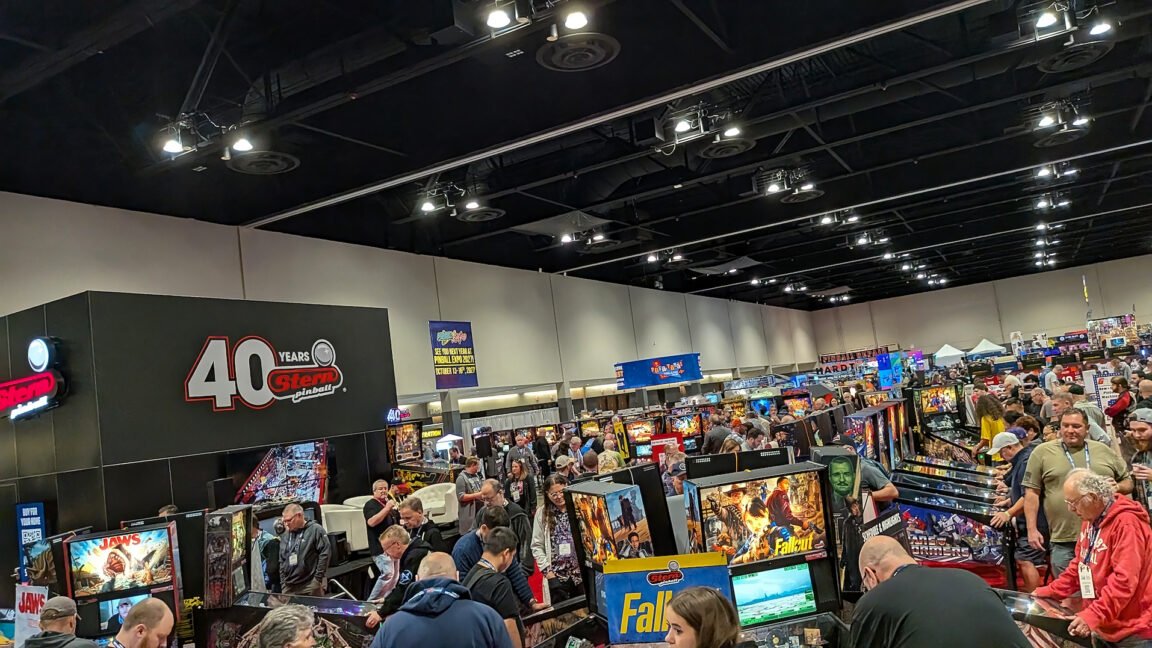
The Convergence of Mechanical Nostalgia and Modern Computation at Pinball Expo 2026
The annual Pinball Expo serves as the primary nexus for mechanical engineering, industrial design, and increasingly, complex software integration. As the industry gathers in 2026, the focus has shifted from simple solenoid-driven gameplay to sophisticated digital ecosystems. This year’s exhibition highlights a profound evolution in how physical hardware interacts with modern processing power, marking a departure from the traditional electro-mechanical state machines that defined the medium for decades.
Hardware Innovation and Mechanical Complexity
At the core of the latest pinball hardware is a move toward more granular control systems. Modern machines now employ high-frequency microcontrollers to manage solenoid fire-timing with millisecond precision. By decoupling the mechanical response from the primary game engine via dedicated real-time processing boards, manufacturers are achieving a level of kinetic responsiveness that was previously unattainable.
These systems utilize hall-effect sensors rather than traditional mechanical leaf switches. By measuring the proximity of the steel ball through magnetic flux density, the game logic can interpret velocity and trajectory before the ball even strikes a target. This advancement allows for dynamic difficulty adjustment. If the sensors detect a player consistently hitting high-scoring shots, the game engine can subtly alter the physics of the playfield environment by adjusting the timing of active magnet features or reconfiguring the flow of the game through motorized gate diverters. The physical construction has also moved toward modularity, with playfield components now featuring quick-release wiring harnesses that allow operators to swap entire sub-assemblies in minutes, significantly reducing maintenance downtime.
Advancements in Visual Processing and Display Technology
The display integration at this year’s expo signals the end of the traditional Dot Matrix Display era. Most flagship machines have transitioned to integrated high-resolution LCD panels that function as secondary gameplay interfaces. These displays are no longer merely passive scoreboards; they serve as active telemetry dashboards.
The software powering these displays utilizes game engines capable of real-time asset rendering. This allows developers to overlay visual information directly onto the ball’s path, providing the player with vital tactical data, such as calculated shot multipliers or countdown timers for active missions. Furthermore, the integration of low-latency video feed capabilities allows these systems to mirror the playfield action in real-time, displaying slow-motion replays of specific ball captures. This integration relies on high-bandwidth data buses that sync the display refresh rate with the physical events occurring on the playfield, ensuring that visual feedback matches the mechanical impact without perceptible lag.
The Role of Machine Learning in Predictive Gameplay
A significant technical breakthrough featured at Expo 2026 is the implementation of local machine learning models within the pinball controller board. Rather than relying on static rule sets, the latest firmware utilizes an inference engine to monitor player performance over the course of a session.
By analyzing historical data points—such as drain frequency, target accuracy, and ball hold time—the onboard processor constructs a performance profile for the player. If the system detects a player struggling, it can initiate adaptive assistance features, such as briefly extending the ball-save timer or strategically activating bumpers to push the ball back toward the center of the playfield. Conversely, for high-skill players, the machine increases the complexity of target sequencing. This implementation of predictive algorithms ensures that each game is tuned to the specific capabilities of the user, effectively balancing the challenge to maximize engagement duration without relying on arbitrary randomization.
Connectivity and Ecosystem Synchronization
Pinball machines are no longer isolated systems; they are now fully integrated nodes within a broader network. The adoption of robust wireless connectivity protocols allows machines to communicate with cloud-based leaderboards, remote diagnostic servers, and mobile companion applications.
Technically, this involves encrypted data transmission that reports machine health and gameplay statistics to the manufacturer in real-time. Operators can use this telemetry to track component wear, predicting when a specific solenoid or rubber ring will likely reach the end of its service life. This predictive maintenance model transforms the traditional arcade business, as it allows for proactive part replacement before a mechanical failure occurs. Additionally, the synchronization features enable persistent player profiles. When a user authenticates at a machine, their progress, high scores, and preferred game settings are loaded via the network, allowing a seamless continuation of their competitive journey across different machines and geographical locations.
Industry Impact and Future Trajectories
The technical refinements showcased at Pinball Expo 2026 illustrate a maturing industry that is leveraging modern technology to preserve the tactile essence of mechanical gaming. By integrating precise sensor arrays, predictive software, and networked diagnostics, manufacturers have successfully bridged the gap between the analog past and the digital future.
The impact of these changes extends beyond the hardware itself. The ability to push over-the-air firmware updates allows developers to adjust rule sets long after a machine has left the factory, effectively turning hardware products into living services. As we look toward the future of this niche yet technically dense field, the integration of more sophisticated edge computing will likely allow for even greater levels of interactivity. The hardware may be built from steel and wood, but the intelligence driving it has become decidedly silicon-centric, setting a new standard for performance and maintainability in the amusement industry.
Disclaimer: This content is auto-generated for informational purposes only.
Source: Read Original News