









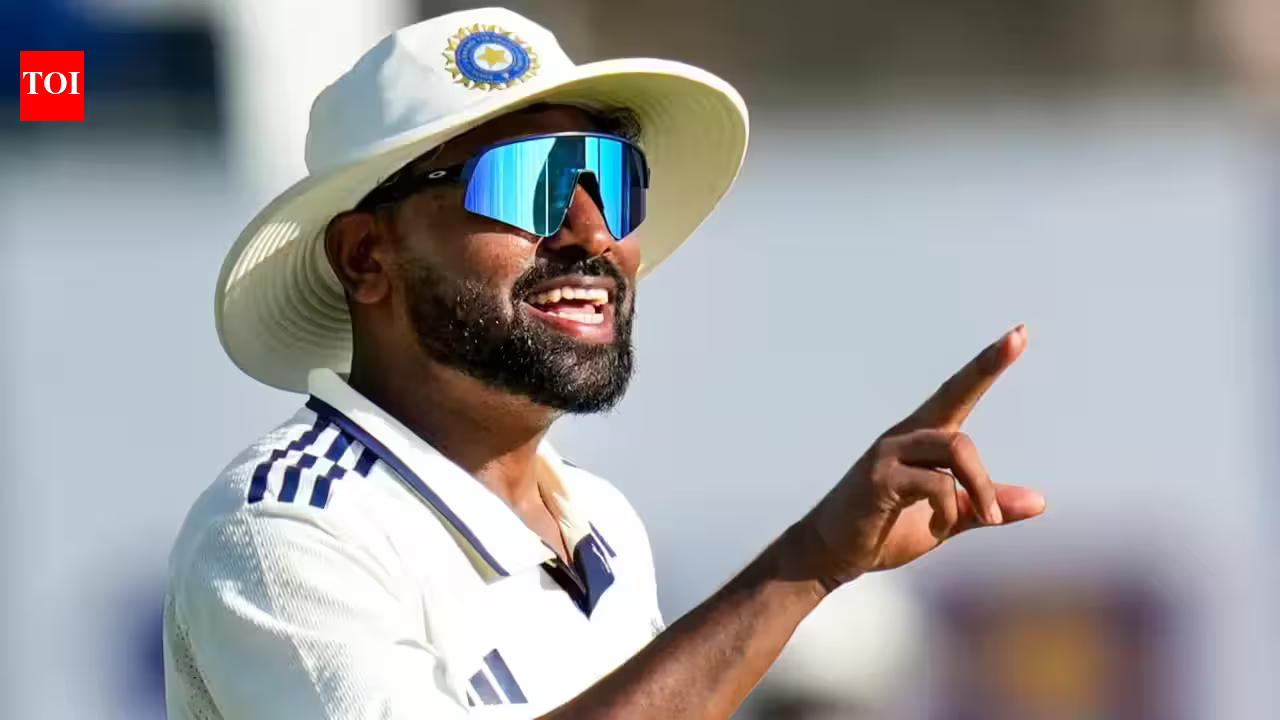
Puzzlement continues to dominate the discourse surrounding the Indian cricket team’s selection strategy as the side faces off against New Zealand in Christchurch. Among the chorus of voices questioning the tactical decisions made by the team management, former Indian cricketer Mohammed Kaif has emerged as a vocal critic, expressing sheer disbelief over the repeated omission of premier fast bowler Mohammed Siraj from the playing XI.
The decision to bench a bowler of Siraj’s pedigree—who currently sits at the top of India’s wicket-taking charts in the ongoing World Test Championship (WTC) cycle—has sent shockwaves through the cricketing fraternity. Having scalped 43 wickets in just 11 matches, Siraj’s statistical contribution to India’s WTC campaign is undeniable, making his sudden absence from the Test lineup all the more perplexing.
Kaif Leads the Outcry
Taking to the social media platform X, Kaif did not mince his words. He argued that Siraj, owing to his proven ability to perform in foreign conditions, should be considered an automatic selection alongside the spearhead, Jasprit Bumrah.
“Hard to believe as one of India’s premier fast bowlers, Mohammed Siraj, is dropped again,” Kaif wrote. “Siraj should be one of the first names considered in India’s overseas Test bowling attack, alongside Bumrah. Interestingly, bowling coach Morne Morkel himself called Siraj a world-class bowler and said he was bowling well.”
Kaif’s frustration reflects a broader sentiment among analysts who believe that in the high-stakes environment of overseas Tests, experience and a proven track record must take precedence. Siraj has long been touted as India’s “enforcer” in tough conditions, having delivered stellar performances, most notably his heroic display during India’s dramatic victory at The Oval against England last year. His record in Asian conditions is equally formidable, boasting 21 wickets at an average of 21.28.
The Management’s Rationale
The team management has maintained a stance focused on “current form” and “tactical assessment,” though their public justifications have provided little comfort to those calling for Siraj’s inclusion. Following the draw in the series opener in Wellington—a match where the Indian bowling attack struggled to dismiss a resilient New Zealand lineup—captain Shubman Gill addressed the media.
“Sometimes you have to see which bowlers are in form, which bowlers are bowling the best,” Gill explained, touching on the complex criteria used to finalize the XI.
Adding further context to the situation, bowling coach Morne Morkel provided insight into the private discussions held with the Hyderabad-born pacer. Morkel described the omission not as a permanent demotion, but as a deliberate “step back” to allow the bowler to recalibrate.
“The conversation I had with him was to say, ‘Listen, let’s just step it back a little bit. Where are we at the moment, what do we need to improve, and where can we get better?’” Morkel stated on the eve of the Christchurch Test. While the coaching staff clearly hopes this break will allow Siraj to return to his peak, the timing of such an assessment—during a pivotal WTC series—has left many wondering if the team is sacrificing immediate efficacy for a long-term developmental gamble.
Shifting Dynamics in the Pace Battery
The composition of India’s bowling attack for the New Zealand series has seen significant upheaval. For the series opener, the selectors opted for a quartet of Jasprit Bumrah, Prasidh Krishna, Akash Deep, and Anshul Kamboj, supported by the off-spin of Washington Sundar. In a further twist for the Christchurch Test, the management handed a maiden Test cap to young pacer Gurnoor Brar, who replaced Prasidh Krishna.
The continued exclusion of veteran all-rounder Ravindra Jadeja in favor of Washington Sundar further highlights the management’s desire to experiment with the balance of the squad. However, as the series remains finely poised at 0-0, the pressure to deliver a result is mounting.
The Stakes are Rising
The critique surrounding Siraj’s absence is indicative of the scrutiny placed upon the team during high-profile tours. In the demanding arena of Test cricket, where momentum is built on the back of disciplined bowling spells and the ability to break partnerships, leaving out a bowler who has proven himself against the best in the world is a gamble that carries significant risk.
Whether the management’s decision to rest Siraj for a “reset” will pay off remains to be seen. If India’s bowling attack fails to generate the penetration required to dismantle the New Zealand batting lineup in Christchurch, the calls for Siraj’s return will undoubtedly grow louder. For now, the spotlight remains fixed on the playing XI, leaving fans and experts alike to wonder if the team’s most reliable wicket-taker will be drafted back into the mix before the opportunity to secure the series slips away.
Disclaimer: This content is auto-generated for informational purposes only.
Source: Read Original News