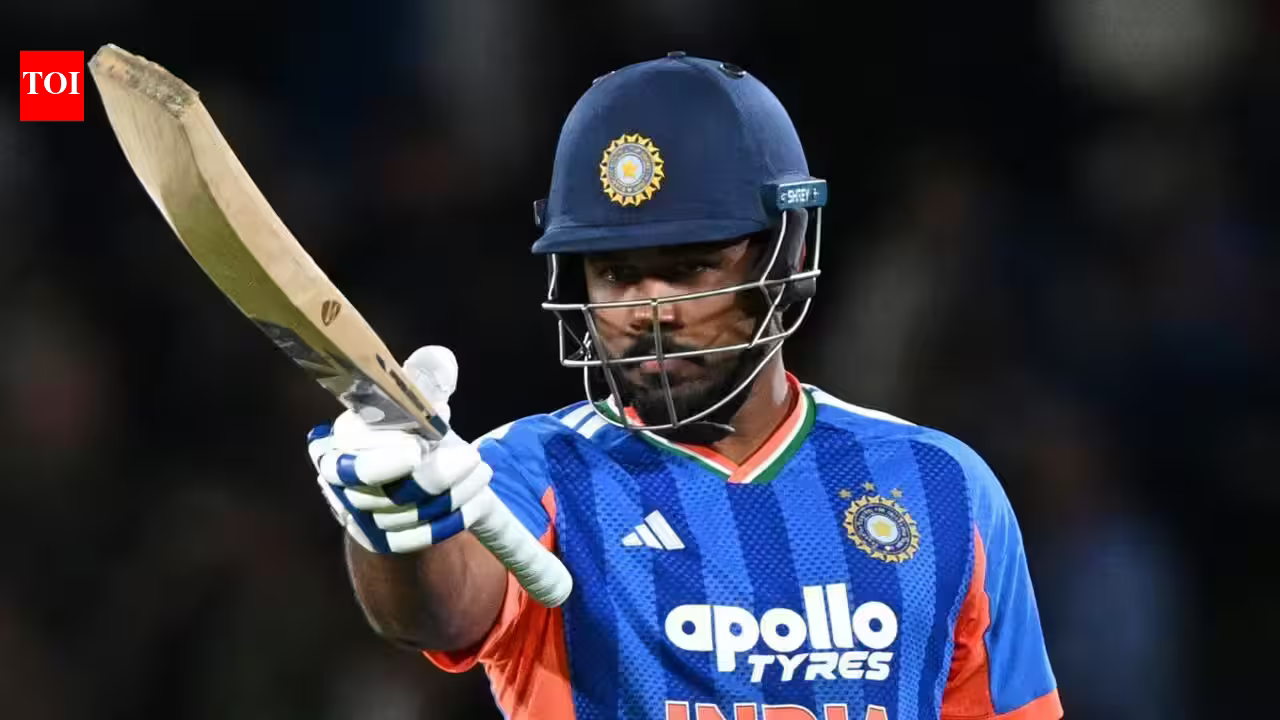










NEW DELHI — In a display of sustained, aggressive dominance that has redefined the modern T20 landscape, the Indian cricket team has officially shattered the ceiling of modern power-hitting. When Naman Dhir connected cleanly in the 19th over against New Zealand, sending the ball soaring 15 rows into the stands, it wasn’t just a moment of individual brilliance; it marked India’s 400th six of the 2026 calendar year.
To put that figure into perspective, just four years ago in 2022, India recorded 289 sixes across 40 T20 Internationals. Today, over the same volume of matches, they have surged to 400—a staggering 38.4 percent increase that serves as a chilling warning to the rest of the cricketing world. As Shreyas Iyer’s squad prepares for their upcoming series against Sri Lanka in December, the question is no longer whether they can hit sixes, but how many more the record books can possibly accommodate.
The Anatomy of Dominance
The statistical footprint of this Indian side is as intimidating as it is efficient. In their recent 3-2 series triumph over New Zealand, the difference in approach was stark: India cleared the ropes 142 times, while the Black Caps managed only 61. In terms of pure run-scoring, that disparity equated to 486 additional runs generated solely through boundaries.
The strategy behind these numbers is anchored at the top of the order. Abhishek Sharma has emerged as the spearhead of this revolution, tallying an astonishing 86 sixes in the calendar year. He is bolstered by the blistering form of Ishan Kishan (60) and Sanju Samson (50). This top-three dominance is the driving force behind India being the only nation to have breached the 100-run mark in the Powerplay twice this year, amassing 145 sixes in the opening six overs alone across their 40 outings.
With a team run rate of 11.21 and an explosive strike rate of 189.96, India’s current blueprint is proving to be the gold standard for global T20 cricket.
Mastery Over Risk
Renowned power-hitting coach Julian Wood suggests that India’s success stems from a fundamental shift in philosophy. While other nations continue to grapple with the “risk-management” approach, India has moved toward a model of skill mastery.
“I think India are approaching T20 cricket differently from other nations,” Wood told TimesofIndia.com. “They’re batting differently and not managing risk in the traditional sense. Instead of managing risk, you have to master the skill, and I think Indian batters are doing that very well.”
Wood attributes the rapid evolution of the Indian game to their immense talent pool, which allows for a quicker adaptation to the game’s ever-changing demands. According to the coach, the traditional “yorker” remains the only sanctuary left for bowlers. “Batters are now hitting length balls. The only delivery you can’t really hit is a yorker. The problem for bowlers is that when they miss, the ball doesn’t just go for four; it goes for six. That puts them under tremendous pressure.”
The Rise of the Fearless Batter
Echoing these sentiments, Sunrisers Hyderabad batting coach Hariesh Jaikumar argues that the rise in big-hitting is less about pitch conditions and more about a seismic change in player mentality. “I think the quality of batting has improved significantly,” Jaikumar observed. “Players have also started playing fearless cricket. They don’t have the inhibitions that batters may have had earlier.”
This shift is perhaps most visible in the emergence of a new breed of cricketer. Where teams once relied on “finishers” to provide late-innings fireworks, India is now empowering its top-order players to attack from the very first ball. Players like Vaibhav Sooryavanshi, who has gained notoriety for dispatching elite bowlers like Jasprit Bumrah and Pat Cummins, represent a future where the distinction between a “top-order anchor” and a “lower-order hitter” has all but vanished.
A Vision of the Future
Wood believes we are witnessing the precursor to a complete structural change in how T20 teams are composed. “In five years, teams could be full of this type of cricketer,” Wood predicted. “The top eight batters could all be players who just want to smash the ball. We’re already beginning to see that.”
Beyond the T20 format, the ripple effects are being felt across the sport. The aggressive mindset fostered in the shortest format is beginning to bleed into ODIs and Test cricket, forcing nations to chase down monumental totals—a trend currently being seen globally.
As India heads into the Sri Lanka series, they do so not merely as winners, but as pioneers. Their 400-six milestone is a benchmark of a team that has dared to dismantle traditional coaching dogmas, proving that in the modern game, the only limit to scoring is the distance from the pitch to the top tier of the stands.
Disclaimer: This content is auto-generated for informational purposes only.
Source: Read Original News