









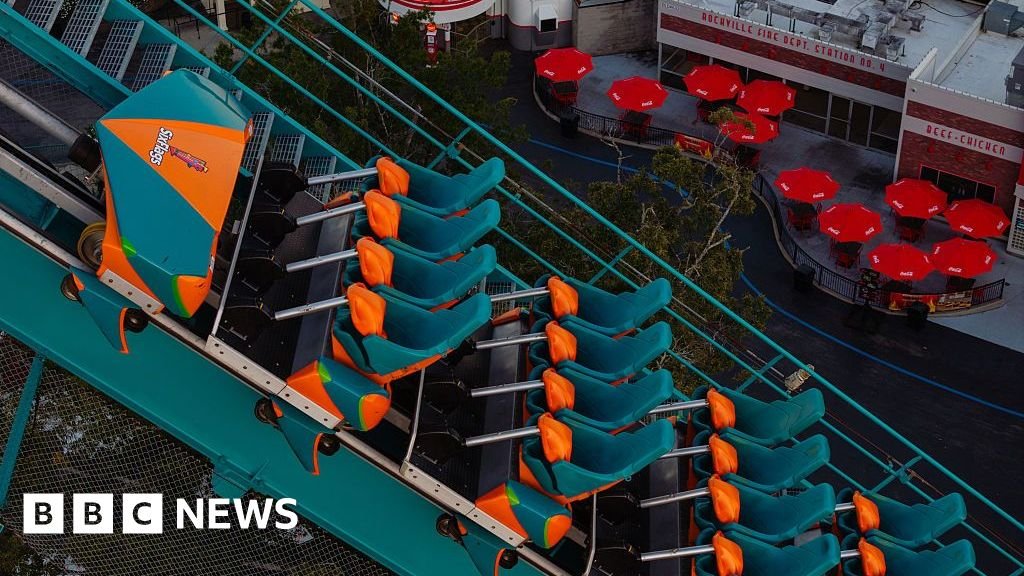
As Six Flags continues to modernize its park operations through digital transformation, the iconic Goliath roller coaster remains a benchmark for data-driven thrill engineering. First unveiled in 2006, this architectural marvel—featuring a staggering 200-foot apex and a high-velocity 70 mph descent—has recently become a focal point for how major amusement parks leverage AI and Google-integrated technologies to optimize guest safety and operational efficiency.
The Intersection of Legacy Engineering and Predictive AI
While Goliath was constructed nearly two decades ago, its continued relevance is a testament to the longevity of physical engineering, now augmented by modern software suites. Six Flags has increasingly moved its backend infrastructure to the cloud, utilizing Google Cloud’s advanced analytics to monitor ride performance in real-time. By feeding telemetry data from sensors embedded within the coaster’s track and braking systems into machine learning models, park engineers can now predict maintenance needs before mechanical issues arise.
This digital layer ensures that the 170-foot plunge and the signature 540-degree spiral remain within optimal safety parameters. The integration of these tech stacks allows park operators to track the “thrill scale”—where Goliath currently holds a level four out of five—against crowd flow data. By analyzing heat maps generated through Google Maps platform integrations, park managers can predict bottlenecks near the ride entrance, allowing for dynamic staffing adjustments that keep wait times to a minimum.
Optimizing the Guest Experience through Google Ecosystems
The modern theme park experience is no longer just about the physical hardware; it is about the digital ecosystem that supports the guest. Today, visitors often plan their trips to Six Flags using Google Search and Google Assistant, which provide real-time updates on ride status, weather conditions, and park capacity.
The Goliath ride serves as a perfect use case for how tech-forward parks manage information. When a guest searches for “Goliath thrill ride” via their Android device, the result—powered by Google’s Knowledge Graph—pulls precise metrics directly from the park’s database. This seamless flow of information from the park’s operational servers to the user’s mobile screen is a result of robust API integrations. Furthermore, the use of Google’s AI-driven advertising tools allows Six Flags to serve hyper-targeted content to thrill-seekers who have expressed interest in high-speed, “level four” attractions, effectively bridging the gap between historical ride data and modern consumer intent.
Future-Proofing High-Speed Thrills with Machine Learning
Looking ahead, the industry is poised to adopt generative AI to further enhance the “thrill” experience. Research teams are exploring how to use AI to generate personalized “ride videos” for guests, where footage of them on the coaster is automatically edited and synced with music using cloud-based vision processing tools.
While Goliath remains a nostalgic staple of the 2006 era, it is currently benefiting from the next generation of industrial technology. Engineers are testing AI-driven simulations to model how the coaster’s forces affect structural integrity over long-term cycles, a process that once required months of manual calculation. By utilizing Google’s High-Performance Computing (HPC) clusters, the park can simulate years of wear-and-tear in a matter of hours.
As Six Flags iterates on its digital footprint, the goal remains clear: to preserve the heart-pounding sensation of the 70 mph G-forces while leveraging the quiet, invisible power of the cloud to ensure that every loop and spiral is as safe as it is exciting. The Goliath stands not just as a monument to steel and gravity, but as a gateway into the tech-integrated future of the global entertainment industry.
Disclaimer: This content is auto-generated for informational purposes only.
Source: Read Original News