



New Delhi Choked: Pollution Levels Surge 58 Times Over Safety Limits Post-Diwali
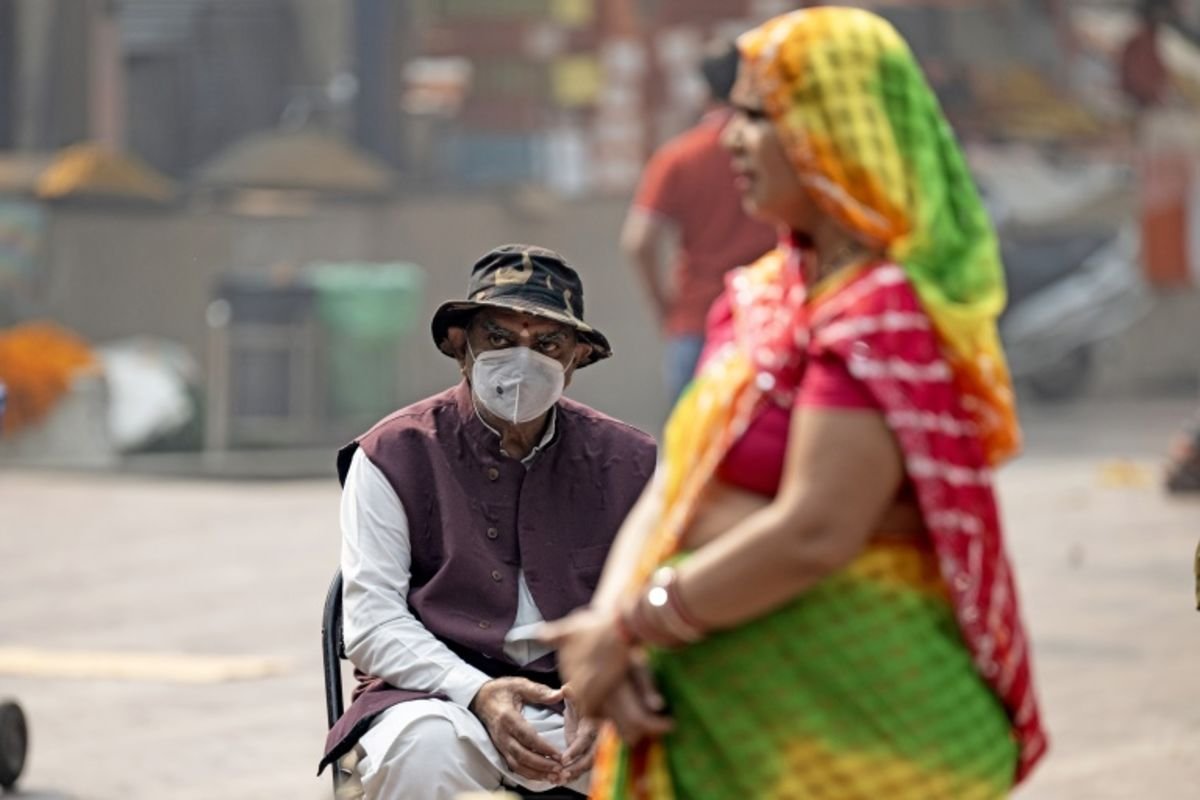
The national capital awoke to a toxic shroud on Monday as air quality plummeted to hazardous levels, driven by a massive spike in firework activity during the Diwali celebrations. Despite stringent judicial warnings and regulatory efforts, the city’s skies turned a murky grey, with particulate matter concentrations reaching staggering heights that dwarf international safety standards.
According to data tracked by IQAir, air quality sensors in the Mandir Marg area recorded PM 2.5 levels—the fine, cancer-causing microparticles capable of entering the bloodstream—at an alarming 879 micrograms per cubic metre. This reading was logged roughly eight hours after the height of the festivities, effectively placing the city’s air quality at nearly 59 times the daily exposure limit recommended by the World Health Organization (WHO).
Flouting the Rules Amidst Festive Fervor
The environmental crisis unfolded despite a recent Supreme Court directive that sought to mitigate the damage by restricting citizens to the use of “green” firecrackers—a specific category engineered to release fewer pollutants. However, the mandate proved difficult to enforce on the ground. Across the capital, the night was defined by the relentless sound of explosions and thick clouds of acrid smoke, signaling that the court’s limitations were widely disregarded by the public.
For a city of over 30 million residents, the Diwali firecrackers act as a catastrophic multiplier for existing environmental stressors. New Delhi’s winter air is already compromised by a lethal cocktail of heavy vehicle traffic, industrial emissions, and the seasonal practice of crop residue burning in neighboring states.
A Multidimensional Pollution Crisis
The sheer volume of pollutants in the Delhi atmosphere is a product of several converging sources. Data released by the Ministry of Environment highlights that vehicle emissions are responsible for 23% of the capital’s winter pollution, while biomass and farm stubble burning account for 20%. Industrial output, including emissions from coal-fired power plants, contributes another 9%.
Perhaps most concerning is the 27% share attributed to secondary particles. These are formed through complex chemical reactions in the atmosphere as gases released from vehicles, power plants, and industry interact, creating a persistent smog that blankets the region for months on end.
The Public Health Toll
The implications of this persistent atmospheric toxicity extend far beyond seasonal discomfort. The long-term health consequences for India’s urban population are dire. A 2024 study featured in The Lancet Planetary Health underscored the gravity of the situation, estimating that air pollution was a contributing factor in 3.8 million deaths across India during the decade spanning 2009 to 2019.
As the city enters the peak of the winter season, local authorities face an uphill battle. While the government has previously enacted emergency measures, such as bans on non-essential construction and strict vehicular restrictions, the post-Diwali spike serves as a stark reminder of the limitations of current policy. For the residents of Delhi, the festival of lights has once again left the city grappling with a dark reality: a public health emergency that demands more than just seasonal restrictions.
Disclaimer: This content is auto-generated for informational purposes only.
Source: Read Original News