







In the high-pressure ecosystem of the Indian film industry, the narrative around motherhood has undergone a tectonic shift. Today, we celebrate icons like Alia Bhatt, who seamlessly balanced the grueling demands of her Hollywood debut in Heart of Stone with the responsibilities of impending motherhood, all while launching her own production house. But while Alia’s professional vigor is often hailed as a modern triumph, the seeds of that relentless work ethic were sown long ago by her mother, Soni Razdan.
A look back at Razdan’s career in the 80s and 90s reveals a woman who was not just acting, but navigating a professional landscape that was far less forgiving to working mothers than it is today. Through her recent reflections, we gain a rare, candid glimpse into the reality of a generation of actresses who had to juggle the spotlight with the unspoken, often hidden, demands of raising a family.
The ‘Buniyaad’ Era: Filming Through the Unknown
Long before the red carpets and the global brand endorsements, Soni Razdan was building her craft on the small screen. Her breakthrough came with the seminal television series Buniyaad (1986–1987), directed by Ramesh Sippy and Jyoti Swarup. It was here, in the midst of a demanding production schedule, that Razdan discovered she was pregnant for the first time.
The logistical nightmares of the era are difficult for today’s stars to fathom. Living in the then-undeveloped Lokhandwala complex, Razdan recalled the daily struggle of simply reaching the set. “I was living in the boonies,” she shared in a recent interview. “You couldn’t even get a taxi in the morning.” In a show of grace that stands as a testament to the respect she commanded, the Sippy family stepped in to provide transportation and ensured she was comfortable on set—a far cry from the standard industry attitude of the time, which often viewed pregnancy as a professional inconvenience.
The ‘Gumrah’ Cigarettes and Pregnancy Perks
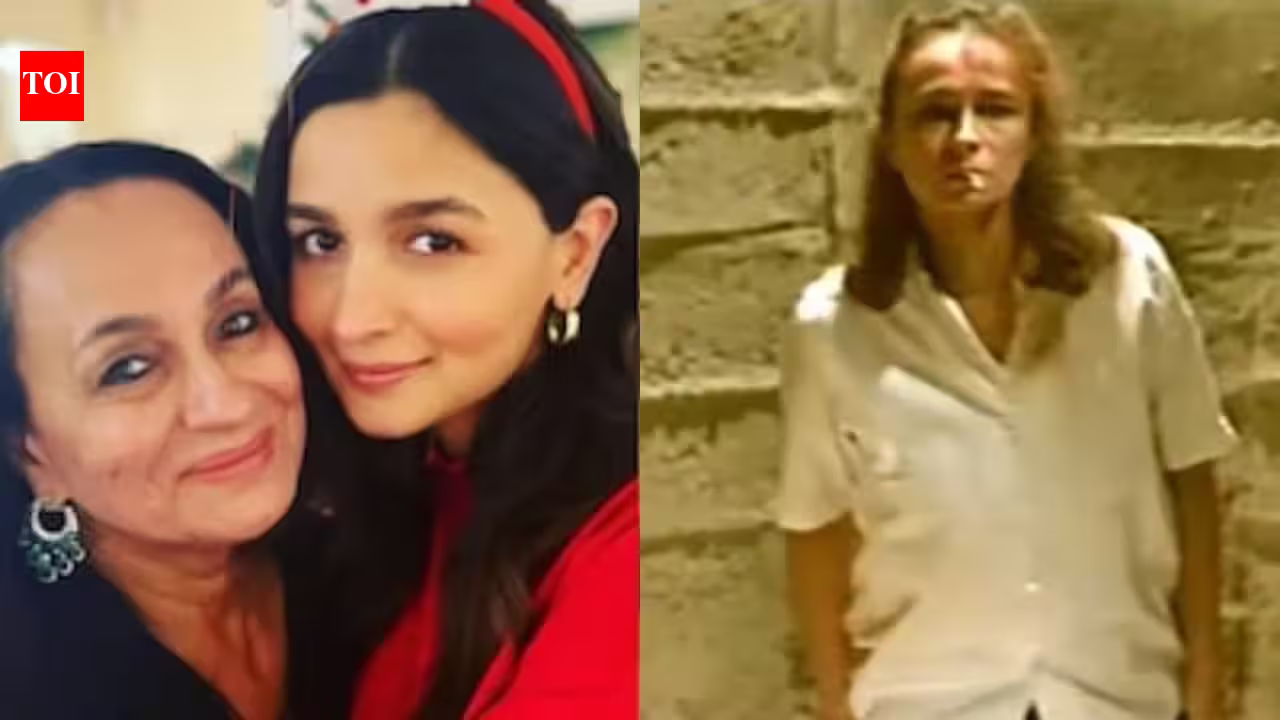
Perhaps the most startling anecdote from Razdan’s career involves the 1993 crime thriller Gumrah. During production, Razdan found herself in the middle of a scene that required her to chain-smoke. Unbeknownst to her, she was pregnant with her second child, Alia Bhatt.
“I was shooting that smoking scene, and I’d have smoked some 100 cigarettes in one day. I had no clue Alia was inside me!” Razdan recalls with a laugh. While the irony of the situation is not lost on her, the physical reality of the shoot was quite rigorous. She famously performed a grueling gallows sequence while carrying the future star, only to return to the set five months later to find that her costumes required significant alterations to accommodate her growing bump. It is a striking image: a woman navigating the heavy, dark themes of a Mahesh Bhatt thriller while silently preparing for the arrival of the woman who would eventually become one of India’s most successful actors.
Tiptoeing Around Motherhood: The Old Industry Mindset
Razdan is quick to point out that the professional climate for women in the 90s was radically different. There was a pervasive, suffocating pressure to keep motherhood behind the curtain. Actresses were expected to “tiptoe around the fact” that they had children, fearing that producers would assume they were distracted or likely to bolt the moment a child fell ill.
This environment forced many, including Razdan, to live a dual life. She recounts a harrowing moment on the set of the 1995 show A Mouthful of Sky, where she was interrupted by a paging call informing her that her two young daughters, Shaheen and Alia—then seven and three years old—were locked out of their home. “I remember I had such trauma on set,” she admitted. The contrast to today’s industry, where Alia Bhatt can openly embrace her role as a mother without fear of professional repercussions, is a source of genuine “gratification” for Razdan. The days of hiding a family to secure a role are, thankfully, in the rearview mirror.
Being ‘Mahesh Bhatt’s Wife’ and the Professional Stigma
Perhaps the most frustrating hurdle Razdan faced was not the pregnancy itself, but the assumptions made about her ambition after her marriage to filmmaker Mahesh Bhatt. In a classic example of industry gatekeeping, many producers and casting directors assumed that, as the wife of a successful director, she no longer needed or wanted to work.
“People said, ‘Why does she need to work now? She’s Mahesh Bhatt’s wife,’” Razdan recalls. This outdated perception led to a dry spell that was only broken by the support of Cinevistaas Limited. The production house, led by Prem Kishen Malhotra and Sunil Mehta, proved to be a lifeline. They didn’t just offer her work; they offered her dignity. By guaranteeing her a minimum of 10 days of work per month, they provided the stability she craved—a rarity in an era where an actress’s shelf life was often dictated by rumors and marital status rather than talent.
A Legacy of Resilience
Looking at the trajectory of the Bhatt women, the parallels are impossible to ignore. Alia Bhatt’s ability to dominate the box office while navigating the complexities of modern motherhood is clearly an inheritance. While the industry has evolved to be more inclusive and supportive, the grit required to persist when the world tells you to step back remains a family trait.
Soni Razdan’s story is a reminder that behind every star is a history of sacrifice. She didn’t just survive the cutthroat world of 80s and 90s Indian cinema; she carved out a space for herself on her own terms. Today, seeing her daughter command the industry with the same, if not greater, level of autonomy is a vindication of the path Razdan herself had to forge through trial, error, and the occasional cigarette-filled blur on a film set. The “break” may have taken her, as she jokingly says, but she never truly stopped moving.
Disclaimer: This content is auto-generated for informational purposes only.
Source: Read Original News