







Advancements in Acoustic Engineering: The Sound Motion Revolution
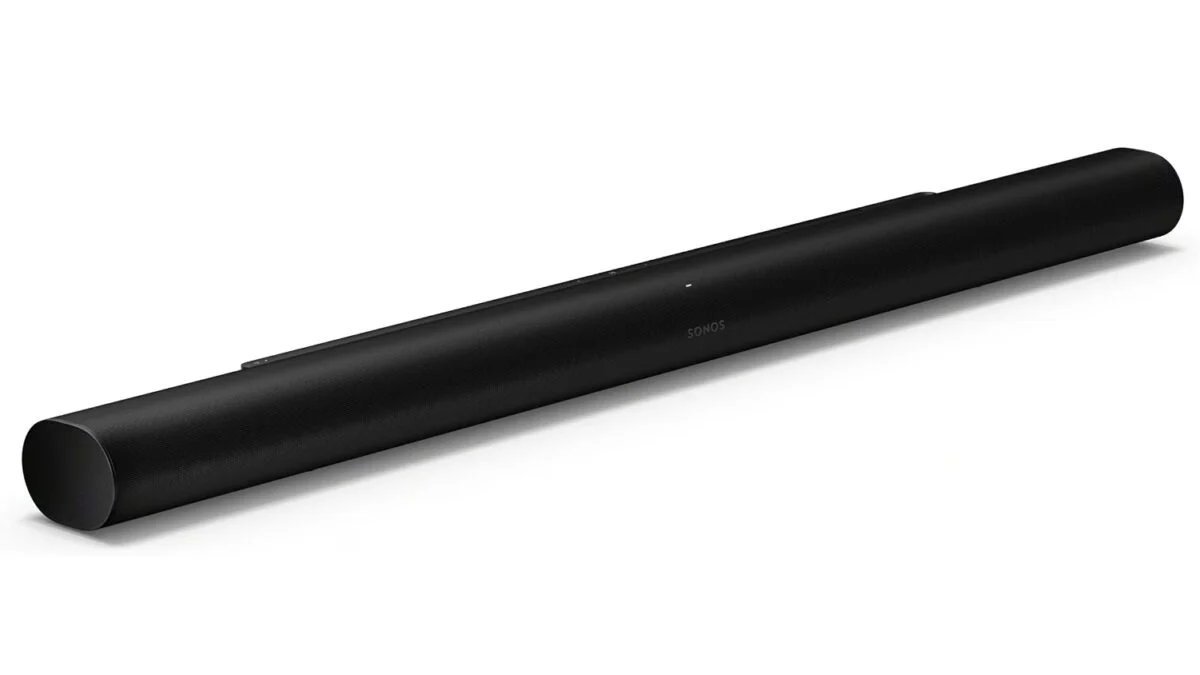
The home theater landscape has long been dominated by the trade-off between convenience and fidelity. Traditional high-end audio setups often demanded multiple bulky amplifiers, a web of tangled cables, and a strategic placement of satellites throughout the living area. The Sonos Arc Ultra aims to dismantle this paradigm by leveraging proprietary Sound Motion technology. This architectural innovation represents a significant shift in driver design, utilizing high-excursion transducers that occupy a smaller footprint than conventional drivers while maintaining the ability to displace a greater volume of air.
By miniaturizing the motor structure without sacrificing acoustic output, Sonos has managed to pack a 9.1.4-channel configuration into a single, cohesive chassis. This internal complexity is essential for delivering the verticality required by modern spatial audio formats like Dolby Atmos. Rather than relying solely on reflective sound, the hardware processes audio signals to create a hemispherical soundstage, simulating the presence of overhead and side channels that would typically necessitate dedicated rear or ceiling-mounted speakers.
Intelligent Dialogue and Real-Time Audio Processing
One of the most frequent consumer complaints regarding modern soundbars is the struggle to balance clear dialogue against high-dynamic-range soundscapes in cinematic content. Action films often feature aggressive orchestral scores and loud sound effects that can mask human speech. The Arc Ultra addresses this through an integrated, AI-driven Speech Enhancement mode. Unlike static EQ presets that simply raise the midrange frequencies, this implementation runs continuously, performing active spectral analysis on incoming audio streams.
This system isolates the specific frequency bands occupied by the human voice and optimizes them against the surrounding sound floor in real time. The result is a consistent listening experience that removes the requirement for the user to manually adjust volume levels during quieter scenes. By analyzing the audio signal as it arrives, the processing engine ensures that clarity remains high regardless of the complexity of the accompanying background noise or dynamic range shifts.
Calibration and Ecosystem Integration
The barrier to entry for high-end audio is often the complexity of the calibration process. Sonos simplifies this via its Trueplay technology, which utilizes the microphone hardware in a user’s mobile device to map the acoustic characteristics of the listening room. By measuring the way sound waves reflect off walls, floors, and furniture, the system creates a tailored EQ profile. This setup process, which takes approximately two minutes to complete, significantly mitigates issues caused by problematic room layouts or non-ideal furniture positioning.
From an integration standpoint, the Arc Ultra serves as a central hub for home audio. It supports HDMI eARC, ensuring high-bandwidth transmission of uncompressed audio data from the television. Beyond television-related tasks, the unit functions as a high-fidelity streaming device. It is fully compatible with AirPlay 2, Spotify Connect, and Bluetooth, allowing it to transition seamlessly from a movie theater role to a high-performance music playback system. This versatility is bolstered by the Sonos ecosystem, which allows the Arc Ultra to sync with other Sonos speakers throughout a residence, facilitating synchronized whole-home audio playback.
Modular Expansion for Immersive Environments
While the Arc Ultra is engineered to perform as a standalone powerhouse, its value proposition is extended by its modular nature. For enthusiasts who eventually desire a more traditional surround sound footprint, the unit is designed to interface wirelessly with the Sonos Sub 4 and a pair of Era 300 speakers. When integrated into this ecosystem, the Arc Ultra acts as the master channel, delegating dedicated low-end and rear surround duties to the external modules.
The inclusion of upward-firing drivers in the Era 300 speakers, when paired with the Arc Ultra, enables a true, rather than simulated, 9.1.4 spatial arrangement. This design path allows users to invest in a premium, single-unit system initially and scale up to a full cinematic surround environment later without replacing existing components or running additional long-form wiring across the room.
Market Positioning and Value Analysis
The premium soundbar market is currently defined by a competitive rivalry between flagship offerings from Sonos, Samsung, and Sony. Historically, achieving a 9.1.4-channel performance level required the purchase of external, dedicated surround modules, which often resulted in a total system cost significantly exceeding the price of a single unit. The Arc Ultra challenges this by offering near-equivalent performance density in one package.
Recent market adjustments have repositioned the Arc Ultra, placing it at a more aggressive price point that competes directly with mid-range soundbars while maintaining its status as a flagship offering. For the consumer, this discount bridges the gap between high-fidelity luxury and accessible home theater hardware. As manufacturers continue to push the boundaries of driver efficiency and digital signal processing, the Arc Ultra stands as a primary example of how hardware architecture can evolve to meet the needs of modern consumers who prioritize both audio clarity and minimalism in their living spaces. Given the current technological trajectory, it represents a significant benchmark for what can be achieved within the confines of a compact, single-bar form factor.
Disclaimer: This content is auto-generated for informational purposes only.
Source: Read Original News