





Keir Starmer has put measures to tackle the cost of living and forge closer ties with the European Union at the heart of his plan to revive Labour’s fortunes after a disastrous set of elections.
The prime minister is battling to save his job, with a Labour MP plotting to launch a leadership challenge on Monday in the hope of spurring his Cabinet to move to oust him.
But despite mounting pressure to quit, Starmer insisted he would lead Labour into the next UK general election to continue with his 10-year project of “national renewal”.
The prime minister will use an address on Monday and the King’s Speech on Wednesday to mount a fightback after growing numbers of Labour MPs demanded a change at the top of the party.
In a Mirror interview, Starmer promised to be “full-throated” about the need for closer ties with Brussels as he sought to win back his wavering MPs and address the drift of voters from Labour to the Greens in many former strongholds in London and cities across England.
I feel that Brexit has held back our young people … I’m not going to let Brexit stand in the way of their opportunities, and therefore we’ll push forward on that
But the big winners from the local elections in England were Reform UK, led by Brexit’s champion Nigel Farage, which snatched councils which had been Labour for generations in former northern heartlands.
In an apparent attempt to address the concerns of voters who felt left behind, Starmer promised “an economy that really works for everyone, wherever they live”.
The Mirror reported that No 10 and the Treasury are drawing up support for families, targeting fuel costs and household bills which have soared since the Iran war pushed up global oil and gas prices.
Scrapping September’s planned increase in fuel duty is understood to be an option on the table, the newspaper reported.

Starmer promised action to address the economic impact of the war, saying: “I know this causes anxiety for families, and I won’t stand by.”
He said that he would be responding with a plan “about the hope and opportunity of a better future, part of which is a stronger economy and an economy that really works for everyone, wherever they live, whatever they do”.
“There are a number of strands to that, but one is, we have to be closer to Europe, and I just want to be full-throated about this.”
A youth experience scheme, allowing young EU and British citizens to work and study in each others’ countries, is expected to be agreed this summer and implemented by 2027.
Starmer said: “I feel that Brexit has held back our young people. They should be free to work, study, travel in European countries, just as I was able to when I was growing up.
“That has been smashed away from young people because of Brexit. I’m not going to let Brexit stand in the way of their opportunities, and therefore we’ll push forward on that.”
Former Foreign Office minister Catherine West has promised to launch a leadership bid on Monday unless Starmer is ushered out by the Cabinet.
But the prime minister said he would not walk away from the job.
Asked if he would lead Labour at the next election, expected in 2029, and serve a full term, he said: “Yes I will, and I’ve always said it’s a decade of national renewal, where the legacy we inherited was an appalling legacy on all fronts, not just the economy, which was broken.”

After launching her surprise leadership bid Ms West, who was in Starmer’s government until September last year, described the election results as “apocalyptic”.
She told the Press Association: “What I’d like to see is the Cabinet locking itself in a room tonight and coming up with a plan to respond to what was the worst election result for the Labour Party that I can remember, and I’ve been in public life since 2001.”
She hoped the party could unite around a single Cabinet figure to avoid the need for a leadership election.
But she added: “I have said that if the Cabinet do not get their act together and get the seriousness of the moment that we find ourselves electorally, that on Monday morning, I will email every single one of my colleagues and ask for up to 80 names.”
She would need the backing of 20 per cent of Labour’s 403 MPs – a total of 81 – to challenge Starmer.

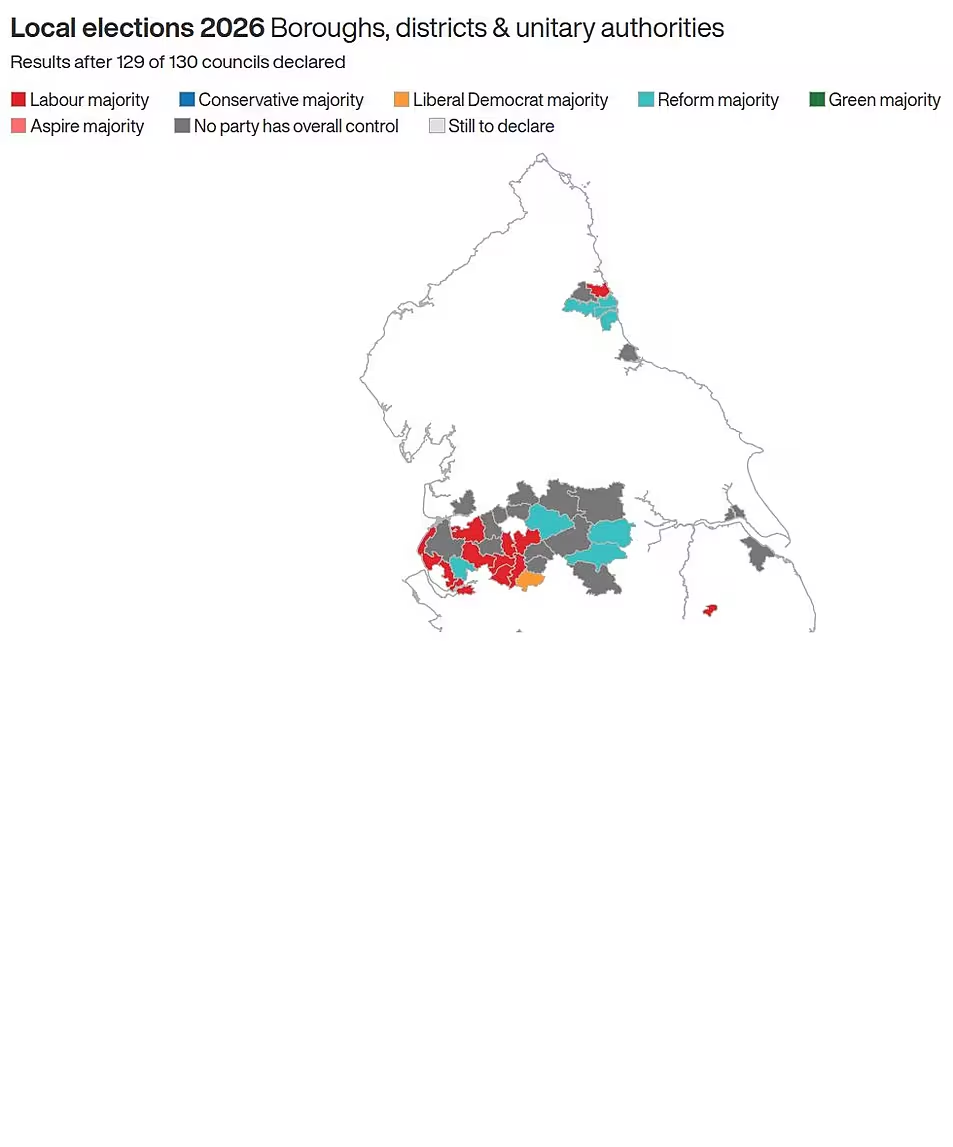
Results on Saturday underlined the challenge facing Starmer, with Reform taking control in Barnsley and pushing Labour out of office in Bradford while a Green surge took Lewisham and forced Labour out in Lambeth for the first time in 20 years.
But Starmer told the Observer: “I have a strong belief that there aren’t many people who actually want Zack Polanski or Nigel Farage as prime minister.
“I think that the mainstream majority actually want to know that we, the Government, have progressive answers to the challenges that they face on a daily basis, and we need to spell out in terms and with conviction that we do have those progressive answers.”
With full results in from 135 of the 136 councils that had elections, Labour had lost control of 36 authorities and had a net loss of 1,193 councillors.
Around 30 Labour backbenchers have publicly suggested Sir Keir should either quit or set a timetable for his departure.
But deputy Labour leader Lucy Powell told BBC Radio 4’s Today programme: “Thinking that setting out some kind of timetable would put to bed the issues of leadership, I think is actually the wrong conclusion here.
“Because all that would do is fire the starting gun of a, quite honestly, very distracting and ongoing debate about leadership.”
While many of Starmer’s critics have been those on the left of the party who were never his natural supporters, the scale of the defeats has prompted more moderate voices to demand change.
Clive Betts, the party’s joint longest-serving MP, also said the Cabinet should make it clear to the Prime Minister he has to go “in the not too distant future”.
Health secretary Wes Streeting, who has continued to attract speculation about his ambitions despite publicly denying plans for a leadership tilt, said the prime minister will “have my support” in setting out how the government will move forward on Monday.
But facing questions from reporters late on Friday night as he attended the count for Redbridge Council, where Labour clung on to power, he declined to say whether he believed Starmer was the right person to lead the party into the next general election.
Former deputy leader Angela Rayner, widely viewed as a potential challenger for the leadership, has not yet commented on the results.
Nor has Greater Manchester mayor Andy Burnham, whose path back to Westminster has previously been blocked by Labour’s ruling National Executive Committee.
In the aftermath of the elections:
– Starmer gave former prime minister Gordon Brown a role as special envoy on global finance and made Baroness Harriet Harman his adviser on women and girls.
– Scottish first minister John Swinney said his SNP will engage with other parties to ensure Reform UK, which came joint second, is “locked out” of government at Holyrood. He said the prospect of Farage becoming prime minister in Downing Street showed “the need for independence is so urgent”.
– Plaid Cymru’s Rhun ap Iorwerth said he intends to form a minority government in the Senedd.

World
Starmer names former prime minister Gordon Brown as adviser
– Reform had gained 14 councils and 1,349 seats.
– The Green Party had gained control of five councils and put on 376 councillors.
– The Liberal Democrats had gained three councils and 143 seats while the Tories had a net loss of eight authorities and 428 councillors.