








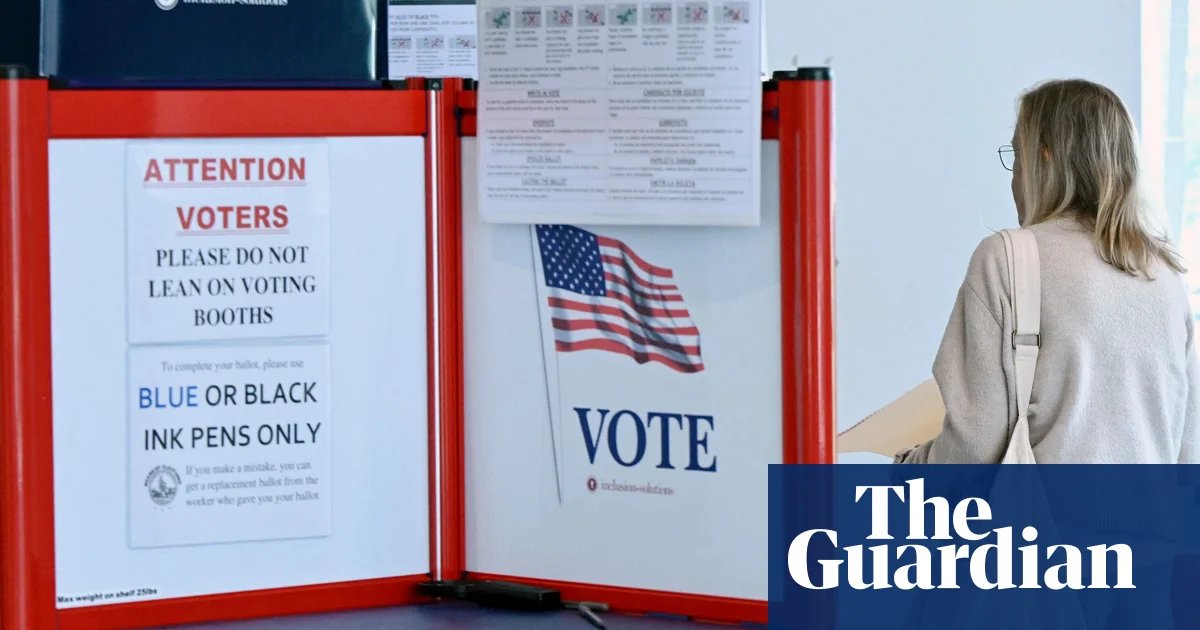
The outcome of the 3 November US midterm elections is set to send shockwaves through Australian markets, with investors bracing for a volatile period as the balance of power in Washington remains on a knife-edge. With Democrats needing to flip four seats in both the House of Representatives and the Senate to overcome narrow Republican majorities, the stakes for global economic stability have rarely been higher.
If Donald Trump’s Republican Party manages to retain control of both chambers, market experts anticipate an immediate “Santa rally” on Wall Street, which would likely spill over into the Australian Stock Exchange. Rob Talevski, chief executive of Webull Securities Australia, suggests a Republican hold would signal the arrival of fresh fiscal stimulus, including a proposed $US5,000 payment to every American adult.
“It’s going to be somewhat like a Santa rally… we’re going to see markets rally on that,” Talevski noted. However, he warned that this “sugar hit” would likely be fleeting. Once the initial optimism fades, investors will be forced to confront persistent economic headwinds, including high debt-servicing costs and inflationary pressures, causing the market to deflate as reality sets in. A Republican victory would also likely bolster the technology sector, providing a floor for stocks currently wobbling over fears of an artificial intelligence bubble.
Conversely, a “split Congress”—where Democrats control the House and Republicans the Senate—would likely lead to political gridlock. While markets often welcome such stalemates because they limit aggressive spending and help cool inflation, they also invite danger. A bruising battle over the federal debt ceiling is considered the most significant risk, with the potential to rattle global equities and even spark a US default. Anthony Malouf, an economist at Ebury, identified the debt ceiling as the “biggest concern” for observers, noting that while gridlock prevents reckless spending, it creates a dangerous environment for policy execution.
A Democratic sweep of both chambers would present a different set of challenges and opportunities. While it would grant Democrats significant leverage to challenge the Trump administration’s agenda, it would not entirely strip the President of his power, given his veto authority and ability to govern via executive order.
For Australia, a Democratic victory could prove a boon for the renewable energy sector. A shift in policy toward electric vehicles and green technology could revive interest in critical minerals, potentially providing a long-awaited rebound for embattled Australian lithium producers. However, such a shift could simultaneously pressure the AI-driven tech sector, as policymakers may respond to public “AI angst” with tighter regulations.
Regardless of the composition of Congress, a contested or disputed result poses the most unsettling prospect for Australian markets. Persistent legal battles over ballot counts would fuel uncertainty, likely forcing industries that rely on commodities—a cornerstone of the ASX—to pause development plans. As investors wait for the dust to settle, the global economy remains in a state of suspended animation, awaiting the final tally from the US.
Disclaimer: This content is auto-generated for informational purposes only.
Source: Read Original News