







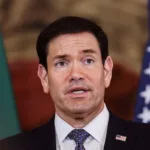


COLOMBO – In a firm assertion regarding the boundaries of executive authority, the President has declared that the administration will strictly adhere to the rule of law, emphasizing that the public should not expect any policy decisions to deviate from rulings handed down by the Supreme Court.
Addressing concerns regarding the potential for political overreach and the implementation of controversial policy agendas, the President reaffirmed the government’s commitment to constitutional governance. During a recent high-level briefing, the President clarified that the judiciary remains the ultimate arbiter of the law, and the executive branch is bound by its interpretations and mandates.
“We operate within a framework of clear checks and balances,” the President stated. “My administration is committed to transparency and the preservation of legal integrity. Therefore, the public should not expect any executive actions or policy directives that move beyond the parameters set by the Supreme Court. We respect the judicial process, and we will honor its findings.”
The statement comes amidst a period of heightened sensitivity surrounding legal challenges to government policy. Political analysts suggest that the President’s remarks are aimed at reassuring both the international community and local stakeholders that the state will remain compliant with judicial oversight, particularly as the country navigates ongoing economic and administrative reforms.
The President further highlighted that while the executive branch holds the mandate to govern and implement developmental agendas, these powers are not absolute. By subordinating policy goals to judicial outcomes, the government hopes to foster a culture of stability and predictability in governance.
“The law is the foundation upon which we build,” the President added. “Any expectation of maneuverability outside the legal consensus is misplaced. We are committed to working within the guidelines provided by the courts, even when those rulings challenge our immediate policy preferences. This is the hallmark of a healthy, functioning democracy.”
Legal experts have largely welcomed the remarks as a positive signal for the separation of powers. By publicly pledging to yield to the judiciary, the President has sought to quiet concerns about potential executive overreach that often arises during times of crisis.
However, the opposition has remained cautious, noting that the true test of this commitment will lie in how the government responds to upcoming landmark cases currently pending before the bench. As the nation watches the intersection of law and governance, the President’s vow to remain within the “Supreme Court’s lines” serves as a critical benchmark for the administration’s adherence to democratic norms.
The President’s office indicated that all future ministerial decisions will be subjected to rigorous legal vetting to ensure complete alignment with constitutional mandates and judicial precedent, reinforcing the government’s stance that no policy is above the law.
Disclaimer: This content is auto-generated for informational purposes only.
Source: Read Original News