








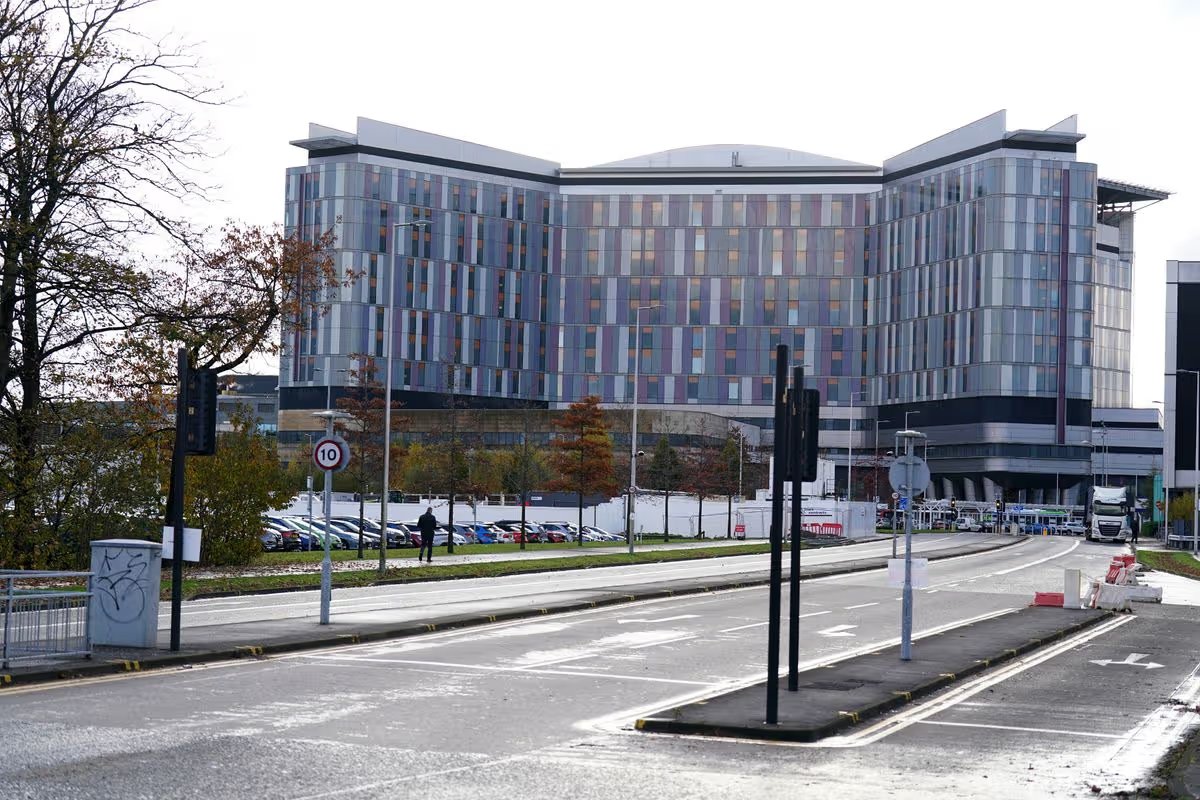
The Queen Elizabeth University Hospital in Glasgow was sealed off its Acute Receiving Unit around 6am on Tuesday morning after receiving a patient suspected of having the virus

Part of the Queen Elizabeth University Hospital was locked down this morning(Image: Andrew Milligan/PA Wire)
A British hospital has been put on partial lockdown after a patient was feared to have contracted Ebola.
The Queen Elizabeth University Hospital in Glasgow was sealed off its Acute Receiving Unit around 6am on Tuesday morning after receiving a patient suspected of having the virus. It is understood the person arrived back in Glasgow from an affected Ebola country.
They went to the hospital after developing symptoms. Tests are currently being carried out to confirm whether the patient has contracted the deadly, contagious disease. The Democratic Republic of Congo and Uganda are currently responding to an outbreak. One case has also been recorded in France.
A source told the National newspaper in Scotland: “Obviously Ebola is a deadly and contagious illness, and emergency measures had to be put in place immediately to protect both staff and any members of the public.
“The person came to the Acute Receiving Unit, where people are sent by their GP or the health board’s 101 number to avoid having to present at accident and emergency. This was quickly shut down and sealed off from the rest of the hospital.
“The person was assessed there and then taken elsewhere in the hospital. I believe they were put into confinement while the tests to establish if they have Ebola or something else are carried out.”
Public Health Scotland said it has “well established protocols for assessing and testing travellers arriving in the UK from areas affected by Ebola”.
A spokesperson added: “Where required, contact tracing will occur and contacts may undergo clinical assessment and precautionary testing. The UKHSA Returning Workers Scheme (RWS) which aims to protect and monitor the health of those who may travel from the UK to affected areas for their work, has been activated.
“Organisations deploying workers to affected areas where they may be exposed to Ebola through their work, should register those workers with the scheme. There are currently no confirmed cases of Ebola in Scotland and the risk to the general public remains low.”
If confirmed, the case would be the first of Ebola in Glasgow for over 10 years. Nurse Pauline Cafferkey underwent treatment at the country’s largest hospital in 2016 after a recurrence of the illness.
She had initially contracted it in 2014 while volunteering as a nurse for Ebola victims in Kerry Town, Sierra Leone.
Ebola is transmitted through direct contact with blood and body fluids and objects that have been contaminated by someone with the virus. It also spreads through contact with sick or dead wild animals.
It can take symptoms two to 21 days to appear following infection, known as an incubation period. It first appears as a high fever, intense muscle and joint pain, headaches and a sore throat.
Initial symptoms are often followed by vomiting and diarrhoea, rashes on the skin, kidney and liver failure, and sometimes internal and external bleeding.
People who survive the virus can suffer from arthritis as well as vision and hearing problems. Some types of Ebola can be prevented with vaccines and treated with medicines.