








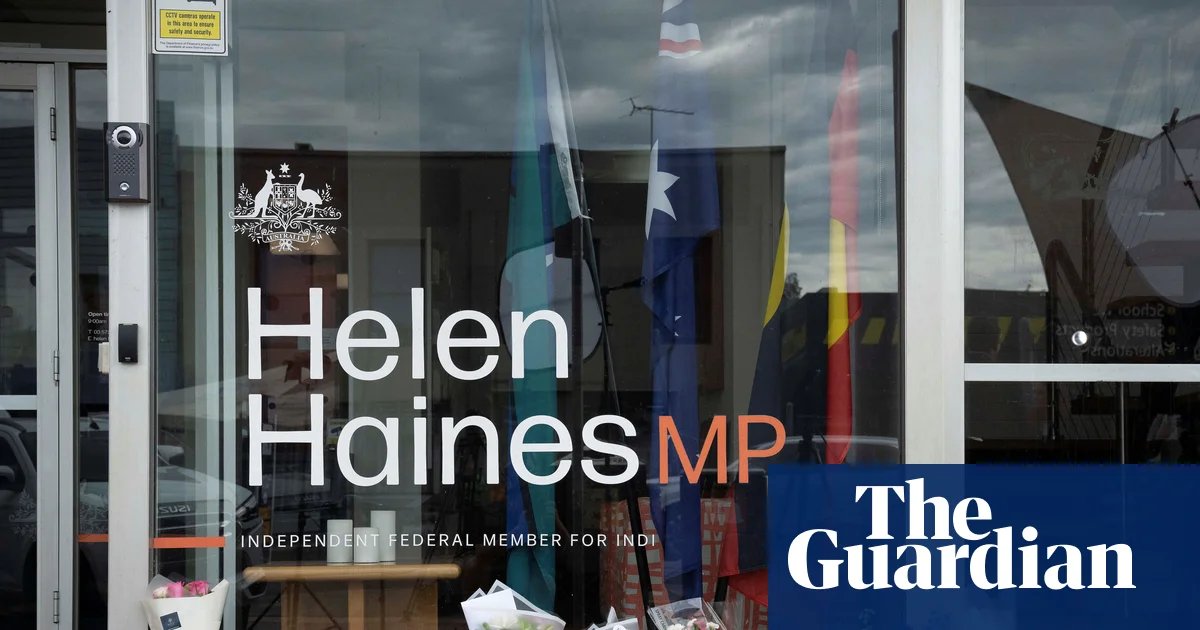
The horrific assault on Helen Haines, the independent member for Indi, has shattered the illusion that Australian politics is immune to the violent extremism plaguing other parts of the world. After being allegedly struck by a vehicle twice outside her electorate office, Haines remains hospitalised with life-altering injuries, having lost both of her legs. A man has been charged in connection with the attack, yet as the nation grapples with the shock, the incident has exposed a deepening, dangerous fracture in the country’s democratic fabric.
The assault on Haines has served as a grim catalyst for a national reckoning regarding the safety of public figures, particularly women. While male politicians have reported their own harrowing brushes with violence, the abuse directed at women is overwhelmingly gendered, often involving threats of sexual violence, degradation regarding their appearance, and intimidation directed toward their children.
Minister for Women Katy Gallagher has faced threats against her children, while Social Services Minister Tanya Plibersek has revealed that she has lost count of the death and rape threats she has received throughout her career, including notes slipped under her door wishing for her children to “die of painful cancers.”
The trend is not merely local. Global data from the Inter-parliamentary Union confirms that politicians worldwide are facing rising levels of hostility. However, experts point to a specific, self-perpetuating cycle where online rhetoric acts as an incubator for real-world violence. Prof. Julie Posetti, a leading expert on online violence against women, argues that this environment is being deliberately fueled by algorithmic models that prioritize rage and anger for profit.
“An environment has been created where there is tolerance for slut-shaming women in politics,” Posetti says. She highlights that the dehumanization of female leaders—who are frequently depicted in violent terms by both the public and, occasionally, their own parliamentary colleagues—is normalizing a level of vitriol that would have been deemed repugnant just a decade ago.
This toxic culture is compounded by the “siloing” effect of social media, where individuals are trapped in feedback loops that reinforce extremist views. Lawmakers are now scrambling to determine how to stop this trajectory. While the federal government is pursuing a “digital duty of care” to hold tech platforms accountable, advocates warn that regulation is only half the battle.
Tamatha Paul, a New Zealand MP, stressed that the onus also lies with the community—specifically with men—to challenge the misogyny that underpins these acts of violence. “When they make jokes, when they say that politicians look like pigs, when they make comments that they would never make about another man, call them out,” she urged.
As Helen Haines begins the long road to recovery, the question facing the Australian political class is not just how to increase security, but whether the current culture of public discourse can be saved from itself before the next tragedy occurs. For many, the warning is clear: silence and inaction are no longer merely passive choices—they are complicit in the next attack.
Disclaimer: This content is auto-generated for informational purposes only.
Source: Read Original News