






India’s higher education landscape is undergoing a massive transformation, driven by an unprecedented surge in student enrollment and a renewed national focus on pedagogical standards. With the release of the All India Survey on Higher Education (AISHE) 2023-24, the government has provided a comprehensive snapshot of a system that serves as a cornerstone of the nation’s socio-economic growth. As the sector expands, the discourse is shifting from mere accessibility to the quality of the classroom experience.
## A System of Massive Scale
The latest AISHE data, released in July 2026, underscores the sheer magnitude of India’s academic ecosystem. The country currently supports approximately 1,200 universities, 50,000 colleges, and 15,000 standalone institutes. This expansive network caters to a student body of nearly 4.5 crore learners, guided by a workforce of over 17 lakh faculty members.
This vast network is the engine behind the country’s demographic dividend, but it also presents a significant policy challenge: how to maintain academic rigor across such a geographically and socially diverse landscape.
## Decoding the Pupil-Teacher Ratio
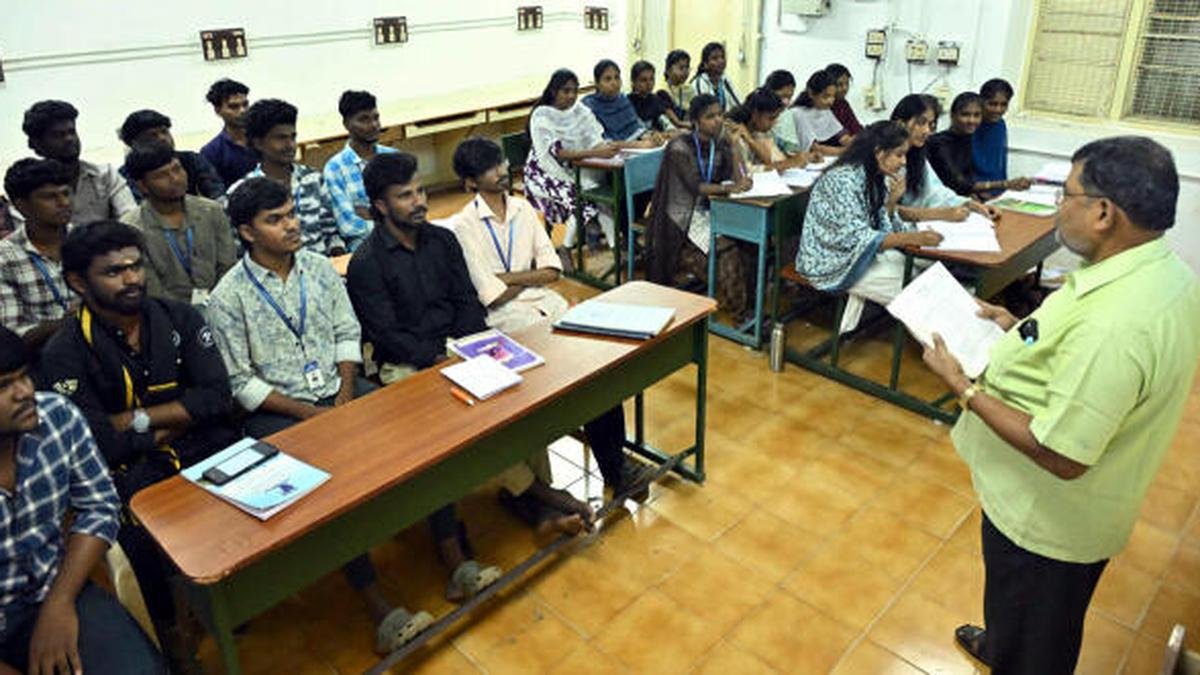
As the number of students increases, educationists and policy experts are turning their focus toward the Pupil-Teacher Ratio (PTR). The PTR serves as a primary metric for determining the quality of individual attention a student receives. It is the average number of students per teacher at a given level of education, and it acts as a critical barometer for the efficiency of an institution.
According to regulatory guidelines, the desirable range for higher education is set between 15:1 and 25:1. This range is designed to balance institutional sustainability with the pedagogical necessity of interactive learning. When the ratio remains within these bounds, students benefit from more personalized instruction, better access to faculty during office hours, and a more robust environment for critical thinking and research mentorship.
## The Policy Imperative for Quality
For educational institutions, maintaining an optimal PTR is not merely a bureaucratic requirement; it is a fundamental pillar of modern pedagogy. As the curriculum evolves to include more project-based learning and practical assessments, the faculty’s role becomes increasingly hands-on.
However, scaling this model to accommodate 4.5 crore students is a daunting task. Policy makers are currently navigating the fine line between rapid expansion and the preservation of quality. This involves strategic investments in faculty recruitment and the implementation of digital infrastructure to bridge gaps in institutions where human resources might be stretched thin.
## Preparing for a New Academic Era
For students, the PTR is a vital factor when evaluating institutions. As competition for seats in prestigious universities increases, students and their families are increasingly looking beyond rankings and considering the learning environment. A healthy PTR often signals an institution’s commitment to academic excellence and student development.
Looking ahead, the focus is expected to stay on bridging the gap between urban centers of excellence and rural colleges. Strengthening the teaching force and diversifying teaching methodologies—such as incorporating blended learning and AI-supported tutoring—may help maintain high educational standards even as enrollments continue to climb.
By prioritizing the human element in higher education—the teacher-student connection—India aims to ensure that its demographic potential translates into a highly skilled, knowledgeable, and globally competitive workforce. The path forward involves a delicate balancing act: sustaining the momentum of access while ensuring that every student gets the personalized attention they need to succeed in a complex, evolving world.
Disclaimer: This content is auto-generated for informational purposes only.
Source: Read Original News