








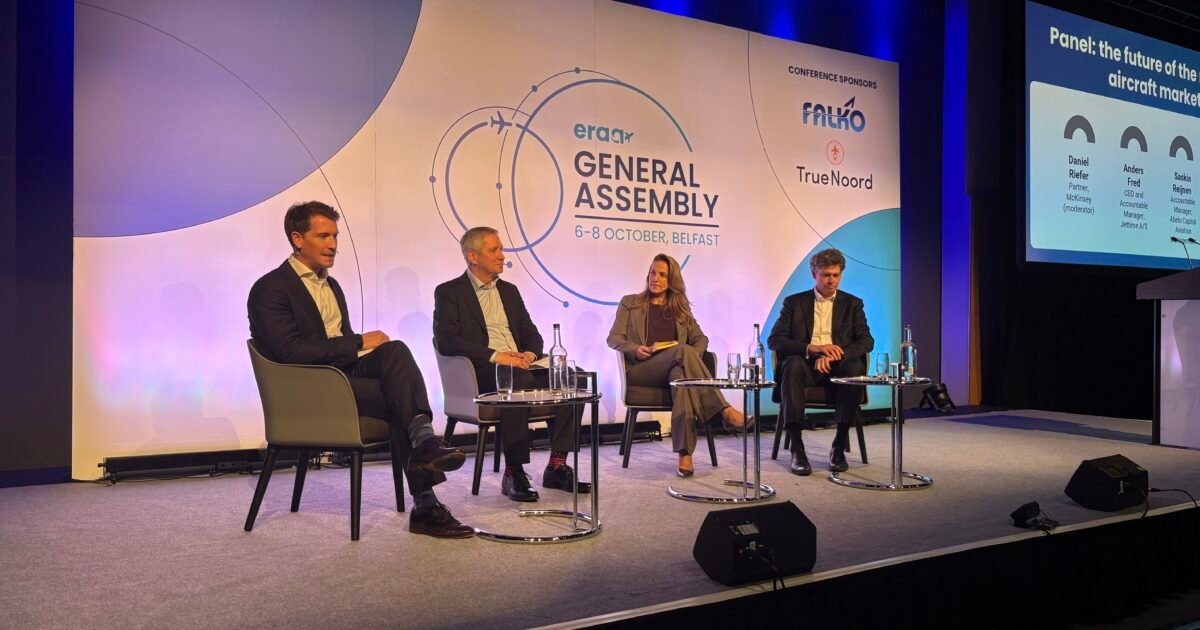
Regional airlines are navigating a new era of uncertainty as persistent supply-chain bottlenecks force carriers to abandon fleet renewal plans in favor of keeping aging aircraft in service. At the European Regions Airline Association (ERAA) General Assembly, industry executives painted a picture of a sector struggling with limited inventory, forcing operators to extend leases and commit to expensive engine overhauls just to maintain current network connectivity.
## The Shift from Innovation to Survival
For years, regional carriers planned for a transition toward newer, more efficient, and sustainable aircraft. However, as manufacturers struggle to clear record-high order backlogs, those timelines have shifted significantly. Daniel Riefer, a partner at McKinsey, noted that while passenger demand is surging, the availability of regional aircraft for routes under 1,000 kilometers has dwindled.
The consensus among stakeholders is that the “certainty” of an older asset currently outweighs the risks associated with new, potentially delayed deliveries. Saskia Reijnen, SVP of Marketing at Abelo, noted that the secondary market for young regional aircraft is effectively bone-dry. Airlines are now forced to forecast their needs years in advance, a level of long-term planning that was rarely required in the pre-pandemic era.
## Engine Scarcity: The Silent Bottleneck
While aircraft availability captures headlines, experts are increasingly concerned about the engine market. Andeers Fred, CEO of Jetime A/S, identified the scarcity of spare engines and limited Maintenance, Repair, and Overhaul (MRO) capacity as the most acute risks to regional operations.
“If I put my money on one thing, it’s the engine spares,” Fred remarked, highlighting that turnaround times for shop visits have become unmanageable. This shortage is forcing leasing companies like TrueNoord to pivot their investment strategies. TrueNoord CEO Anne-Bart Tielman confirmed the company is funneling significant capital into major overhauls of CF34 engines, acknowledging that these aging powerplants will need to remain in the skies well past their originally intended retirement dates.
This trend reflects a broader technological and logistical stalemate. As manufacturers struggle to ramp up production, the aviation industry’s “digital twin” simulations and predictive maintenance AI—tools often championed to optimize fleet cycles—are being applied not to new, high-tech fleets, but to legacy assets that were never meant to operate this deep into the 2030s.
## The Long-Term Impact on Connectivity
The misalignment between supply and demand is creating an environment where lease rates are likely to remain elevated for the foreseeable future. With capacity constrained, the cost of keeping older planes flying is ballooning, which may eventually trickle down to ticket prices on regional routes.
For the regional aviation sector, the message from the ERAA Assembly was clear: relief is not on the horizon. The industry is entering a period of prolonged structural scarcity where the focus is entirely on keeping existing hardware in the air.
Technology giants and aerospace innovators are racing to introduce advanced supply-chain AI and automation to help manage these logistics, yet even these sophisticated systems cannot overcome the physical reality of missing parts and overburdened MRO shops. As older aircraft become the backbone of regional fleets for the next decade, operators are accepting that their “future-proofing” strategies have been replaced by a pragmatic commitment to the machines they already have. The industry’s ambition for rapid decarbonization and fleet renewal is now effectively on hold, subordinated to the immediate, grinding necessity of keeping regional connectivity alive in a supply-constrained world.
Disclaimer: This content is auto-generated for informational purposes only.
Source: Read Original News