






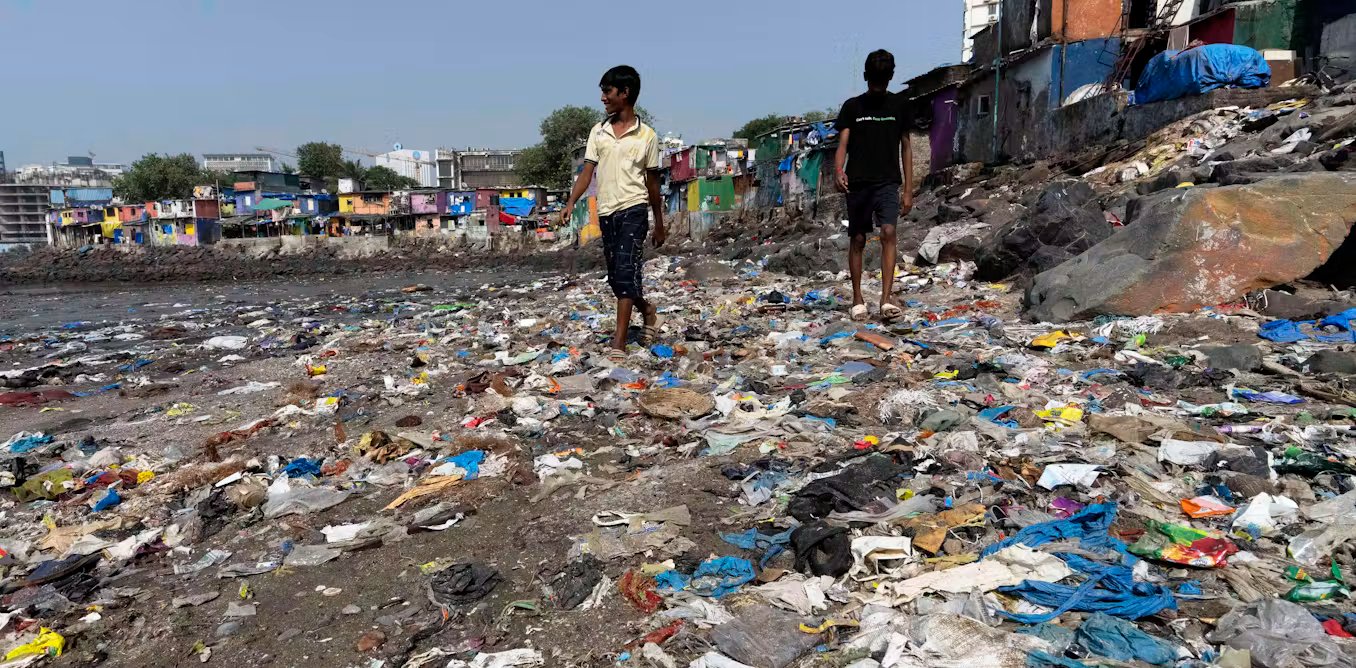
Every week, millions of pieces of secondhand clothing arrive at the Kantamanto Market in Accra, Ghana. It is one of the world’s largest textile resale hubs, a place where garments discarded in Europe or North America are granted a second life. Yet, for every item that finds a new owner, there are countless others—stained, torn, or simply unwanted—that end up in local waterways, illegal dumps, and overflowing informal landfills.
This cycle highlights a stark paradox in the modern global economy: while materials circulate freely across continents, environmental and social accountability remains tethered to the borders of the Global North.
When consumers in industrialized nations drop off used electronics at a collection point or donate bags of clothing to charity, the act is often framed as an environmental triumph. However, the story rarely ends there. Much of this waste is exported to the Global South, carrying with it the hidden health and ecological costs of production and disposal. As highlighted at the 93rd Acfas congress, these goods frequently travel without the accompanying eco-taxes, funding, or management infrastructure required to deal with their inevitable end-of-life.
The scale of the problem is staggering. According to the Global E-waste Monitor 2024, the world generated 62 million metric tonnes of electrical and electronic waste in 2022. Alarmingly, only 22.3 percent was handled through documented, formal recycling channels. The remainder flows through complex, opaque global networks where reuse, repair, and dismantling intersect. While this trade generates economic value for some, the environmental hazards—such as toxic metal leaching and chemical contamination—remain concentrated in the regions where the products are ultimately discarded.
Canadian scholar Max Liboiron describes this as an “unequal distribution of pollution.” In cities across Africa and Asia, informal waste pickers often dismantle electronic devices to extract copper and aluminum. While these workers provide a vital service by recovering resources that would otherwise be lost, they frequently operate under precarious, hazardous conditions without adequate protection or institutional recognition. The pollution they absorb is not an accident; it is a systematic consequence of a global trade model that outsources the environmental burden of consumption.
The textile industry serves as another primary example. By shipping massive volumes of low-quality clothing to the Global South, industrialized countries essentially export their waste management crisis. Markets like Kantamanto are often praised for their circularity, but they are frequently overwhelmed by mountains of textile waste that no one can sell or recycle, leaving local governments in Ghana to manage a problem they did not create.
The prevailing approach to the “circular economy” is often criticized for its narrow focus on technical fixes and material flows, ignoring the social and political dynamics at play. Recent research suggests that the most effective circular practices—repair, reuse, and recovery—have long existed in the Global South outside of formal, institutionalized frameworks. Yet, the people sustaining these systems are rarely factored into international funding or governance models.
There is a growing movement to redefine responsibility. The current reliance on the Basel Convention—which primarily regulates hazardous waste—is insufficient to cover the flow of used goods, textiles, and electronics destined for reuse. Experts argue that a truly sustainable circular economy must circulate more than just materials; it must circulate accountability, financial support, and regulatory protections.
If industrialized nations are to claim a commitment to the environment, they must move beyond simply sorting waste at the curb. Genuine circularity requires acknowledging that the responsibility for a product—and the resources required to manage it safely—must follow that product regardless of where it ends up. If our waste is permitted to cross borders, our accountability must follow.
Disclaimer: This content is auto-generated for informational purposes only.
Source: Read Original News