








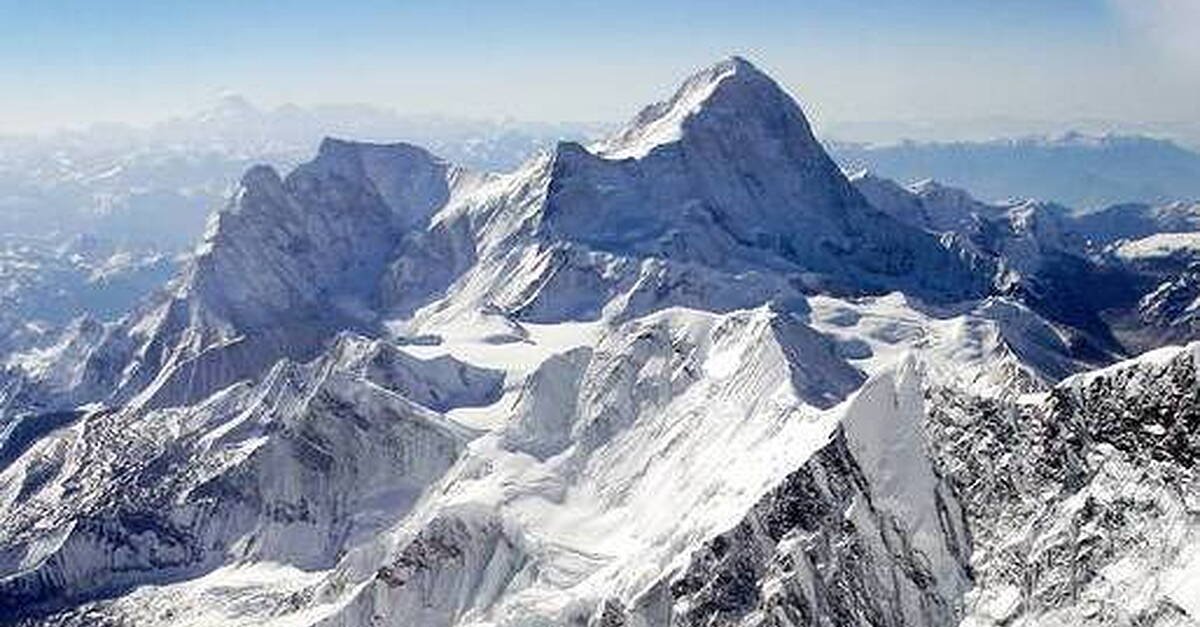
The Himalayas, often referred to as the “Third Pole,” are hurtling toward a climate-induced tipping point that threatens the water security of nearly two billion people. A landmark study released this month reveals that glaciers across the mountain range are melting at an unprecedented rate, significantly faster than they were just a decade ago, signaling a looming humanitarian crisis.
The research indicates that the region is rapidly approaching what hydrologists term “peak water”—the point at which glacial meltwater discharge will reach its maximum before inevitably declining. Scientists project that this critical threshold will be crossed by the middle of this century. Once this tipping point is breached, the permanent ice reserves that feed the great river systems of Asia—including the Indus, Ganges, and Brahmaputra—will begin to shrink, leading to a profound transformation in water availability.
For the millions of people living in the downstream nations of India, Pakistan, China, and Nepal, the implications are dire. These glaciers serve as the “water towers” of Asia, providing a steady supply of freshwater that sustains massive agricultural sectors and supports the drinking water needs of vast urban populations. As the rate of melting accelerates, the immediate danger manifests as volatile seasonal flooding and the formation of unstable glacial lakes. However, the long-term outlook is far bleaker: a permanent reduction in water flow that could trigger catastrophic food and energy shortages.
“We are witnessing the unraveling of a delicate hydrological balance that has sustained human civilization in this region for millennia,” said one of the study’s lead authors. “The rapid transition from surplus to scarcity is not a distant threat; it is a current reality that demands immediate regional cooperation and adaptive policy measures.”
The study highlights that while the rate of retreat varies by sub-region, the overall trend is one of systemic instability. Rising global temperatures are causing the snow-line to climb higher, reducing the accumulation of new ice during winter months. This prevents glaciers from replenishing their mass, turning a once-renewable resource into a dwindling reservoir.
Beyond the immediate loss of water, the ecological impacts are expected to be staggering. The Himalayan ecosystem acts as a global biodiversity hotspot, and the rapid shift in temperature and water flow threatens to push sensitive alpine species toward extinction.
As the international community grapples with the findings, the report serves as a stark warning to policymakers. Achieving the goals set out in the Paris Agreement is cited as the only viable path to mitigating the most extreme scenarios of glacial loss. Without a dramatic shift in global carbon emissions and the implementation of robust water management infrastructure, the Himalayas may move from being a source of life to a source of geopolitical instability, as nations compete for control over the region’s receding lifeblood.
Disclaimer: This content is auto-generated for informational purposes only.
Source: Read Original News