








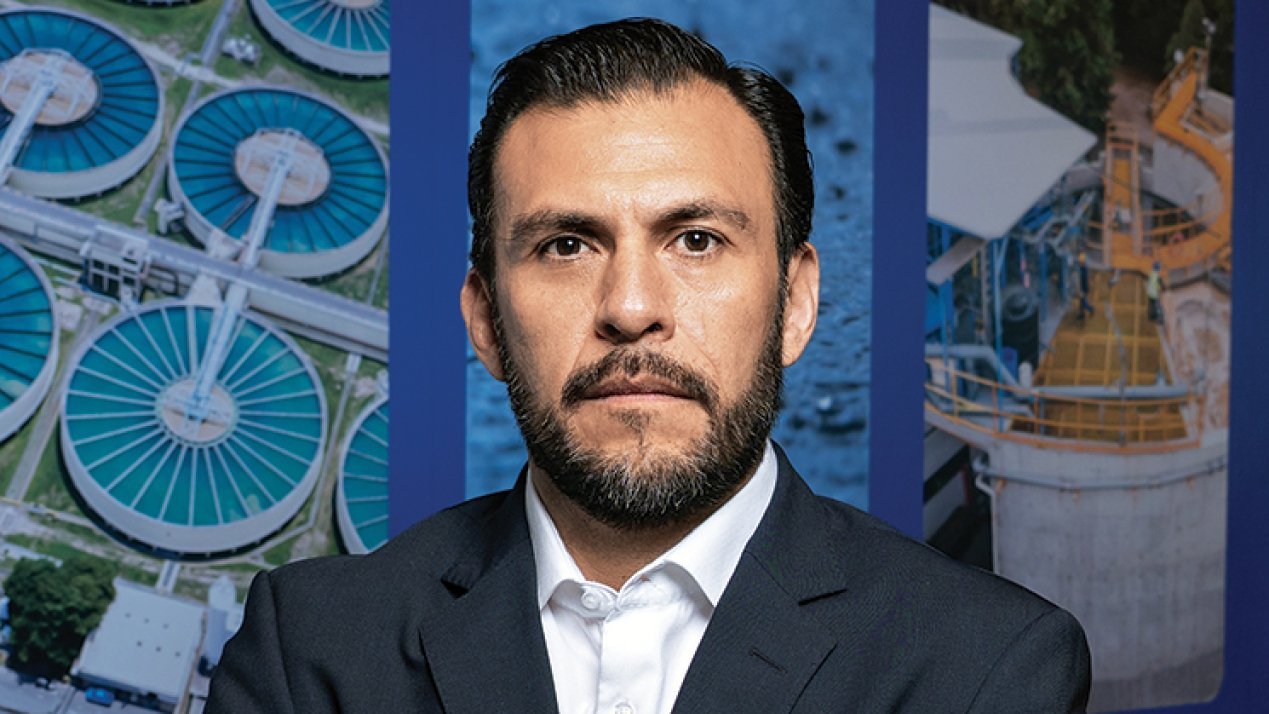
Water security has rapidly climbed to the top of the corporate agenda, becoming as vital to investment decisions as logistics, energy, and labor. As Mexico grapples with the reality of its 653 aquifers—114 of which were classified as overexploited by the National Water Commission (CONAGUA) as of 2023—industrial and tourism sectors are finding that their long-term growth is inextricably linked to their ability to manage water cycles effectively.
From Extraction to Circularity: A Strategic Shift
Historically, industrial site selection relied on proximity to transport hubs and raw materials. Today, that calculus includes a “water competitiveness” index. With 75% of Mexico’s 90.6 billion cubic meters of allocated water dedicated to agriculture, industry is under mounting pressure to optimize its internal usage.
The key to navigating this scarcity lies in shifting the paradigm from simple consumption to circularity. Rather than looking for new sources, companies are increasingly deploying advanced water-treatment technologies to recover and reuse existing flows. By mapping water usage facility-by-facility, businesses can identify opportunities to recirculate water—whether in cooling towers, cleaning processes, or general facility services—thereby reducing the reliance on external, often strained, water sources.
Technology as an Economic Lever
Advancements in filtration and membrane technologies are facilitating this transition. Systems such as ultrafiltration, membrane bioreactors (MBR), and reverse osmosis (RO) are becoming indispensable for companies aiming to transform wastewater from a disposal cost into a strategic asset.
The global appetite for these technologies is massive. Industry forecasts from Fortune Business Insights suggest the filtration market will expand by 67% by 2034, with reverse osmosis leading the way as it captures over 60% of the market share. While Latin America currently accounts for only 7% of this global market, the region is poised for a significant acceleration in adoption as companies realize that treated, reused water is the key to maintaining operational continuity in water-stressed regions like Nuevo Leon or the coastal corridors of Quintana Roo.
Systemic Water Security and ESG Integration
The impact of this shift extends far beyond the individual factory fence line. When industrial actors invest in internal water loops, they reduce cumulative pressure on local watersheds and aquifers. This is particularly vital in metropolitan areas where the demand for water pits industrial needs against urban consumption.
In the Monterrey Metropolitan Area, for instance, industrial groundwater concessions have previously rivaled the storage capacity of major dams. When industry reclaims its own water, it frees up critical resources for the public, fostering a more harmonious relationship with the surrounding community and environment.
To support these objectives, industry leaders are moving toward integrated water cycle designs. Advanced firms are leveraging digital monitoring and automated treatment systems—often powered by AI and real-time data analytics—to ensure water quality standards are met precisely, minimizing waste and maximizing efficiency. By integrating these systems, companies are not just checking a sustainability box; they are fortifying their supply chains against the risks of future droughts and government-imposed usage restrictions.
As Mexico continues to solidify its role as a global industrial hub, the measure of success is changing. A treatment plant’s profitability is no longer defined by how many liters it can process, but by how much “first-use” water it keeps in the ground. By treating water as a finite, strategic asset rather than an infinite utility, Mexican industries are building a model for competitive, sustainable growth that balances economic ambition with environmental stewardship.
Disclaimer: This content is auto-generated for informational purposes only.
Source: Read Original News