




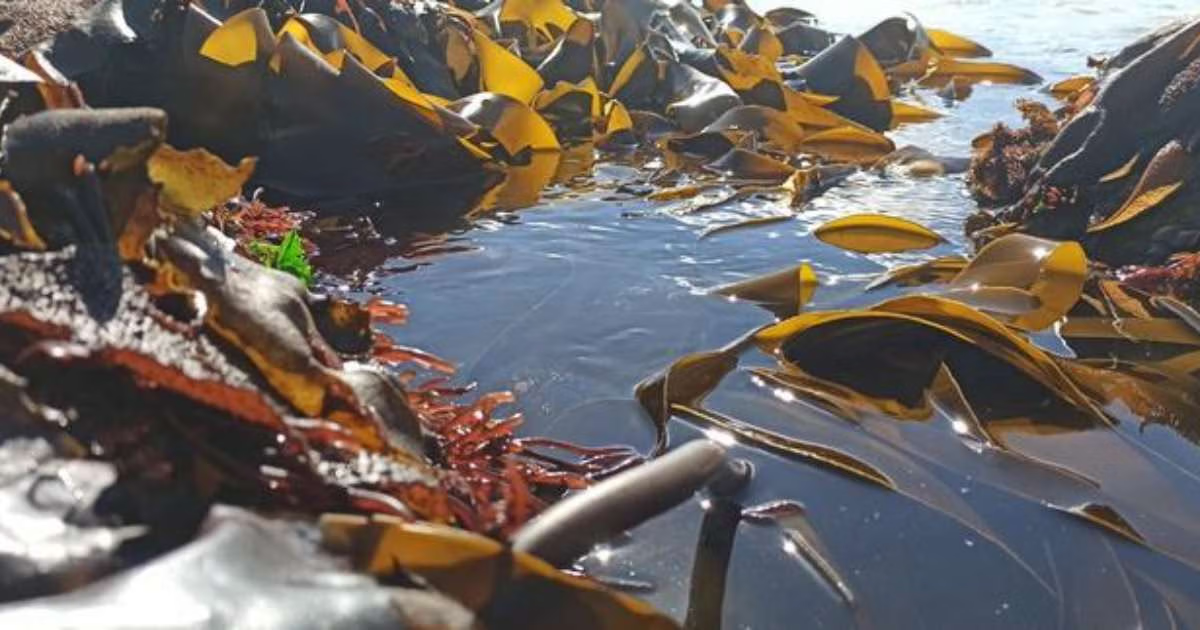
A groundbreaking study on the split-fan kelp (Laminaria pallida) has revealed a sophisticated, previously unknown survival mechanism that allows this vital marine seaweed to adapt its reproductive strategy based on its surroundings. The research, which explored the balance between sexual and asexual reproduction, offers new insights into how marine ecosystems might maintain resilience in the face of climate change and shifting ocean conditions.
While sexual reproduction is the dominant strategy for most animals, the ability to reproduce asexually—or clonally—is widespread among plants, fungi, and algae. However, the triggers for switching between these strategies have long remained an ecological mystery. By examining Laminaria pallida populations along the Southern Atlantic coast, researchers have discovered that kelp possesses an unexpected “reproductive insurance policy” that activates when mates are in short supply.
Laboratory experiments initially demonstrated that both male and female split-fan kelp are capable of asexual reproduction. However, this shortcut comes with trade-offs; the offspring produced through asexual pathways exhibited slower growth rates and a higher prevalence of developmental abnormalities compared to those produced through sexual fertilization. Despite these inefficiencies, the mechanism offers a critical safety net for the species.
To understand the biological underpinnings of this flexibility, the team sequenced RNA from kelp at various stages of the reproductive cycle. The results showed that while male and female gene expression profiles are typically distinct, male kelp undergo a process of “de-masculinization” during asexual reproduction, with their gene expression patterns shifting to closely resemble those of females.
A significant portion of the study involved comparing laboratory findings with wild observations. Researchers collected 523 samples of split-fan kelp from the coastlines of South Africa and Namibia, finding no evidence of asexual reproduction in the natural environment. This prompted a hypothesis: the presence of the opposite sex in the wild might suppress the asexual urge. To test this, the team grew male and female kelp in laboratory Petri dishes, separated by a fine mesh. The results confirmed that both sexes were significantly more likely to reproduce asexually when kept in isolation from potential mates.
The researchers believe this suggests that kelp sense the presence of nearby mates through chemical signaling that diffuses through the water. When these signals are absent—signaling a sparse or isolated population—the kelp “switches” its reproductive strategy to ensure its own survival and the potential for population growth, despite the biological costs.
This discovery of reproductive flexibility is particularly important for conservation efforts. Kelp forests act as essential carbon sinks and provide critical habitat for a vast array of marine life. As ocean temperatures rise and environmental stressors increase, these habitats are increasingly vulnerable to fragmentation. Understanding that kelp can persist in isolation through asexual means provides conservationists with a better grasp of how these underwater forests can recover or maintain themselves in challenging conditions.
“Our findings show that kelps have much greater flexibility in how they reproduce than previously appreciated,” the authors noted. By utilizing asexual reproduction as a temporary backup strategy, Laminaria pallida can effectively navigate periods of low population density. This biological “Plan B” ensures that even in the absence of fertilization, the species maintains the ability to persist, providing a glimmer of hope for the resilience of kelp ecosystems in a rapidly changing ocean environment.
Disclaimer: This content is auto-generated for informational purposes only.
Source: Read Original News