






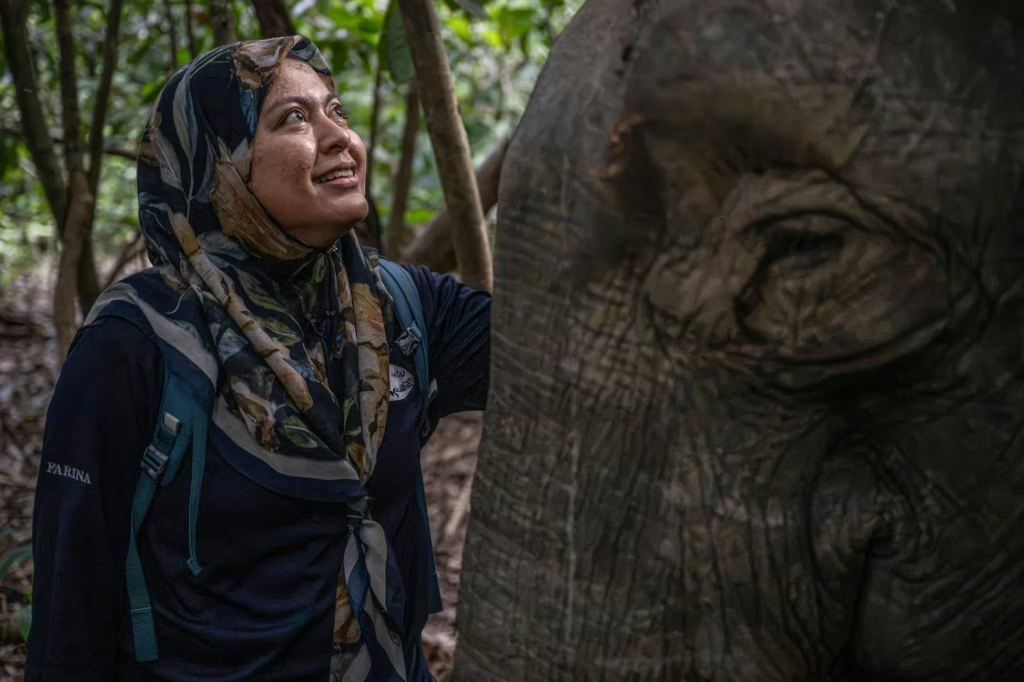
Deep in the heart of Malaysia’s Borneo jungle, the air thick with the humidity of an approaching tropical storm, a high-stakes rescue mission is underway. A Bornean elephant lies tranquilized on the forest floor, her herd bellowing in the distance, rallying to protect their fallen companion. For Farina Othman, a renowned conservationist dubbed “Borneo’s elephant whisperer,” time is the enemy. Her team has only thirty minutes to secure a tracking collar onto the animal, identified as “Pigtail,” before the sedative wears off and the protective herd returns.
Pigtail is one of only about 1,000 Bornean elephants remaining in the wild—a population pushed to the brink by four decades of aggressive habitat loss. According to the International Union for Conservation of Nature, which officially listed the species as endangered earlier this year, these majestic creatures have lost over 60 percent of their habitat in Sabah to logging and the relentless expansion of oil palm plantations.
In the Lower Kinabatangan floodplain, where roughly 160 elephants reside, the animals are increasingly hemmed in by human development. As forest patches shrink, elephants are forced to navigate a fragmented landscape of plantations and villages. The resulting contact often turns dangerous. Recently, a herd of 20 elephants rampaged through palm oil smallholdings, terrorizing residents and sparking urgent calls for stronger defenses.
“People don’t feel safe around elephants, and that’s when conflict happens,” Othman explains. As the head of the local conservation group Seratu Aatai, she understands that physical barriers like electric fences are rarely enough to stop bulls weighing up to five tonnes, which often learn to bypass them. Instead, she is spearheading a movement toward coexistence.
Othman’s strategy focuses on “elephant corridors”—vital pathways through plantations that connect isolated forest fragments. Her team works closely with local communities, training “wildlife guardians” to safely escort elephants away from homes rather than chasing or harming them. The shift in local mindset is already palpable; villagers who once used the term “banish” now speak of “escorting” the animals, a cultural change that is vital for long-term survival.
The challenge remains convincing plantation owners to sacrifice land for these corridors, a move that is economically difficult in a volatile global market. While industry representatives argue that farmers lack the financial incentives to prioritize conservation, Othman remains undeterred. For her, the goal is clear: turning elephants from perceived “disturbances” into an accepted “ecological reality.”
As the team finishes securing the collar and collecting blood samples, they beat a hasty retreat into the treeline. Above, lightning flashes and thunder rolls across the canopy. They leave Pigtail to rejoin her kin, knowing that this single collar—and the corridors they are fighting to build—may be the only thing standing between these animals and extinction.
Disclaimer: This content is auto-generated for informational purposes only.
Source: Read Original News