







Former CDS General Anil Chauhan Warns of Emerging Threat of Cognitive Warfare
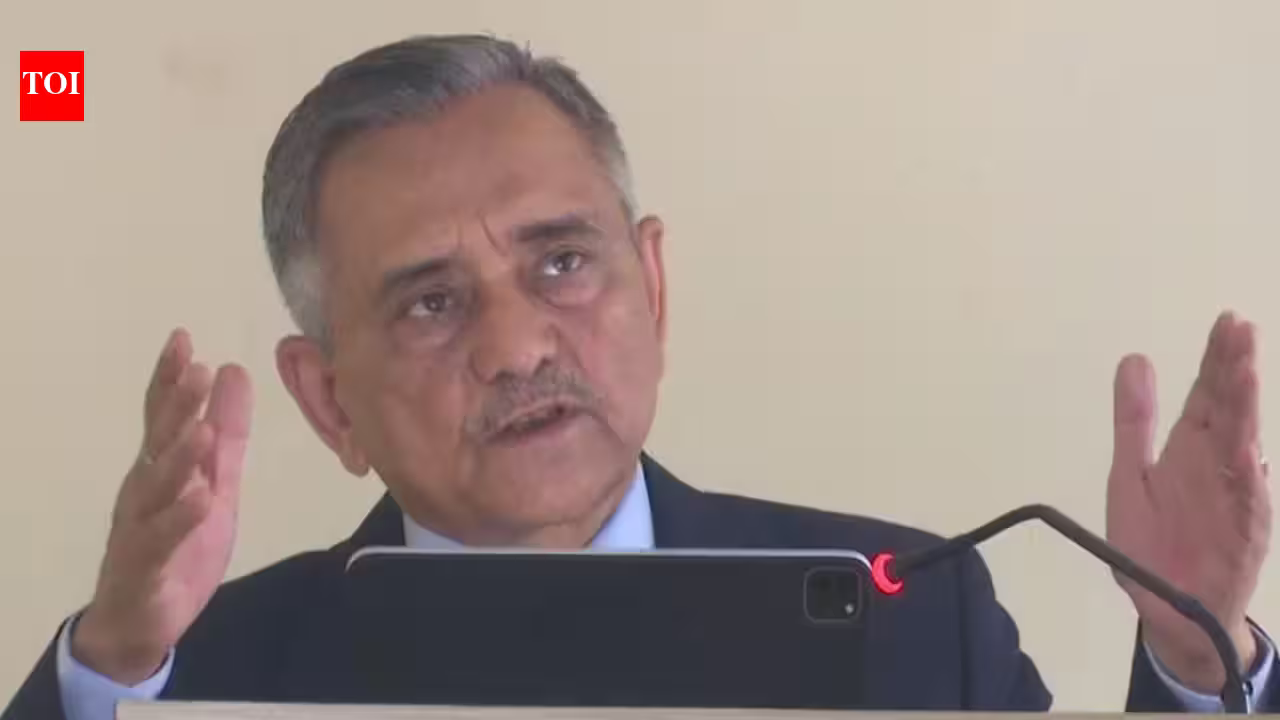
Former Chief of Defence Staff (CDS) General Anil Chauhan has issued a stark warning regarding the shifting landscape of modern threats facing India. Addressing an audience at Jawaharlal Nehru University (JNU) on November 3, General Chauhan emphasized that national security is no longer restricted to borders and battlefield preparedness. Instead, he highlighted the urgent need for India to fortify itself against “cognitive warfare,” a sophisticated challenge involving the weaponization of information to destabilize society.
The Rise of Cognitive Warfare
During his inaugural lecture on ‘Strategic Culture of India and National Security,’ General Chauhan articulated how contemporary adversaries are increasingly utilizing digital tools to manipulate public perception. He pointed to the rapid proliferation of deepfakes, coordinated influence operations, and the strategic exploitation of social media platforms as primary instruments in this new era of conflict.
Unlike traditional military aggression, cognitive warfare aims to erode the internal cohesion of a nation. General Chauhan warned that these operations are designed to sow discord and incite division long before the truth can be established or facts verified. He stressed that this is not merely a public relations battle or a simple disagreement in narratives; rather, it is a calculated effort to undermine national resilience that must be taken with the utmost seriousness by the state and its people.
Integrating Strategic Thinking into Education
To counter these multifaceted threats, the former CDS proposed a paradigm shift in how India approaches security education. He argued that strategic awareness must be integrated into the nation’s core educational framework, moving beyond the confines of military academies and government institutions.
“The first task is to make strategic thinking part of national education,” General Chauhan asserted. He called for a more robust synergy between universities and military war colleges, suggesting that academic curricula be expanded to include critical topics such as Indian political thought, traditional statecraft, diplomacy, military history, and the intersection of technology and national security. By fostering a deeper understanding of these subjects among the youth, India can cultivate a more resilient and discerning society.
Economic Interdependence as a Weapon
General Chauhan also touched upon the weaponization of global systems, noting that economic ties are no longer purely avenues for mutual growth. He warned that trade, energy supplies, critical minerals, and data exchange are frequently being exploited as tools of geopolitical leverage.
“Economic interdependence is being weaponised. Trade, finance, critical minerals, energy, technology, standards, supply chains, data, information. Everything is weaponised today,” he remarked. This observation reflects a broader reality where national security and economic policy are now inextricably linked, requiring a holistic approach to safeguarding India’s interests.
Empowering an Informed Citizenry
Concluding his address, General Chauhan offered a powerful message on the necessity of an informed public. He maintained that the strength of a nation’s frontiers is inherently tied to the awareness of its people. By grounding contemporary security needs in India’s rich heritage—such as the principles of dharma and Kautilya’s timeless statecraft—the country can maintain ethical restraint while ensuring it remains strategically prepared.
He underscored that security awareness must be communicated in accessible language, ensuring it reaches beyond elite academic circles to the common citizen. “No power, I repeat, no power can threaten the frontiers of a nation whose citizens are aware and informed,” he declared, framing an educated and vigilant population as the ultimate deterrent against the evolving threats of the 21st century.
Disclaimer: This content is auto-generated for informational purposes only.
Source: Read Original News