






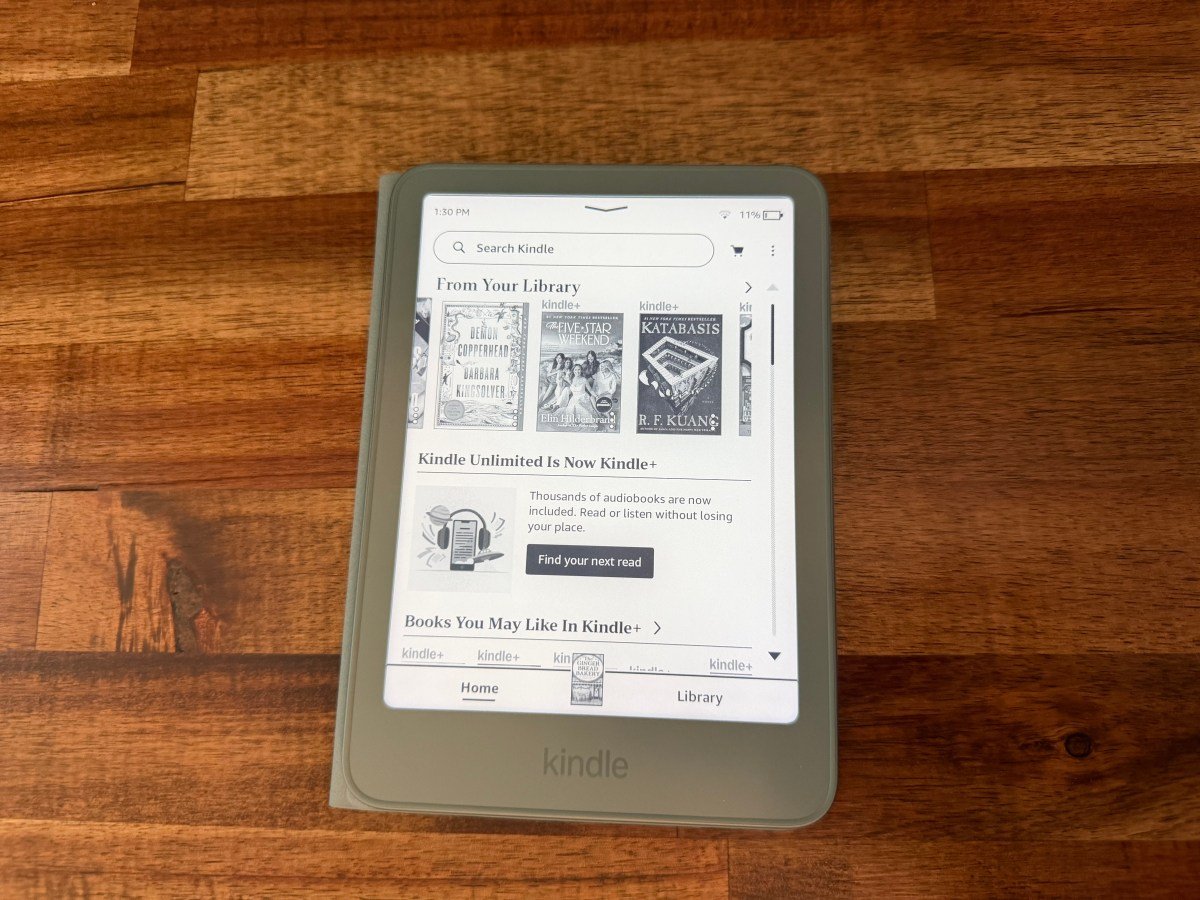
Design Overhaul and Physical Refinements
Amazon’s October 2026 announcement regarding its refreshed Kindle lineup signals the most significant design shift for the product family in years. The central theme of this update is the migration toward an edge-to-edge, flush-front display, effectively eliminating the traditional raised bezels that once defined the e-reader aesthetic. This change is not merely cosmetic; it aligns the entry-level device with modern hardware standards.
The 6-inch base model has undergone a rigorous weight and thickness reduction. The latest plastic-bodied iteration is 11% lighter and 14% thinner than its 2024 predecessor, dropping from 158g to 140g and slimming down from 8mm to 6.85mm. This shift, while seemingly incremental, is highly functional for frequent travelers or those who prefer keeping their device in a pocket or small bag. Amazon also introduced an aluminum-backed version of this compact reader, which weighs 162g but maintains a refined, slim profile that offers a more premium tactile experience for users who prioritize build quality.
Navigating the New Flush-Front Interface
The transition to a flush-front design creates a challenge for users who typically hold e-readers by their edges. Without the raised bezel to rest a thumb on, there is a risk of accidental screen taps. To mitigate this, Amazon has implemented a software-side solution: the device features a specialized capacitive touch “dead zone” around the perimeter.
This calibration ensures that the screen does not register a command when a thumb or finger rests on the outer edge. However, the system is designed to distinguish between resting pressure and deliberate interaction; placing a thumb on the screen area does not trigger a page turn or a definition lookup, allowing for a comfortable grip without interfering with the user’s reading flow. This technical update makes the 6-inch form factor much more practical for extended reading sessions despite the absence of a physical frame.
Performance Gains and Storage Upgrades
Beneath the exterior, the 2026 basic Kindle offers a noticeable performance boost over previous models. Amazon cites a 30% increase in speed for common tasks, such as opening books and navigating the library interface. For users transitioning from the 2019 basic Kindle, the jump is substantial. The modern device incorporates USB-C charging, significantly higher screen resolution—jumping from 167 ppi to 300 ppi—and a larger storage capacity. While early units provided only 4GB to 8GB of space, the new standard for the plastic model is 16GB, while the aluminum variant offers 32GB.
These technical improvements translate into a smoother, more responsive experience that feels more aligned with contemporary high-end tablets, despite the device remaining firmly in the “starter” category. The battery efficiency remains a core strength of the lineup, offering up to six weeks of usage on a single charge.
Market Positioning and Pricing Realities
The broader Kindle lineup has seen price increases ranging from $40 to $50, a consequence of the ongoing global memory-chip shortage and the current manufacturing demands driven by the artificial intelligence sector. This adjustment places the 6-inch entry-level device at a starting price of $169.99 for the ad-free version.
While this makes the entry point to the Kindle ecosystem more expensive than in previous years, the basic model remains the most accessible hardware in the portfolio. For consumers, the decision rests on prioritizing portability over feature-rich capabilities. The basic model omits several “premium” features, including waterproof casing, auto-adjusting brightness, color display support, and the amber-toned warm light that many users rely on for nocturnal reading.
Assessing the Value Proposition
Deciding between the basic 6-inch model and the more expensive Paperwhite or Colorsoft series requires an honest assessment of individual reading habits. If the primary use case involves reading in environments with variable lighting, the absence of the warm light—which shifts the display from a cool, bluish white to a softer, eye-friendly amber—may be a significant disadvantage. Furthermore, the lack of IPX8 water resistance limits the utility of the basic Kindle in environments like beaches, bathtubs, or swimming pools.
However, for those seeking a dedicated, minimalist device, the 6-inch model remains a highly efficient tool. The introduction of new aesthetic choices, such as the purple “Ube” color for the plastic model and “Seagrass” or “Alpine Sky” for the aluminum version, provides a layer of customization previously absent in the base tier. Whether the addition of accessories like the new Bluetooth page-turn remote is necessary remains subjective, but the device’s inherent portability—easily fitting into a standard jeans pocket—solidifies its role as the quintessential travel companion for avid readers. While the price hike presents a hurdle, the technical refinements in screen clarity, build thickness, and processing speed ensure the device remains a competitive piece of technology in the current market.
Disclaimer: This content is auto-generated for informational purposes only.
Source: Read Original News