








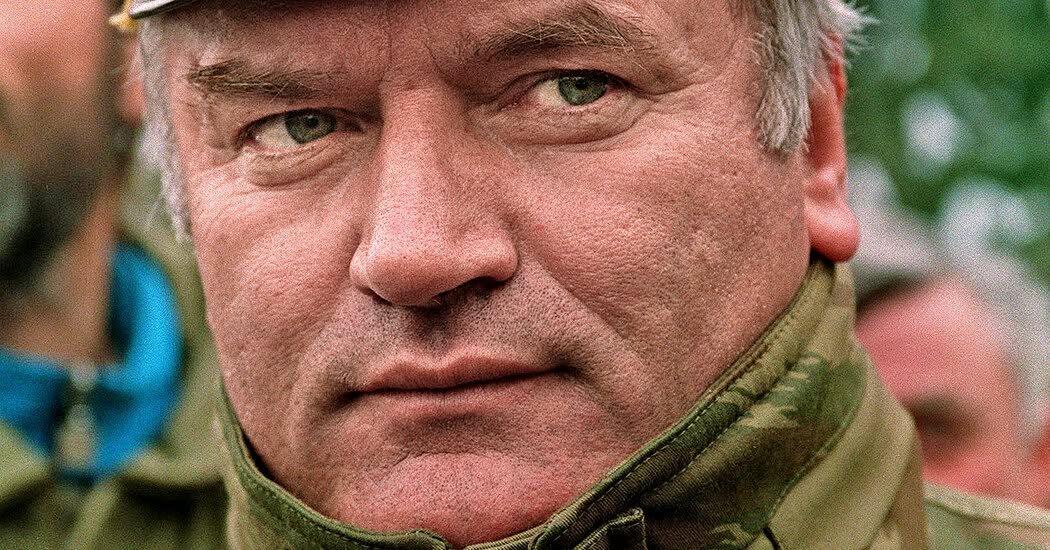
The Legacy of a War Criminal: Ratko Mladić and the Shadow of Srebrenica
In the annals of post-World War II European history, few names evoke as much horror and condemnation as that of Ratko Mladić. Known as the “Butcher of Bosnia,” the Bosnian Serb general remains a central, chilling figure of the brutal ethnic conflicts that tore through the Balkans during the 1990s.
Mladić gained international notoriety as the commander of the Army of the Republika Srpska during the Bosnian War. Under his leadership, his forces executed a campaign of terror that culminated in the 1995 genocide at Srebrenica. In that campaign, more than 8,000 Bosniak Muslim men and boys were systematically rounded up and executed, marking the deadliest massacre on European soil since the fall of the Third Reich.
For decades, the pursuit of justice for the victims of the Balkan wars defined the mission of the International Criminal Tribunal for the former Yugoslavia (ICTY). Mladić, who evaded capture for 16 years while living in hiding, was finally apprehended in Serbia in 2011. His subsequent trial became a landmark moment in international law, representing a long-awaited reckoning for the atrocities committed during the collapse of Yugoslavia.
In 2017, the tribunal handed down a life sentence, finding Mladić guilty of genocide, war crimes, and crimes against humanity. The verdict was a reaffirmation of the global commitment to holding leaders accountable for orchestrating ethnic cleansing. Despite his conviction and his subsequent appeals, Mladić remains a divisive figure in the region; while he is hailed as a hero by some ultranationalists, the international community views him as the architect of unimaginable suffering.
The impact of his actions continues to shape the geopolitical landscape of the Balkans. The shadow cast by the Srebrenica massacre remains an open wound for many families, serving as a solemn reminder of the fragility of peace and the devastating consequences of unchecked hatred. As history looks back on the 1990s, the case of Ratko Mladić stands as a definitive precedent that those who commit mass atrocities will eventually face the judgment of history.