








5 min readAug 10, 2026 02:15 PM IST

(Written by Mohammad Sajjad)
Unveiling the Poetics and Politics of Muslim Identity in Hindi Cinema: A New Scholarly Lens
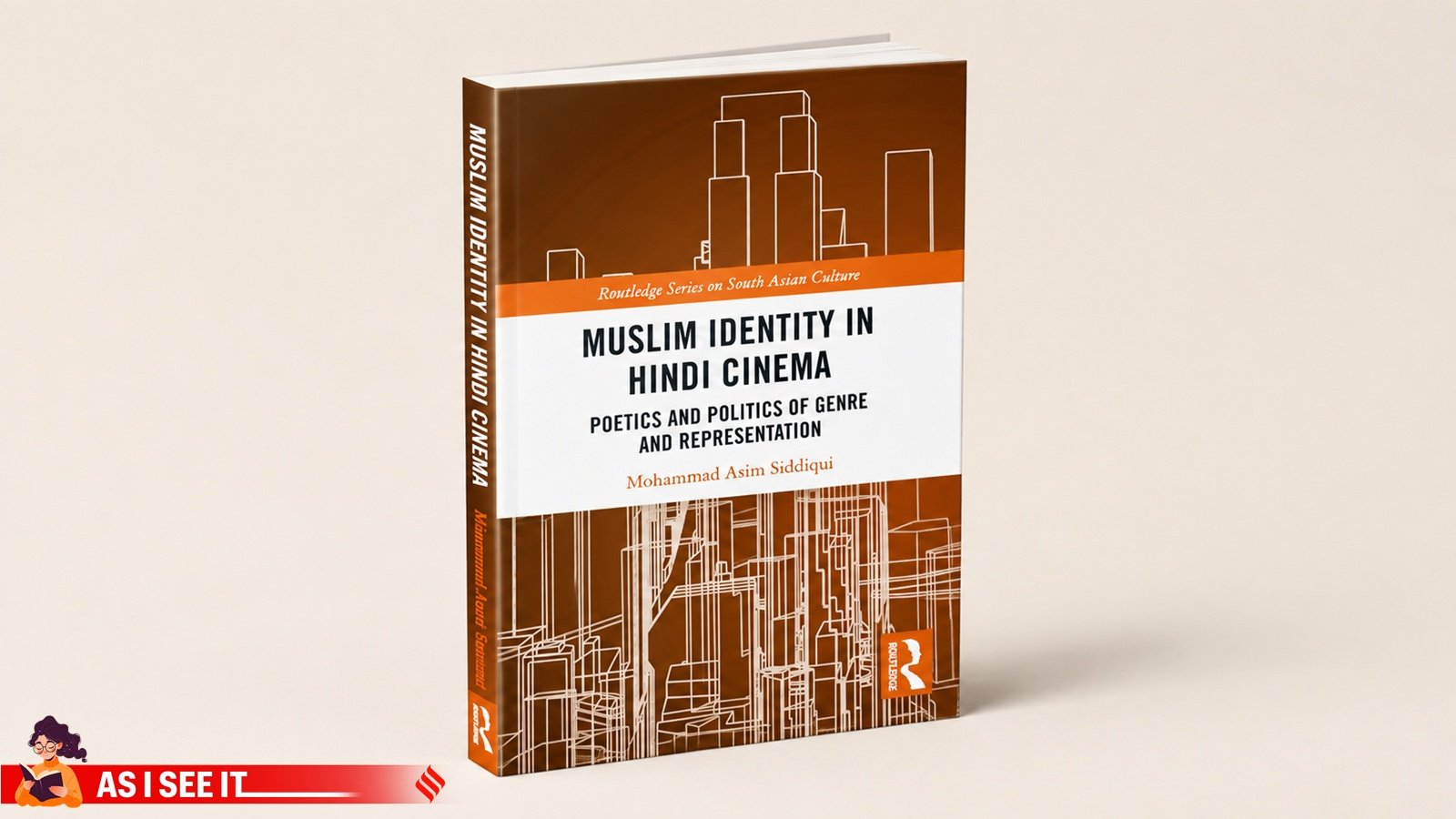
Aligarh, India – August 10, 2026 – For decades, the complex interplay between India’s visual culture and its evolving political consciousness has been a rich, yet often contested, field of academic inquiry. Nowhere is this tension more apparent than in the realm of Bollywood cinema, a powerful mirror reflecting national anxieties, secular aspirations, and democratic identity. A new scholarly work, Muslim Identity in Hindi Cinema: Poetics and Politics of Genre and Representation by Mohammad Asim Siddiqui, Professor of English at Aligarh Muslim University, directly addresses this academic resistance, positioning Hindi cinema as a vital text for historical and cultural investigation.
The academic engagement with popular cinema has long faced skepticism, both within and outside university walls. Siddiqui’s dedication of his book to his mother, who views film as an unserious academic subject, subtly highlights this persistent challenge. This resistance echoes a historical debate, famously articulated by writer Rahi Masum Raza in a landmark 1991 lecture at Aligarh Muslim University. Raza passionately argued for cinema’s legitimacy as a branch of literature, warning that a refusal to teach film literacy would leave society vulnerable to uncritical media consumption. Siddiqui’s new Routledge volume directly answers this call, providing a rigorous analysis of how Muslim identity has been constructed, fetishised, and politicised across decades of Hindi cinema.
From Muslim Socials to Majoritarian Tropes: A Detailed Analysis
Siddiqui’s book offers a meticulously detailed textual analysis, complementing recent political critiques such as Rahul Bhatia’s The Identity Project. He meticulously maps the trajectory of Muslim identity construction in Hindi cinema, from the classic ‘Muslim Social’ genre to the emergence of contemporary majoritarian tropes. Early cinema, Siddiqui argues, utilized idealized Urdu diction, courtly etiquette, and nostalgic feudal aesthetics to render Muslims culturally visible yet politically unthreatening. This romanticized isolation, however, gradually fractured.
The ‘Muslim Social’ genre, once a space for cultural celebration, evolved into a canvas for projecting majoritarian anxieties. Hindi cinema increasingly framed Muslim identity through binary lenses: either as an exoticized relic of the past or as a perceived threat to the nation-state. The book’s strongest section delves into the formal shifts within the genre. Siddiqui highlights how localized spaces like the haveli or the kotha were progressively replaced, particularly after the 1970s, by criminalized, hyper-visible urban settings. This shift, he posits, is a clear indicator of a wider politics of stereotyping. Furthermore, his sharp analysis extends to how film music and code-switching between Urdu and Hindi dialogue have been strategically employed to signal political inclusion or alienation across different cinematic eras.
Story continues below this ad
An Unexamined Silence: Internal Community Dynamics
One of the most thought-provoking aspects of Siddiqui’s analysis lies in its treatment of internal community dynamics. While Hindi cinema has a long history of engaging with Hindu social issues – including caste discrimination, untouchability, widow remarriage, and agrarian feudalism – it has shown a marked hesitation in examining socio-religious regression within Muslim communities. Siddiqui cites Nikaah (1982), a film released during the Shah Bano case, which dramatized the issue of instant triple talaq without maintenance. However, he notes that the film stopped short of a systemic critique of patriarchy and orthodoxy. Decades would pass before a film like Haq addressed the aftermath of that period and the legal and religious pressures facing women.
Siddiqui contrasts this reticence with contemporary Pakistani television dramas, which more regularly confront gender oppression and religious conservatism within their own society, pointing out that Pakistan reformed its Muslim personal law as early as 1961. Critics and scholars, from Iqbal Masud and Khalid Mohamed to Akbar S. Ahmed and Jyotika Virdi, have extensively analyzed how Hindi cinema depicts Muslims through an external, majoritarian gaze. What remains largely absent, Siddiqui suggests, is a self-critical gaze from within, with filmmakers often gravitating towards either romanticized nostalgia or outright vilification, rather than nuanced internal critique.
Story continues below this ad
Limitations and Enduring Value
Despite its profound insights, the book does have some limitations. Its heavy reliance on textual analysis sometimes overshadows the industrial context, offering less insight into how box-office economics, censorship, and changing producer demographics shape onscreen representation. Additionally, the scope largely overlooks the growing influence of streaming platforms and regional cinema.
Nonetheless, Siddiqui’s book stands as an invaluable resource for students and researchers of post-independence Indian history. It provides a clear and compelling framework for understanding how popular media not only reflects but actively shapes majoritarian politics. By asking not just what Hindi cinema shows, but what it deliberately chooses not to show, Siddiqui’s work raises crucial questions.
Read alongside Rahi Masum Raza’s enduring call to take cinema seriously as literature, Siddiqui’s Muslim Identity in Hindi Cinema is a timely and significant contribution, bridging cultural studies and political history. It serves as a powerful reminder that popular cinema is not merely entertainment, but an active participant in shaping the socio-political landscape of a nation.
(Mohammad Sajjad teaches modern and contemporary history of South Asia at Aligarh Muslim University.)
(As I See It is a space for bookish reflection, part personal essay and part love letter to the written word. Views expressed are personal.)