









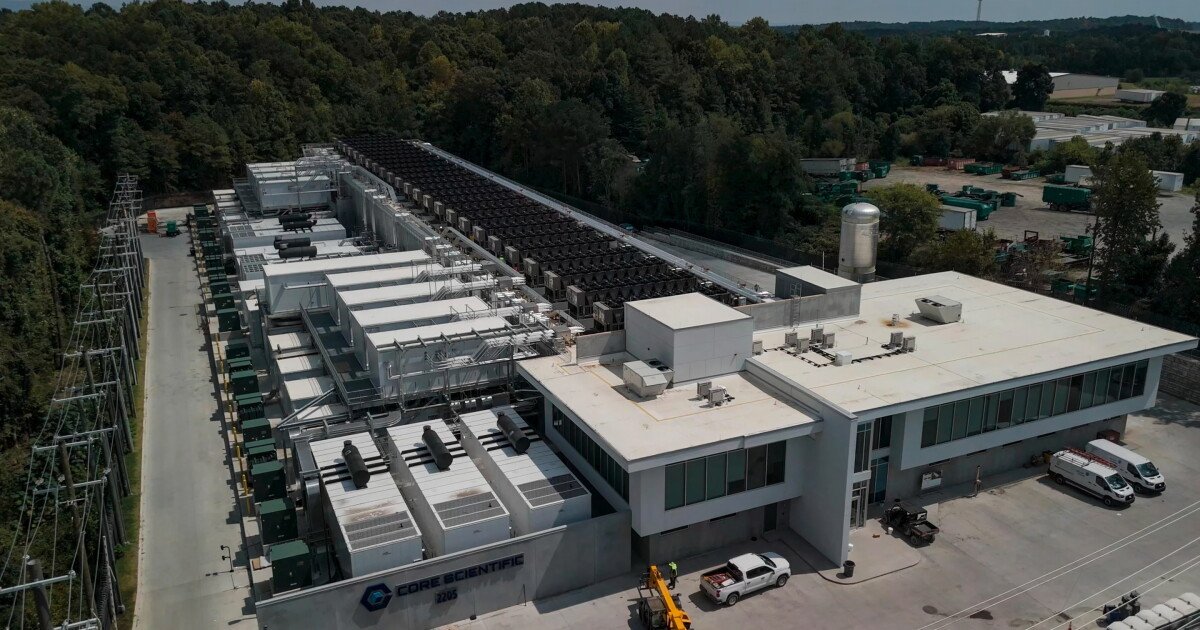
The 400 largest data centers in the United States emitted more heat-trapping gases in a single year than the entire nation of Denmark, a staggering environmental footprint that existed even before the full-scale boom of artificial intelligence. According to a new study published in Nature Sustainability, these massive facilities are fueling a significant climate challenge, casting a shadow over the tech industry’s promises of a greener future.
The Harvard University research, which analyzed data from 403 major U.S. data centers between May 2024 and April 2025, estimates that these sites produced roughly 28.3 million tons of carbon dioxide. Francesca Dominici, a Harvard biostatistics professor and the study’s senior author, noted that the emissions are two to three times higher than previous estimates. The study found that more than half of the 82 terawatt-hours of electricity consumed by these centers—enough to power nearly 7 million homes for a year—was derived from fossil fuels.
“It is the equivalent to the CO2 emission of an entire state like Michigan or a small European country,” Dominici said. “We are going backwards toward the goal of controlling CO2 emissions.” With approximately 2,000 additional data centers planned, researchers fear these numbers will continue to climb.
This surge in energy consumption has led to a major friction point between the tech industry and its sustainability goals. Reports from advocacy groups indicate that the electricity consumption of the world’s biggest tech companies rose by 240% between 2022 and 2025. This reality has become a focal point at the United Nations COP31 climate talks in Antalya, Turkey, where officials are pushing for transparency and accountability.
UN climate chief Simon Stiell addressed the dilemma during the launch of the “Antalya Artificial Intelligence Pledge,” a voluntary commitment for nations and companies to transition to clean energy and improve disclosure regarding power and water usage. “We cannot ask people to accept higher bills, more planet-heating pollution and deeper inequality today in exchange for promises of a better tomorrow,” Stiell stated. “Claims about future emissions savings cannot excuse rising pollution now.”
The pledge also encourages developers to use AI as a tool to solve the very climate problems it is currently exacerbating. Optimists, including former U.S. Vice President Al Gore, argue that while the immediate emissions are concerning, the computational power of AI could lead to efficiency gains that eventually reduce global greenhouse gas emissions by 6% to 9% by 2030. Caleb Max, president of the National Artificial Intelligence Association, echoed this sentiment, suggesting that fears over environmental costs are “overblown” compared to the transformative potential of the technology.
Critics, however, remain wary of this “hope versus harm” narrative. Philip Newell, a spokesperson for Climate Action Against Disinformation, warned that the industry is effectively selling a promise of future climate benefits while masking the immediate, tangible damage caused by its operations.
One potential pathway to mitigation is the capture and reuse of waste heat. Modern data centers vent massive amounts of heat into the atmosphere, a byproduct that many engineers believe could be a vital energy resource. Projects are already underway to integrate this waste heat into district heating systems for homes and businesses. The International Energy Agency estimates that if fully tapped, data centers could satisfy heating needs for 10% of European homes by 2030. In Texas and North Dakota, developers are exploring similar initiatives, using recaptured heat to generate electricity or warm local communities.
As the industry faces increasing political backlash and local opposition, experts emphasize that the environmental future of AI is not yet written. The impact, according to Cornell University energy systems scientist Fengqi You, will ultimately depend on where these facilities are built, how they are managed, and how effectively the industry shifts from fossil fuel dependence to renewable energy sources.
Disclaimer: This content is auto-generated for informational purposes only.
Source: Read Original News