









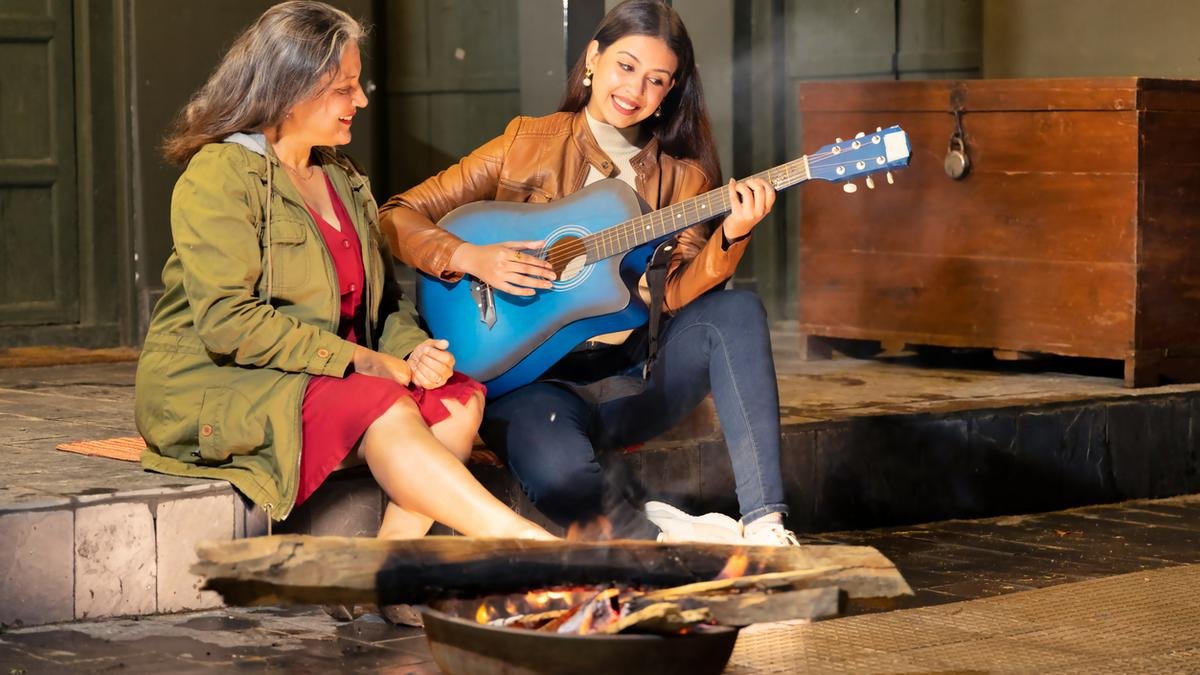
On June 21, the world observes Fête de la Musique. While often translated as “World Music Day,” the French phrase is a clever homophone: it sounds identical to faites de la musique—an exhortation meaning “Make music!” This linguistic play serves as a vital reminder for students and educators alike that learning is not merely a passive act of consumption, but an active, participatory process. By moving music into the streets and public commons, the day challenges our rigid institutional definitions of where, and how, education occurs.
Rethinking the “Archive” in Education
In the formal academic landscape, we often define an “archive” as a physical repository—a library, a database, or a government storehouse. Etymologically, the Greek term arkhe suggests a rule or a founding principle; it carries a sense of “governmentality,” where gatekeepers decide what knowledge is deemed valuable enough to preserve.
However, Indian knowledge traditions offer a compelling pedagogical alternative. Here, the archive is not a building, but a human being. The guru-shishya parampara represents a shift from material record-keeping to a focus on the shabda (the sound-word). In this system, knowledge is not a commodity stored on a shelf; it is an ephemeral, oral, and aural transmission between teacher and student. For students preparing for exams or navigating modern institutions, this tradition offers a profound lesson: true learning is not just about memorizing data, but about imbibing a “living archive” through intimate, one-to-one mentorship.
The Guru as a Living Repository
In many contemporary educational policies, the emphasis is heavily skewed toward standardized testing and digital storage. Yet, the classical arts remind us that the teacher—the guru—is the embodiment of knowledge. This human-centric pedagogy suggests that the most critical element of education is the relationship between the mentor and the learner.
When we apply this to the broader spectrum of our culture, we realize that our elders—a grandmother teaching a family recipe, or a community leader passing down oral history—are essentially “living archives.” In an age of rapid digital acceleration, these human vessels of knowledge are at risk of being lost. Integrating this understanding into our educational framework means recognizing that the most valuable “data” is often stored in the lived experience, stories, and rhythms of our elders.
Music as the Primal Archive
If we define an archive as the medium through which history is memorialized, then music and oral tradition are humanity’s oldest archives. Long before the ink-and-paper record, knowledge was preserved through rhythm, meter, and melody. Hazrat Inayat Khan’s assertion that “language is the simplification of music” suggests that the vibrational quality of human speech is the root of all learning.
For students and policymakers, this is a call to broaden the scope of what we value in the classroom. Education should encourage the “best listener” to become the best archivist. We are surrounded by a “vast vibrational archive”—from the wisdom of our ancestors to the communicative networks of the natural world, such as the mycorrhizal “Wood Wide Web.”
A New Syllabus for the Future
The challenge for our current educational institutions is to move beyond the narrow gatekeeping of information. If we view the world as a classroom, our syllabus should expand to include the “music” of our environment—the song of nature, the wisdom of indigenous practices, and the oral histories passed down through families.
By retuning our ears to these archives, we foster a more compassionate and symbiotic way of learning. Just as Fête de la Musique invites us to step out of the concert hall and into the community, education must invite us to step out of the textbook and into the world. When we treat the universe as a living archive, we stop merely studying for exams and start participating in the transmission of a profound, thriving artistic and intellectual heritage.
Disclaimer: This content is auto-generated for informational purposes only.
Source: Read Original News